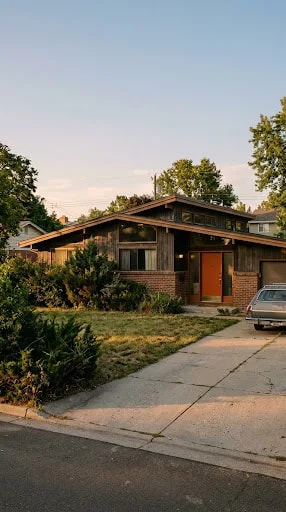
Golden hour does more than just illuminate; it reveals. In this quiet frame, the low-slung silhouette of a 1970s ranch house is washed in a warm, horizontal light that etches every texture into sharp relief. The long shadows stretch across the concrete driveway, pulling the eye toward the dark wood siding and the sturdy brick foundation. That signature orange door becomes a focal point, not just a pop of color but a promise of character within. This is the magic of this architectural style at dusk—it feels grounded, permanent, and softly welcoming.
The design speaks a language of modest confidence. The slightly asymmetrical roofline and deep overhangs are pure 70s pragmatism, offering shelter and a sense of solidity. Clerestory windows hint at a thoughtful interior, designed to capture light from above even as the sun dips low. The materials tell a story of their era: honest brick, enduring wood, and concrete laid for the family car. It’s a composition built for living, not for show, and the passing decades have only added a patina of authenticity.
The scene is beautifully uncurated. Overgrown shrubs brush against the facade, and the lawn wears its patches without apology. A silver sedan sits parked at the edge of the frame, a token of daily life. This isn’t a museum piece frozen in time; it’s a home that has been lived in and adapted to. The mature trees in the background and the glimpse of neighboring roofs place it firmly in a community, a thread in the suburban fabric.
There’s a profound nostalgia here, but it’s not for a bygone aesthetic alone. It’s for a sense of scale, for a connection between the house and its plot of land. The ranch style, in its unassuming way, celebrated the horizontal expanse of the American suburb. This image captures that spirit perfectly—the home doesn’t tower; it settles into the earth, a comfortable and familiar presence on its street.
Ultimately, this photograph is a quiet argument for preservation. It shows us that beauty isn’t always about perfection or grand statements. Sometimes, it’s found in the way the late light catches the grain of the wood, in the steadfastness of brick, and in the lived-in grace of a design that was simply meant to be a good home. It invites us to look closer at the everyday landscapes around us and see the enduring value they hold.