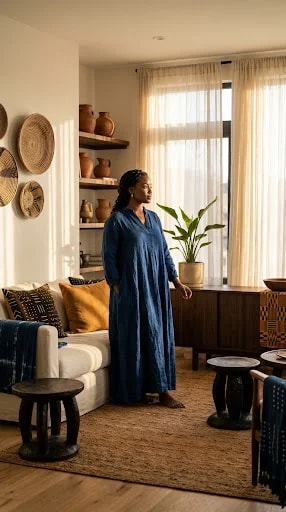
Morning light slides across the cream wall and finds the baskets first. Hung flat and close together, they read as a single woven panel rather than a row of separate souvenirs, and the pale straw tones shift as the sun moves. This is the lesson of the room: in African style home design, the objects are not decoration added at the end. They set the tone, and everything else — the sofa, the curtains, the rug — is arranged to let them speak.
Look at how little is on that wall and how deliberately it is placed. A cluster of shallow baskets sits low enough to be seen from the seat, not stranded near the ceiling. Beside them, floating shelves hold terracotta vessels in unglazed clay, each with a slightly uneven rim that catches shadow. The palette stays disciplined: cream, straw, warm brown, and the rust of fired earth. Grouping handmade pieces by material rather than by origin or era keeps a collection from looking like a market stall and gives it the calm of a gallery wall.
The seating is the neutral ground everything else stands on. A white slipcovered sofa absorbs the light and lets a black-and-white geometric pillow and a mustard one do the talking, with a deep indigo throw folded across the arm. That blue repeats in the long dress of the woman standing barefoot near the window, which is no accident in good styling — a single saturated color echoed twice reads as intentional. Keep the neutrals generous and choose two or three strong accents, then stop.
The wood in the room is dark, low and sculptural: carved stools used as side tables, a small stool pulled up where a coffee table might sit. African-inspired furniture often works at floor level, and that low horizon makes a room feel grounded rather than crowded. Choose pieces with visible tool marks and a soft patina instead of a high-gloss finish; the hand of the maker is the point. A single carved stool can serve as a perch for a plant, a resting place for a tray, or extra seating when guests arrive.
What finally makes the room feel lived in rather than staged is restraint and a little imperfection. Sheer curtains diffuse the light instead of blocking it, one potted plant reaches toward the window, and the rug is rustic enough to forgive bare feet. Buy fewer things, buy them from people who made them, and leave empty wall space for the light to land on. That is the whole method behind African style home design: warmth that comes from material honesty, not from more stuff.