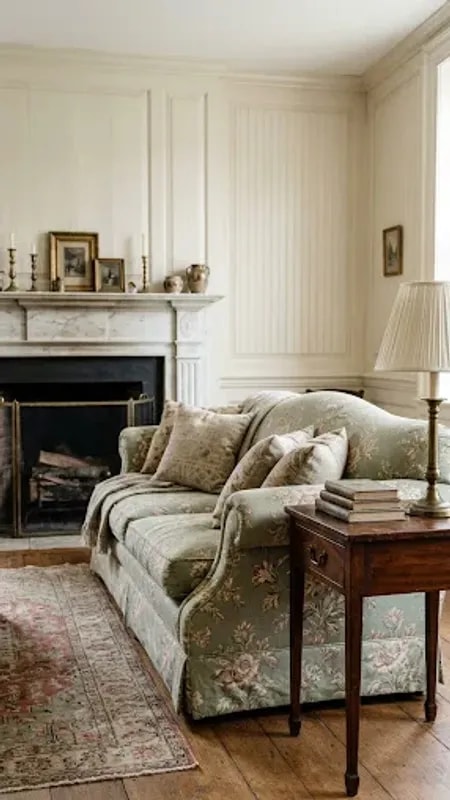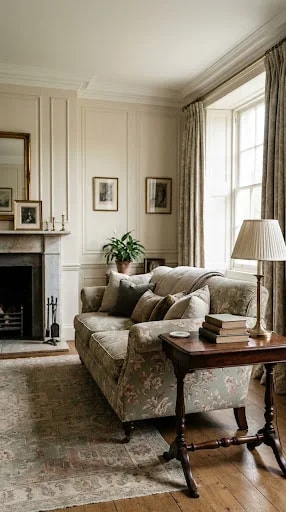
Most rooms are arranged around a wall. This one is arranged around a corner, and that single decision explains almost everything else in the frame. The dark fireplace holds the left side, the floral sofa sits at a slight angle to it, and the tall window closes the triangle on the right. Cream paneled walls and molding run behind all three, giving the arrangement a neutral backdrop without flattening it. The result feels settled rather than staged, because every piece has a job: the fire for warmth, the window for light, the sofa for the long conversation that happens between them.
The bravery here is in the pattern. A floral sofa against heavy patterned curtains and a faded rug could tip into noise, but the palette keeps it honest — ivory, sage, beige, warm brown wood, charcoal. Notice that the boldest print lives on the largest soft surface, while the curtains pick up quieter versions of the same colors and the rug sits almost bleached by time. The trick is proportion rather than restraint: roughly a third of the room is busy, and the rest is allowed to be plain. Paneled walls earn their keep in exactly this kind of scheme, giving the eye somewhere to rest between blooms.
Light does the rest. Daylight arrives soft and sideways from the window, warming the wood floor and grazing the molding so the wall has texture instead of just color. The mirror above the mantel throws that light back into the center of the room, which is why a north-facing corner like this never feels gloomy. For the evening, a single lamp with a pleated shade sits on the dark side table, low and warm, at exactly the height you want beside a sofa arm. Two light sources, twelve hours apart, and the corner works around the clock.
Then there are the things that look accidental and are not. Books stacked flat rather than shelved, framed prints hung small and slightly high, a plant left to lean toward the glass, brass fire tools that are actually used. English interiors earn their lived-in quality by letting objects accumulate on purpose — nothing bought as a set, everything placed where a hand would naturally put it down. The side table is close enough to reach without standing up. The prints sit where you see them from the sofa, not from the doorway.
If you want this corner in your own home, start with the triangle and let it dictate the rest: fire or focal point, generous seating, natural light. Choose one pattern you love, then build the room's palette from its quietest colors so the curtains and rug can echo it without competing. Keep a lamp low, keep the walls calm, and leave a surface free for the books that will pile up anyway.