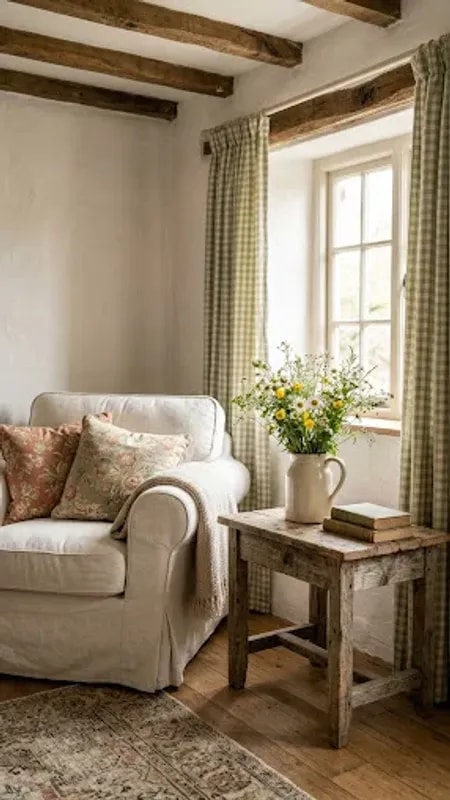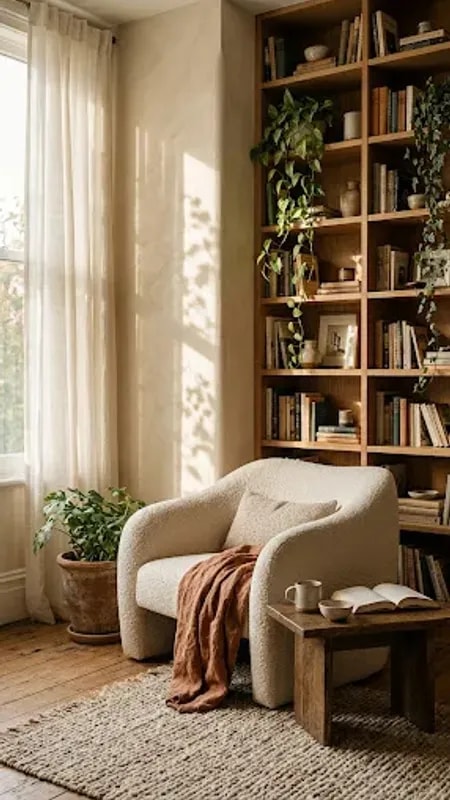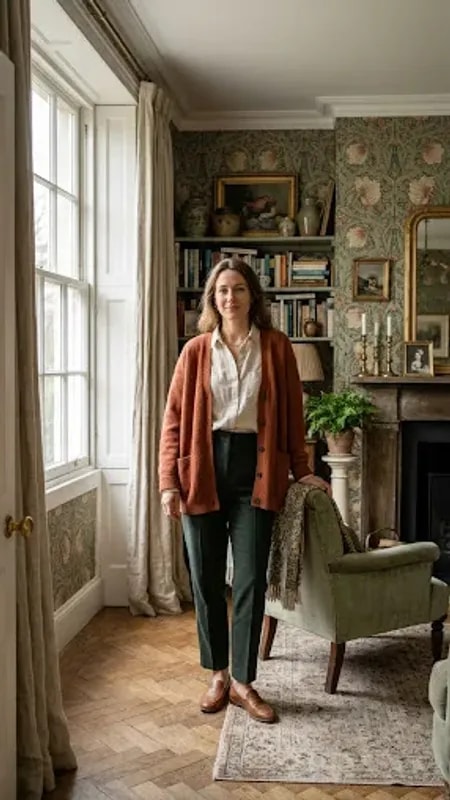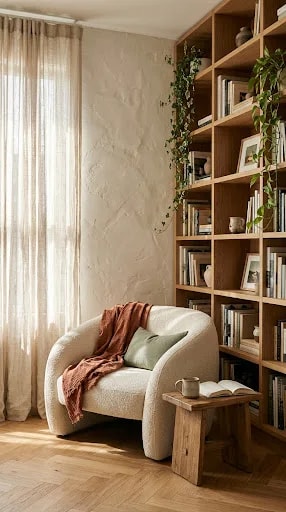
Some corners ask you to walk through them. This one asks you to sit down. The recipe is deceptively plain: a deep armchair angled toward the light, a shelf within reach, and a side table small enough to hold only what a quiet hour requires. What separates a corner that merely looks styled from one that actually gets used is how each element answers the others — the terracotta throw softening cream bouclé, the sage velvet pillow echoing the leaves trailing off the shelf, the herringbone floor pulling long shadows toward the window. Nothing matches exactly, and everything belongs.
Texture does most of the work in a scene like this. Bouclé's looped pile gives the eye something to snag on, a woven cotton throw adds a rougher hand, and velvet brings the one glossy note that keeps the whole arrangement from reading flat. Three textures, one tight palette, is a ratio worth borrowing: pick a soft neutral for the big pieces, then let two or three finishes talk to each other in the accessories. Warmth in an interior comes far more from surface variation than from color alone.
The light here is doing something deliberate. Sheer beige curtains diffuse the window rather than block it, so the plaster wall holds a soft glow instead of a hard glare, and the shadows fall long and gentle across the floor. Heavy drapery would kill the entire mood. If you're working with a similar corner, leave one surface bare so the sun has somewhere to land, and keep the palette to a sensible split: cream and warm wood as the base, burnt orange as the small jolt, muted green as the counterweight. Ten percent of the loud color is plenty.
A bookshelf beside a chair should look collected, not catalogued. Books go both ways — spines upright in runs, a few stacks laid flat to act as risers for a framed print or a small ceramic. One leaning frame and a trailing plant breaking the vertical line of the shelving will do more than a dozen carefully curated objects, and the gaps matter as much as the contents. Negative space is what makes a shelf feel like it grew over years. Choose a wood tone warm enough to pick up the floor beneath it.
The last layer is function disguised as charm: the open book left face down, the mug still warm, the table just big enough for both. Those small signs of use are what make a photographed room feel lived in, and they cost nothing. Give the chair two feet of breathing room from the wall, add a low-pile rug if the floor runs cold, and resist finishing the whole thing in a single weekend. The best corners accumulate.