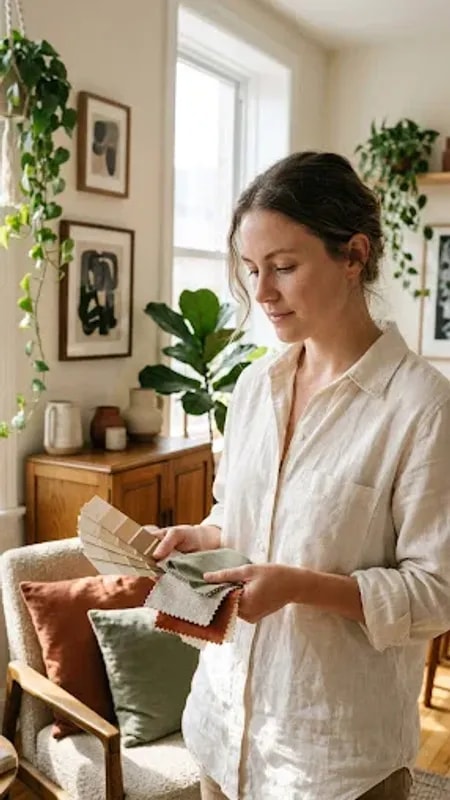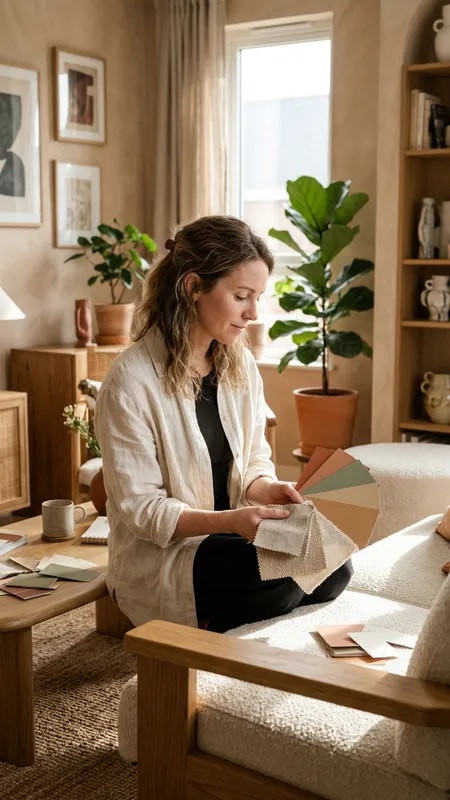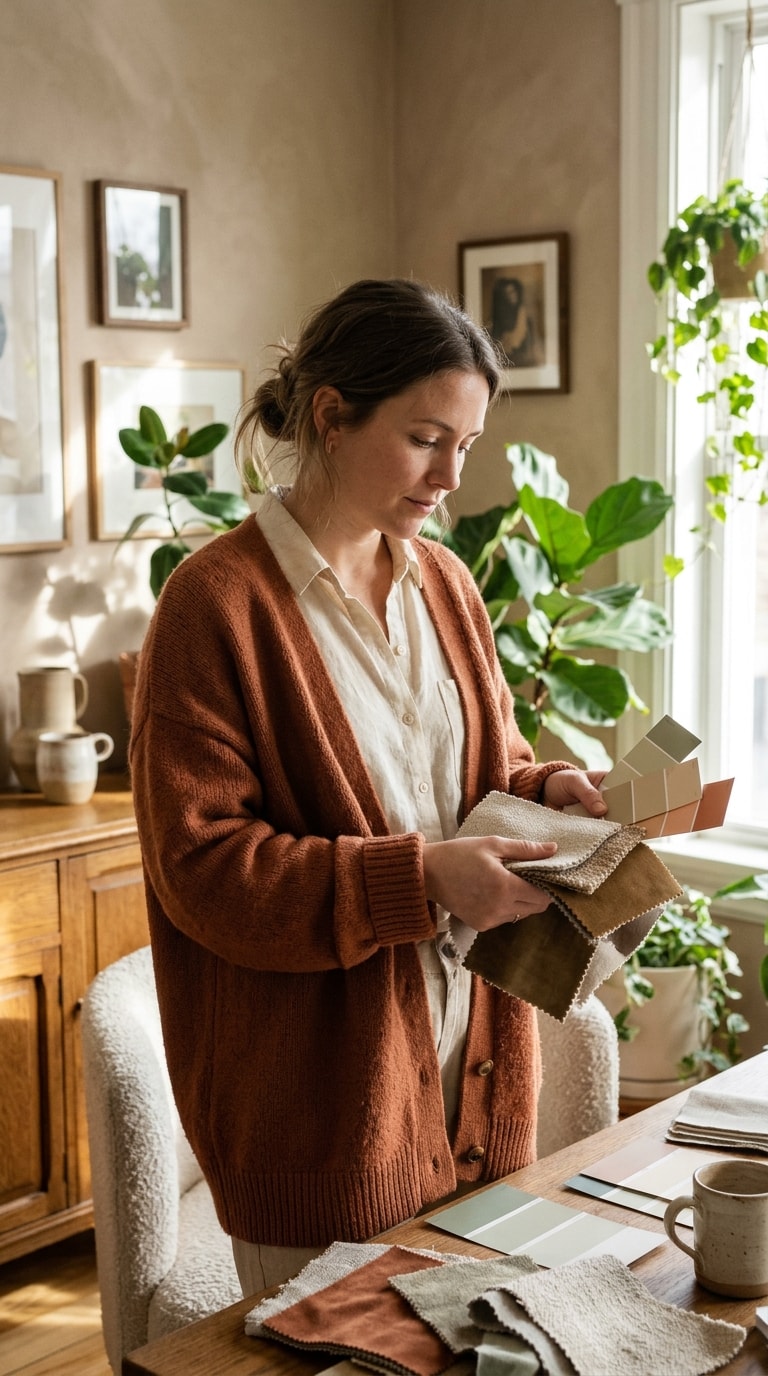
There is a particular kind of quiet that settles over a table covered in samples. A woman in a rust cardigan stands at the edge of it, fanning a handful of fabric swatches like playing cards, holding each one up to the window light before setting it down beside a paint chip and a scrap of warm wood. A mug sits somewhere in the middle of the mess. Behind her, a cabinet, a framed print, a few green plants going about their business. This is not decorating yet. It is the part before decorating, the part most people skip, and it is where a home's style is genuinely decided.
Screens lie a little. A paint color glows on a monitor and turns gray on a north-facing wall; a boucle reads creamy online and arrives looking like oatmeal. Fabric, stone, timber and tile behave differently once they are in your hands and in your light. So gather the real thing. Order the five-dollar samples, ask the paint shop for the chips, keep the offcut of linen you keep stroking in the shop. Bring them home and put them where you will actually see them, on a table near a window, because the light in that room at four in the afternoon is the light your choices will have to survive.
Then comes the editing, which is mostly subtraction. Lay everything out and notice which pieces you keep reaching for without thinking, the ones your fingers find while you are waiting for the kettle. Set aside anything that only appeals because it is currently everywhere. What remains is usually more coherent than you expect: a terracotta, a chalky cream, an oak, a green that matches the plant by the door. Three or four of those recurring pieces are your palette. Everything else is a guest.
Translating the table into a room is simpler once the palette is physical. Give the largest surfaces, walls and floors, to the quietest samples, and let the deeper, warmer ones carry smaller moments: cushions, a lampshade, the inside of a shelf. Keep one object on the table that has nothing to do with design, a mug, a stone from a walk, and let it remind you that the room has to work on an ordinary Tuesday, not just in a photograph. Style that cannot survive daily life is just staging.
Leave the arrangement out for a week before you commit to anything. Watch how the swatches change at breakfast and again at dusk, which pairings start to feel obvious and which start to feel like a costume. The style you are looking for is not a label from a quiz or a hashtag. It is the set of materials you keep returning to in good light, and it has been sitting on the table the whole time.