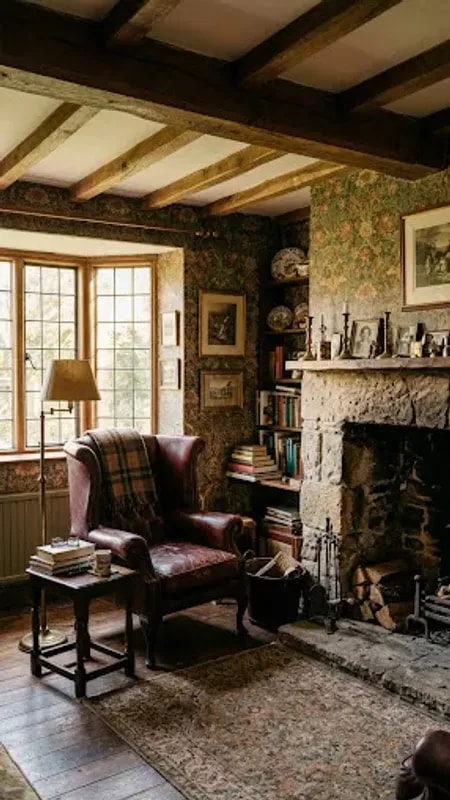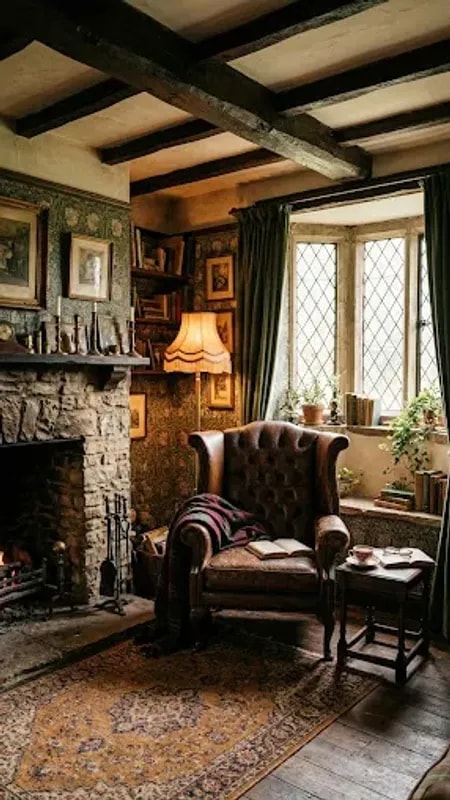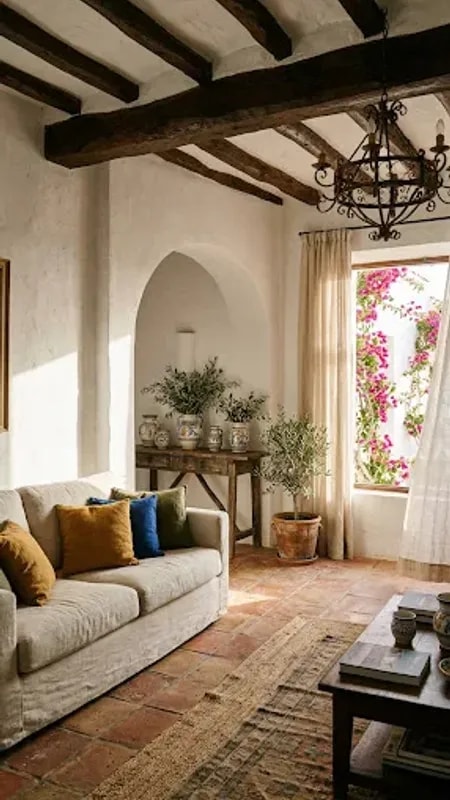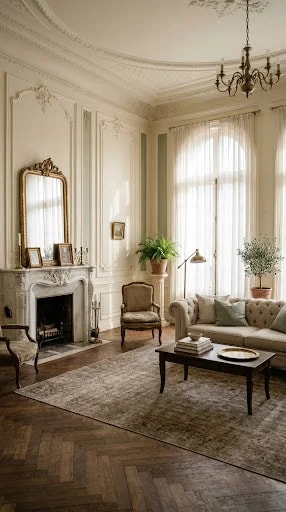
The first thing this room teaches is that European style is built, not decorated. Before a single chair arrived, someone decided the walls deserved paneling, the ceiling deserved a chandelier, and the floor deserved a herringbone pattern laid in rich, dark-stained oak. Those decisions carry the room. Everything else — the tufted beige sofa, the antique armchair, the dark wood coffee table — simply settles into architecture that was already doing the heavy lifting. If you take one idea from a Parisian apartment, take this one: spend on permanence first.
Symmetry is the quiet organizing principle. The marble fireplace sits dead center, crowned by a gilded mirror that doubles the light and stretches the wall upward. Windows flank the composition on both sides, dressed in sheer white curtains that filter rather than block. Intricate moldings frame each panel like a picture mount, and the result is a room that feels calm because your eye always knows where to land. You can borrow this without a renovation: a well-proportioned mirror above a mantel or console, paired moldings on either side, and two matching light sources will read as deliberate even in a plain modern box.
The palette is where restraint becomes luxury. Creams, warm beiges, muted gold, and deep wood tones do almost all the work, with green arriving only through potted plants. Notice how little contrast there is between the sofa, the rug, and the walls — the depth comes from texture instead. Tufting, carved wood, marble veining, patterned wool, and the soft sheen of brass each catch the diffused daylight differently, so the room shifts through the day without ever changing its colors. Resist the urge to add a bold accent wall; in this style, variety in surface matters far more than variety in hue.
Furniture here is deliberately mixed in era, not matched in a set. A classic rolled-arm sofa sits beside an antique chair with carved legs, and the coffee table is dark, heavy, and low enough to disappear. That combination is what keeps classic European rooms from feeling like showrooms. Buy the sofa new if you must, then hunt for the chair, the table, and the rug secondhand — age is the ingredient you cannot fake.
Finally, light. Tall windows with sheer panels, a brass chandelier hung low enough to feel intimate, and lamps placed where people actually sit. The room reads as serene and sophisticated not because it is grand, but because nothing in it is fighting for attention. That is the whole trick of European interior style: choose fewer things, choose them well, and let the architecture and the daylight finish the sentence.