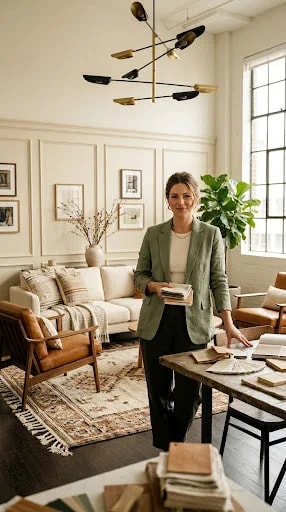
In a bright studio, an interior designer stands at a worktable with fabric samples fanned out before her. Behind her, a cream sofa, a tan leather lounge chair, a vintage rug, and a brass-and-black chandelier hold the room together. It looks effortless, but it is actually a series of decisions about color, texture, scale, and light. That is exactly where home design styles with names become useful: a name is shorthand for those decisions, not a label stamped on a catalog page.
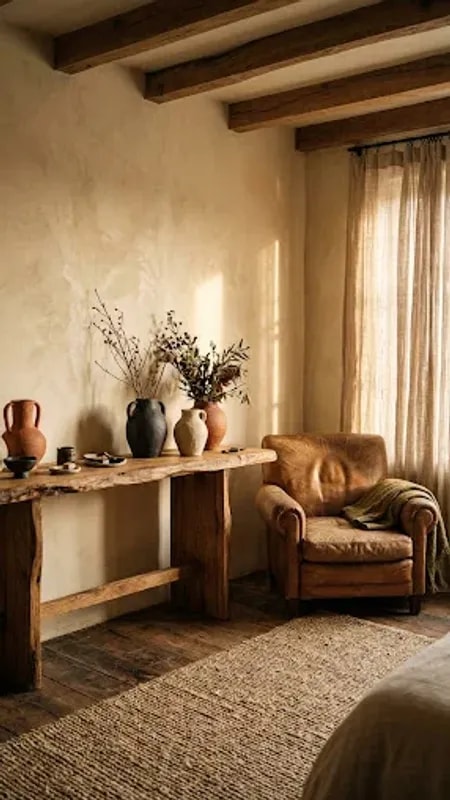
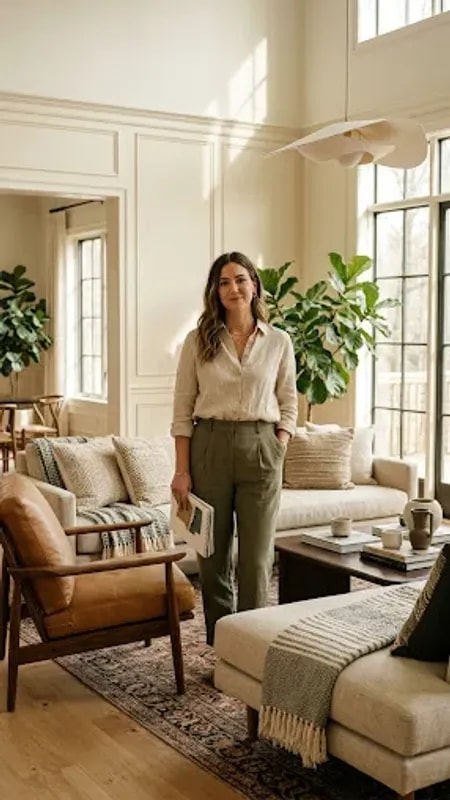
Start with the material story. The room's warm neutrals—cream, tan, wood brown—are cooled by sage green and sharpened by black accents. Add linen, leather, and a patterned vintage rug, and the style could read as organic modern. If the same palette included glass, polished chrome, and sleek lacquer, it would lean toward contemporary. If the architecture brought in heavy trim, symmetry, and antique brass, new traditional would be a better fit. The name only works when it explains what you see and feel underfoot, at eye level, and in the light.
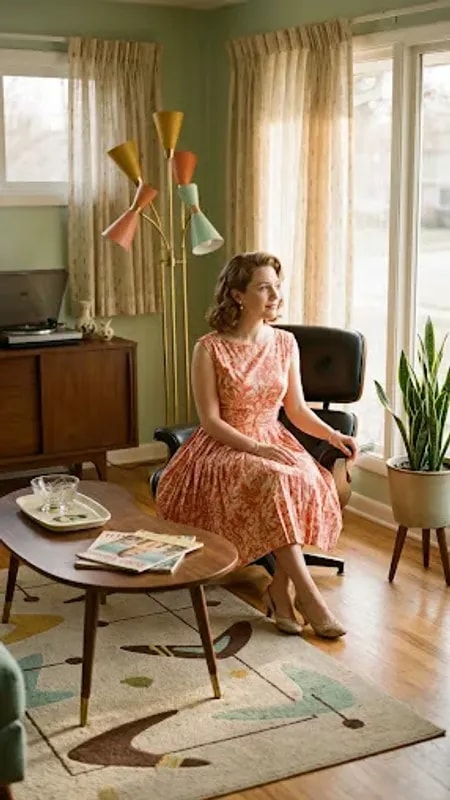
Furniture silhouettes narrow the field further. The sofa's clean lines paired with the chair's rounded, classic shape suggest transitional modern. Swap the leather chair for a walnut-framed lounge with tapered legs and the room tilts mid-century modern. Remove the ornament, lower the palette, and keep only essential shapes, and you are in Japandi territory. Designers often name two or three overlapping directions in a style brief because real rooms rarely fit one tidy category.
Lighting and objects finish the sentence. The mobile chandelier adds a contemporary, sculptural note; framed art and branches keep the room collected rather than showroom-perfect. Those touches can turn a neutral base into modern heritage or contemporary eclectic. This is why a designer holds samples next to the sofa rather than choosing them online: the right name emerges from seeing fabric, wood, metal, and daylight together.
For homeowners, the practical move is to build a style brief with named directions, material samples, and a clear keep-or-change list. Use home design styles with names as a shared vocabulary with your designer, not a rigid rule. The best result is a room that can be described in a sentence and still feels human, calm, and lived in.