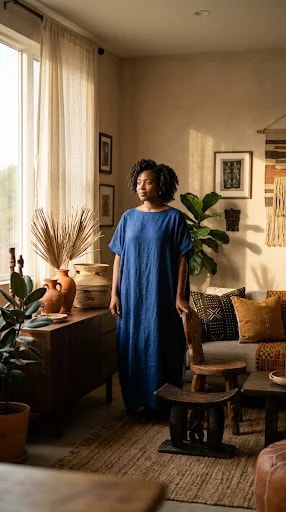
The first thing this room gives you is not an object but a quality of light. Morning sun comes in low through sheer curtains and rakes across the floor, softening the edges of every surface it touches. What it finds is a palette built almost entirely from the ground up: creamy beige walls, tan and ochre cushions, terracotta and brown ceramics, deep green leaves. Against all that warmth, the woman's deep blue dress reads as a single cool note in a warm composition, and the room instantly feels deliberate rather than decorated. If you are planning an African style home design scheme, start with the light and the palette before you buy a single object.
The wooden sideboard is the quiet anchor of the scene. On top of it, terracotta vases hold dried grasses that rise and fall in loose, unforced arcs, and framed art leans rather than hangs. Notice how little is there: three heights of vessel, one sweep of dried stem, generous empty surface. That breathing room is what makes the objects look collected instead of crowded. When you style a similar piece, group in odd numbers, vary the height by at least a head, and leave a third of the surface bare. Dried grasses and palm are forgiving, inexpensive and hold their shape for months.
Texture carries the rest of the story. A woven wall hanging brings a handworked, graphic element to the plain wall, and it earns its place because nothing competes with it. On the sofa, a patterned cushion sits beside a solid mustard one, so the pattern has somewhere to rest. The rule that keeps this room serene is simple: one pattern per seating area, one woven piece per wall, and solids everywhere else. A carved wooden stool holds a book and a cup near the window, useful as well as beautiful, which is the honest test of any craft piece you bring home.
Green is the third material here. A tall potted plant flanks the sideboard, smaller pots cluster on the sill and floor, and their leaves pick up the same light that warms the wood. Plants do the work that another patterned textile would do, but with movement and shadow instead of colour. The textured rug underfoot finishes the composition by giving the eye somewhere soft to land.
What makes the room feel African in style is not a checklist of motifs but a set of instincts: handwork over manufacture, earth over gloss, and objects with a maker behind them. Buy from specific artisans and regions rather than a generic import aisle, and let the pieces age. The result is a room that feels grounded, unhurried and quietly elegant, exactly as this one does.