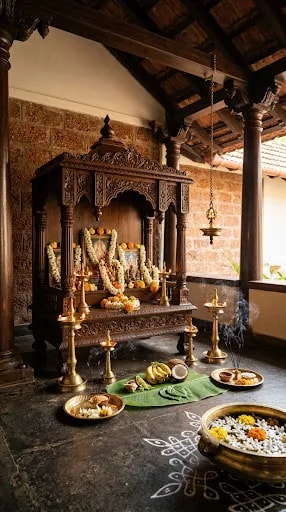
A carved wooden shrine against exposed brick is a beautiful thing, yet it is never quite finished on its own. What turns a Kerala-style home temple from furniture into a living sanctuary is the layer of daily dressing: the brass, the flowers, the fruit, the small flame that gets lit before anything else in the house wakes up. The wood holds the structure; the offerings hold the feeling.
Start with light. In a traditional arrangement, a tall standing oil lamp anchors one side of the shrine and a hanging brass lamp drops from the roof beam above the threshold, so the glow arrives from two heights rather than one flat source. Both should sit slightly forward of the deity niche, never behind it, so the flame lights the carving instead of silhouetting it. The effect is worth the fuss: warm light grazes the grain of the wood, deep shadows settle into the carved folds, and the whole corner seems to breathe. Fill the lamps with good coconut oil and trim the wicks square, because a steady, smokeless flame is most of the atmosphere.
Then comes the arrangement on the altar shelf. A framed image of the deity, garlanded with jasmine and a few marigolds, sits at eye level when you stand before it. Below, a green banana leaf becomes a simple platter: a small bunch of bananas at one end, a coconut resting whole beside it, perhaps a little jaggery or a handful of rice. Keep the leaf fresh and replace it when the edges begin to brown, since the offering is as much about care as about what is on it. A brass bowl of floating flowers placed in the foreground, near the geometric floor motif, catches the light and softens the hard line between the shrine and the room.
Restraint matters more than abundance here. Terracotta, deep brown, and brass already carry the palette, so let the flowers supply the only bright notes and keep the rest quiet. Wipe the brass weekly with tamarind or lemon and salt to keep the patina warm rather than dull, and dust the carved brackets with a soft brush instead of a wet cloth, which can lift the finish from old wood.
What you end up with is not decor staged for a photograph but a corner that changes daily, a little more worn and a little more familiar with each passing morning. That slow accumulation of care is the real design.