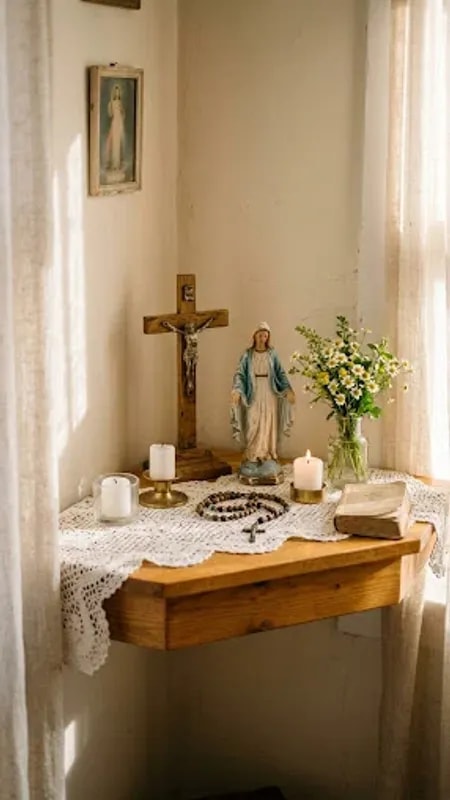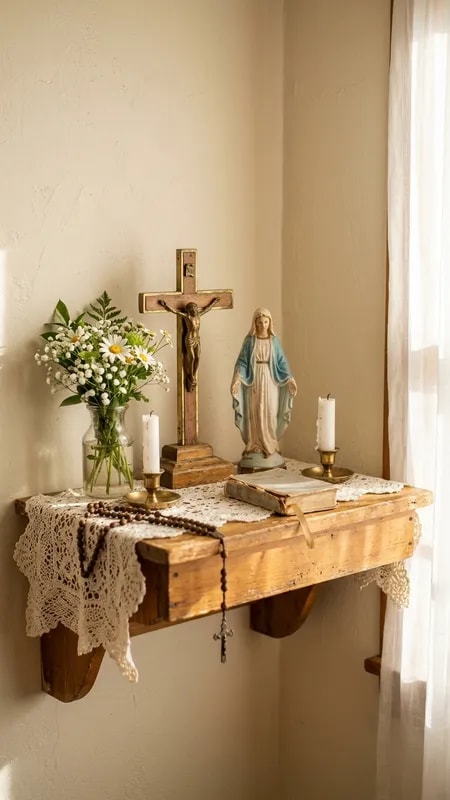
A home altar does not need a table of its own. In this corner, everything rests on one shallow wooden shelf, and the whole scene feels complete. A white lace runner is draped over the front edge so the fabric softens the hard line of the wood and spills just enough to catch the light. That single gesture — cloth over timber — is what separates a shelf from a shrine. It costs almost nothing and instantly makes the surface feel set apart.
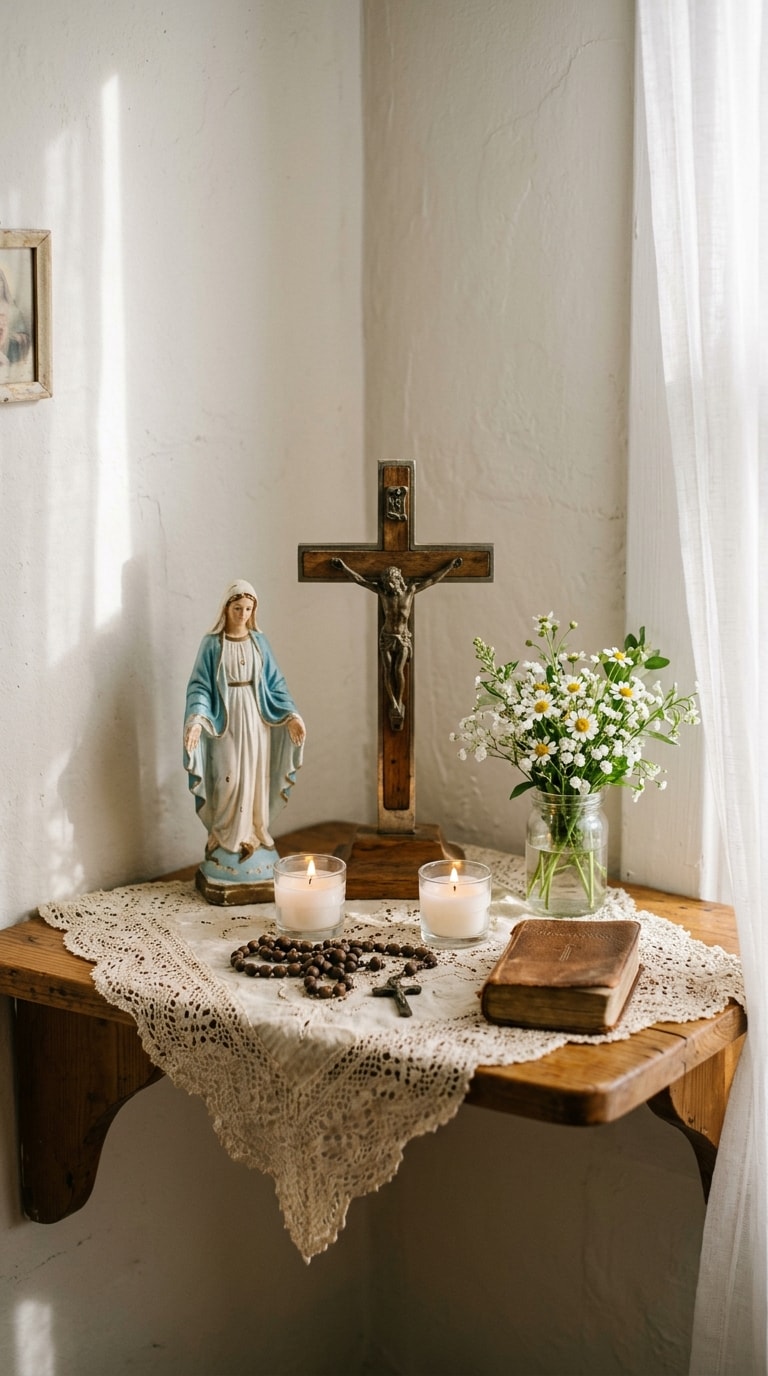
The arrangement works because it is built in heights rather than spread flat. The carved crucifix anchors the back and gives the composition its vertical spine. The blue-and-white Virgin Mary statue sits slightly forward and to one side, never competing with the cross. A glass jar of white daisies and greenery pushes into the opposite corner, adding a loose, living texture that keeps the group from looking like a display case. Two candles in clear glasses sit at the front, low and steady. Back, middle, front: three planes, one glance, no clutter.
Light does more here than any object. Soft daylight arrives from the right, filtered through a sheer curtain, so the crucifix and statue are lit from the side and cast gentle shadows across the lace. When the candles are lit, their warm glow mixes with the cooler window light and the corner reads as both daytime and vigil. If you are placing an altar of your own, watch where the light falls before you commit to a layout. Move the crucifix a few inches and the shadows change the whole mood.
What makes the space feel prayed-in rather than styled are the small, unglamorous things: a dark rosary coiled near the candles, a brown prayer book with softened corners, a jar that looks reused. These are the marks of a corner that gets touched. Resist the urge to keep it pristine. An altar with fingerprints and a slightly crooked runner invites the family to kneel, not just to look.
For small homes, the lesson is scale. One shelf, five or six objects, a natural palette of ivory, warm brown, and pale blue, and a little green to keep it breathing. Let the wall stay bare, let the curtain do the framing, and leave room at the front for someone to set down a cup or a folded intention. A compact altar works best when it looks like it is waiting for you.