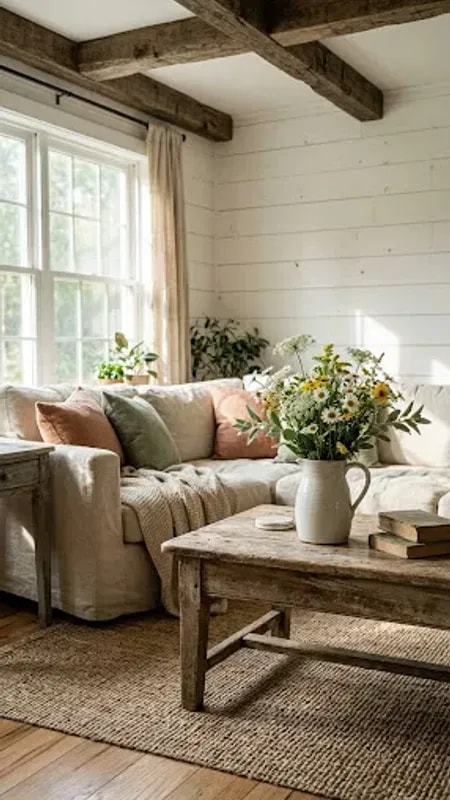
Most rooms are decorated and then lit. This one feels built the other way around, as if the window came first and every object was chosen for how it behaves in the hours of low, angled sun that cross the floor each afternoon. The large multi-paned window is not a backdrop here; it is the room's main event, and the furniture arranges itself in a loose arc that points toward it. A plush white slipcovered sofa sits just off-axis, close enough that the light grazes its arms and falls away into soft shadow at the back cushions.
White does the heavy lifting in a room like this, but not the flat, gallery white that goes gray in the corners. Slipcovers, shiplap, and painted trim read creamy and warm because they reflect whatever is coming through the glass, shifting from pale gold at midday to a cooler, bluish tone near dusk. That mutability is the reason to choose fabric you can wash and walls you can touch up. Slipcovers exist precisely so a farmhouse living room can be sat on, spilled near, and lived in without the low hum of anxiety that comes with upholstery that must be protected.
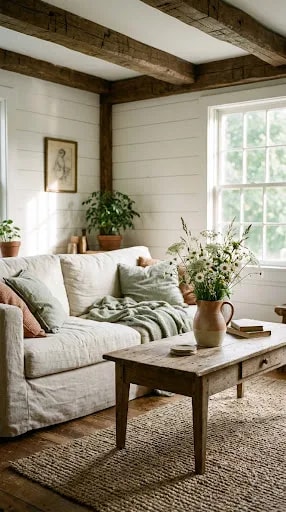
Where the light is soft, texture has to carry the contrast. The distressed wooden coffee table brings a matte, chalky brown against all that brightness, and the jute rug underneath it holds a woven grain that reads even in shadow. A green knit throw draped over one arm introduces the single saturated note in an otherwise earthy palette, and the terracotta accents scattered around keep the sage from going cool. On the table, a ceramic pitcher of small white wildflowers and a stack of books do the quiet work that centerpieces usually overdo: one gesture, natural height, no arrangement fuss.
Overhead, the exposed timber beams do something structural and psychological at once. They lower the ceiling in the best sense, giving the eye a rough, dark counterpoint to the bright window wall so the room reads cozy rather than airy to the point of emptiness. A single framed botanical sketch on the shiplap repeats the wildflowers without matching them, which is the whole trick of styling a farmhouse corner: echo, never duplicate.
If you are chasing this feeling at home, start with the hours instead of the shopping list. Notice when your best light arrives, then place the sofa where it lands, keep the window treatment sheer or absent, and let pale, washable surfaces bounce that light deep into the room. Everything else, from the throw to the pitcher, is a small adjustment in service of the sun.