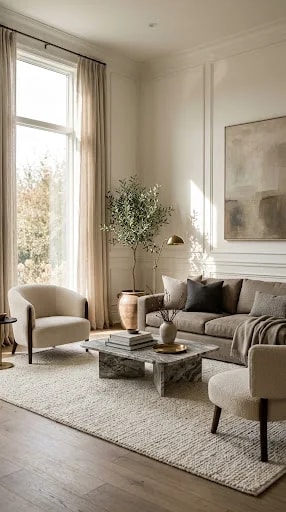
Step into this living room and nothing shouts. That is the point. Transitional design is not a shopping list of half-classic, half-modern pieces; it is a ratio, and the ratio only reads as calm when the architecture, the furniture heights and the textures are all pulling in the same direction. Here, the room earns its polish from a handful of decisions repeated at different scales, from the window trim down to the stack of books on the table.
Start with the shell. The wall molding gives the room its classic backbone, but it stays quiet because it is painted the same cream as the wall behind it — shadow lines instead of contrast. The tall window is treated the same way: curtains hung high and full-length, so the fabric reads as architecture rather than decoration. Against those straight verticals, the seating deliberately loosens up. A cream barrel chair curves back toward the corner, a foreground boucle chair rounds off the near side, and the low marble coffee table drops the visual center of gravity so the ceiling feels taller than it is.
Color does very little work here, which is why texture has to do a lot. Cream, beige, taupe and stone gray sit within a few shades of each other, and the interest comes from surfaces: nubby boucle against smooth linen, a woven rug over warm wood, a soft throw breaking up the long gray-brown sofa. Charcoal and taupe pillows are the only real darks, and they are placed where you want the eye to pause. The olive tree in its terracotta pot supplies the single note of muted green, while the slim brass floor lamp contributes the one warm metal — enough shine to keep the neutrals from going flat.
If you want to borrow the formula, borrow the discipline as much as the palette. Keep window treatments to the ceiling and the floor, choose one rounded seat for every three straight-edged pieces, and let a low table anchor the grouping without blocking sightlines. Style the surface lightly: a few books, one object, breathing room. And notice the timing — the room is at its best in soft, directional daylight, when shadows from the curtains and the lamp leg draw lines across the rug. Transitional style is often described as a compromise. Photographed like this, it looks more like a decision made once, confidently, and then left alone.