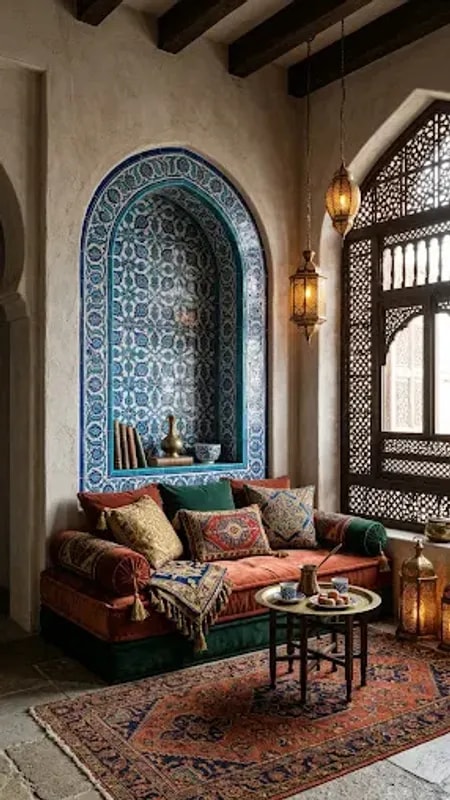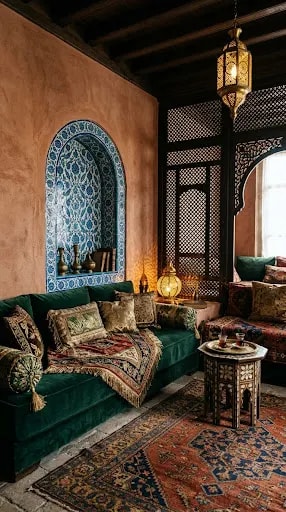
Stand at the edge of this corner and the first thing you register is not the emerald velvet sofa or the hand-painted Iznik tiles glowing inside the arched niche. It is the wood. A dark carved ceiling presses gently downward, a lattice screen filters the space to the right, and an elaborately pierced side table holds a brass tea tray like a small altar to hospitality. The textiles get the applause, but the timber sets the tempo.
The mashrabiya screen deserves more credit than it usually gets in Western interiors. Traditionally turned on a lathe and assembled without nails, these lattice panels were built to slow the sun, move air and preserve privacy without sealing a room off. In a contemporary home they solve a problem that curtains and drywall never quite manage: they divide a room into layers while keeping every layer visible. Here, the screen reads as a shadow play — solid where the wood catches light, transparent where the gaps allow a glimpse of the next space. Nothing in the room feels closed.
Wood carving sets the second layer. The side table beside the sofa is heavy with relief work, and it earns its weight because it holds something worth displaying: a polished brass tray with tulip-shaped glasses, a sugar bowl, a small stack of saucers. Turkish style home design has always understood that a tea tray is furniture, an invitation made physical. Above it, the pierced brass lantern throws scattered amber pools onto the terracotta walls, and the contrast between warm plaster and cool blue tile gives the corner its jewel-box tension.
If you want this feeling at home without turning the room into a museum, choose one carved moment and let it breathe. A single lattice panel set into a doorway, or a pair of turned-wood shutters, does more than a full suite of ornate furniture. Keep the walls in an earthy plaster — terracotta, clay, warm sand — so the greens and blues have something to push against. Skip the tile ceiling, skip the gilded everything. Restraint in the architecture is what allows generosity in the textiles, and the kilim draped over that sofa only sings because the room around it stays quiet.
What holds the whole scene together is the verticality. The crop runs from floor rug to ceiling beam, scooping up lantern light along the way, and the eye travels upward the way it would in a courtyard house. That upward pull is the real trick: tall screens, a high dark ceiling, a niche arcing above head height. Get the bones right and the cushions, the velvet, the brass — all of it simply falls into place.