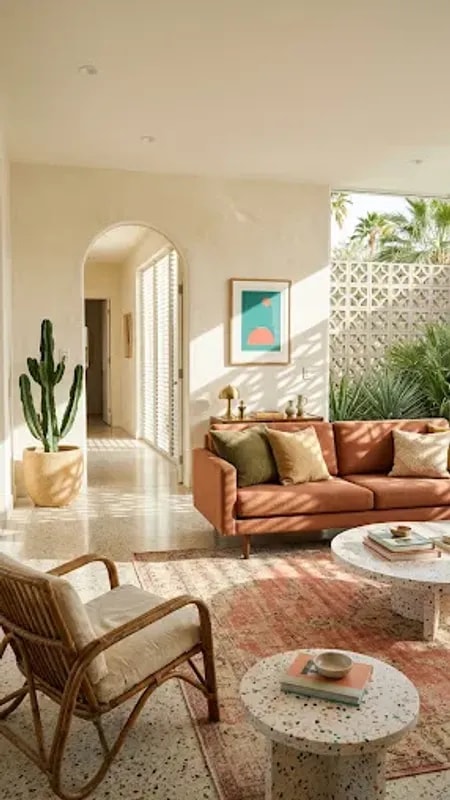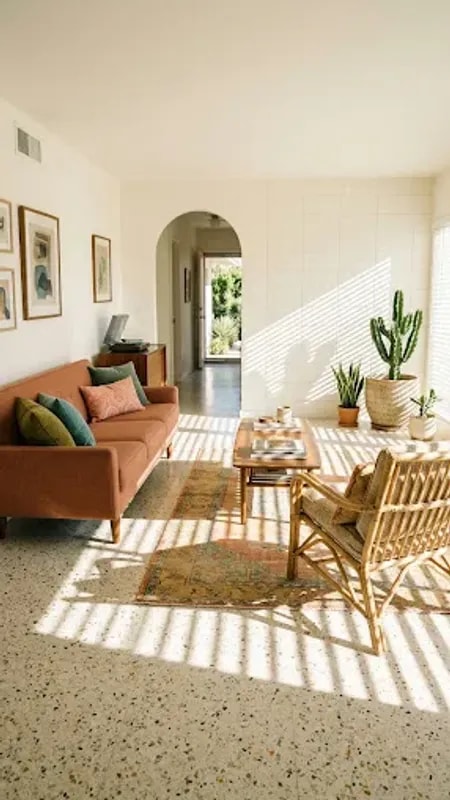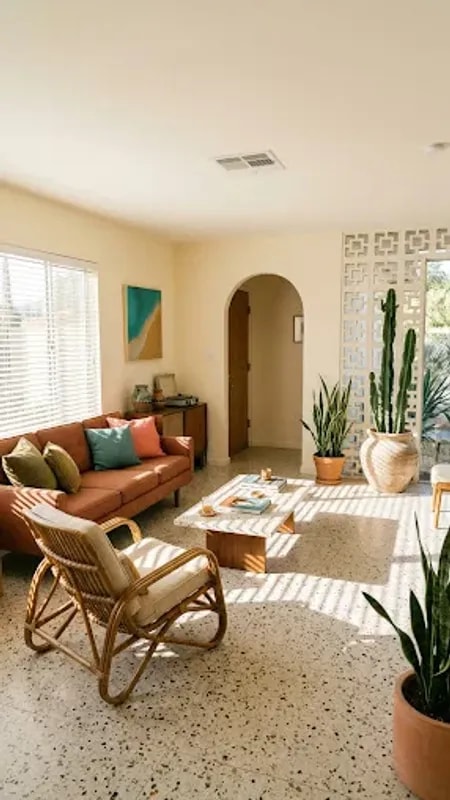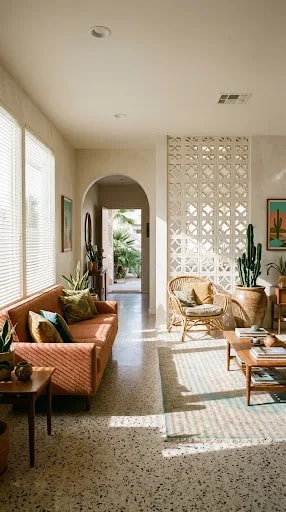
Palm Springs style is often described as a palette, but the rooms that really work are built around light first and color second. In this living room, the architecture does the heavy lifting: a single arched doorway sits dead center, framed in cream plaster, and everything else arranges itself around that opening. The arch is not decoration. It is the room's organizing principle, pulling the eye through the space and out to the greenery beyond, so the garden reads as part of the interior even with the door open.
The color story is desert-modern rather than tropical. A burnt-orange sofa anchors the left side, warmed further by terracotta and tan textiles, then cooled by olive, teal, and deep green pillows that echo the cactus in its woven basket. That push and pull between warm clay tones and cool vegetal ones is what keeps the scheme from feeling like a single flat note. Note how few colors there actually are — cream, rust, olive, teal, speckled stone — and how repetitions of each one make the room feel deliberate instead of scattered.
Texture carries equal weight. Terrazzo runs the length of the floor, its chips of stone catching the sun and softening the hard plane underfoot. Rattan and woven basketry bring in the desert-craft reference without going full retro, and a breeze-block screen on the right introduces pattern through geometry rather than print. Breeze block is the signature move here: it filters glare, throws graphic shadows across the floor, and separates zones without walling anything off. Venetian blinds do the same job on the opposite side, striping the walls and upholstery with horizontal bands of light.
What makes the composition feel calm is the one-point perspective. The arch holds the center, the sofa and screen balance left and right, and the patterned shadows draw the eye forward across the floor toward the doorway. Deep focus keeps the far greenery as crisp as the foreground pillows, which is why the room feels airy rather than enclosed. It is an editorial trick borrowed from real-estate photography, but it also reflects how the space is actually meant to be lived in: seated low, looking out, letting the afternoon do the decorating.
If you want to borrow the look, start with one architectural gesture — an arch, a screen, a wall of filtered light — then build a restrained palette around it and let natural materials supply the texture. Keep the floor pale and speckled, repeat two or three colors in pillows and plants, and resist the urge to fill every surface. In Palm Springs style, the empty, sunlit patch of floor is as much a design element as the sofa sitting on it.