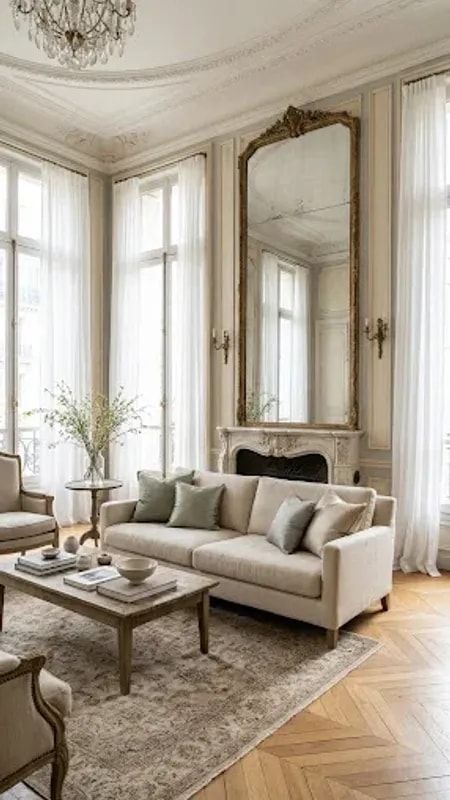
A transitional living room can go wrong in a very particular way. Everything matches, the palette is perfect, and yet the space reads like a showroom waiting for its photograph. What separates the rooms people actually relax in is rarely the sofa or the rug. It is the evidence of use — a shelf arranged with gaps, a tree that has clearly been watered, a stack of books someone might plausibly be halfway through.
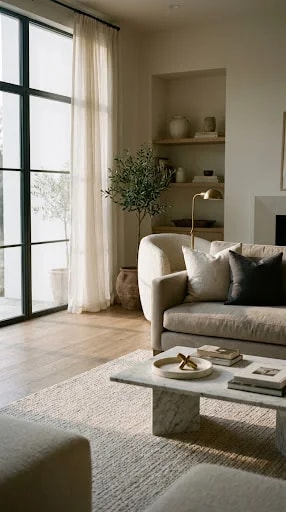
Look closely at a good built-in niche and you will notice it is not full. Ceramics, a few upright books, one or two objects with real weight sit against generous empty wall, and that emptiness is doing as much work as the objects. Transitional design borrows the classic idea of display and the modern preference for restraint, so the ratio matters: roughly a third of the shelf stays open. Vary the heights, keep the colors inside the room's palette of cream, stone, and soft black, and resist the urge to fill a gap just because there is one. A shelf that breathes makes the whole wall feel calmer.
Then there is the plant. An olive tree in a simple pot is the quiet hero of a neutral room, because it introduces the one hue that no amount of beige can fake. Its loose, silvery silhouette softens the hard geometry of black window frames and low stone tables, and it draws the eye upward in a way furniture rarely does. Keep the pot matte and unobtrusive, give the tree enough light, and let it grow slightly unevenly. Perfect symmetry in greenery is the fastest route back to looking staged.
On the coffee table, a tray is the smallest possible act of architecture. It gathers a couple of stacked books, a small bowl, maybe a candle, and gives the surface a center of gravity so the rest can stay bare. The rule is simple: one grouping, plenty of open stone around it. Change the books seasonally, not weekly. The goal is a composition that looks like it happened rather than one that gets rearranged for guests.
Polish and warmth are not opposites, but they need help from each other. Black frames and sheer cream curtains supply the discipline; ceramics, an olive tree, and a well-worn book supply the life. Test any transitional room by asking whether you could tell someone had been in it that morning. If the answer is yes, the design is finished.