Antique rooms are usually discussed in terms of what we put in them: the carved frame, the faded rug, the tarnished gilt mirror. But stand in a room like this one for an hour and you learn something else. The most powerful element in an antique interior is the one nobody buys. It arrives through the window, slides across the plaster, and redraws the whole composition three or four times a day. Everything else is a surface for it to land on.
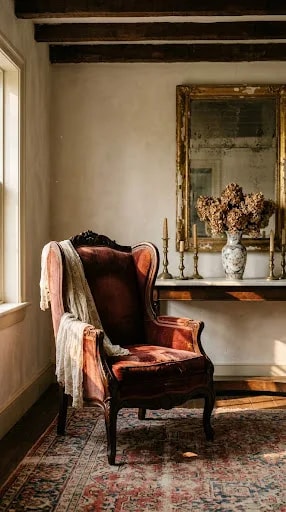
Look at the chair. Deep burgundy velvet, a carved wooden frame with enough age to have softened at the shoulders, a white lace textile thrown over one arm almost as an afterthought. In flat light it would read as heavy and slightly solemn. In raking afternoon sun it becomes something warmer: the nap of the velvet catches the light and glows at the seat, while the shadow side stays dark and dense. That contrast is not a happy accident. Antique furniture was made for rooms lit by candles and windows, which is why carved details and deep colors respond so generously to a single strong source of daylight. The carving exists to make shadow.
The vignette around the chair matters just as much, and its logic is worth borrowing. A dark console table sits against creamy plaster with a large tarnished mirror above it, and the mirror does double duty: it bounces light deeper into the room and reflects a vase of dried hydrangeas and a pair of tall candlesticks, so the arrangement reads twice. Nothing here is precious. The mirror's foxed silvering, the matte leaves, the slightly dusty gold — all of it is comfortable with imperfection. That is the real discipline of antique styling: choosing objects that can be lit harshly and still look better for it.
If you want to recreate this mood, start by subtracting. Dark ceiling beams and creamy walls give you the frame; a single patterned rug, worn thin in the traffic lanes, grounds the floor without competing. Then place your best piece where the sun actually falls at the hour you use the room, and let the rest of the furniture step back into shadow. Keep the palette tight — earth browns, oxblood, faded gold — and add one pale textile, like the lace here, to give the eye somewhere to rest.
Finally, resist the urge to fill the walls. Antique style goes wrong when every surface is crowded and every hour looks the same. Leave room for the light to travel, and let the afternoon do the decorating.