Most rooms ask you to buy something. An arched niche asks you to carve. Set into a wall of tactile plaster, the curve softens the geometry of a rectangular room before a single piece of furniture arrives, and it gives you a place to put things that feels intentional rather than accumulated. That is the quiet power of this detail: it turns storage into architecture, and architecture into the mood of the entire space.
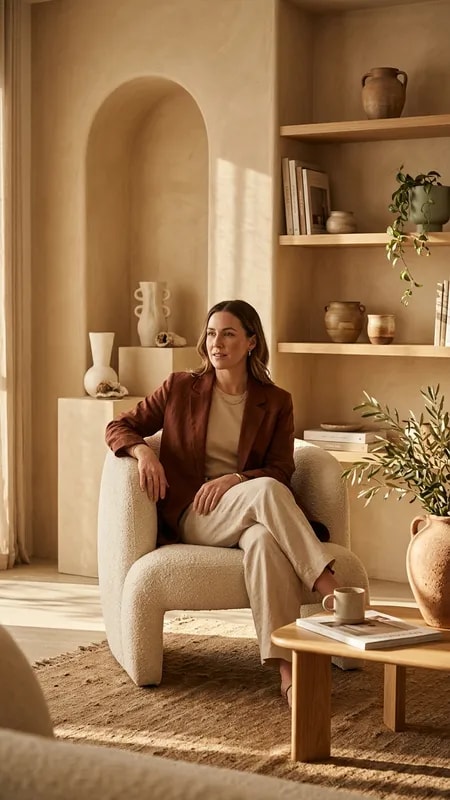
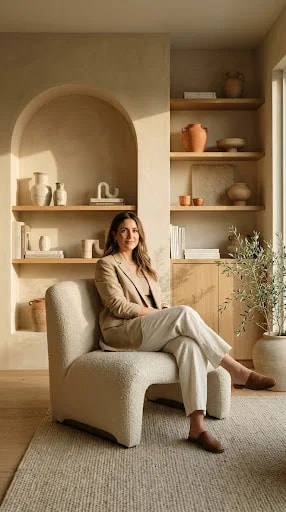
The styling rule that keeps a niche from reading as clutter is restraint with variation. Work in three heights and three materials, and stop there. In the image above, textured ceramics sit low and mid-shelf, a stack of books anchors one corner, and small terracotta pots add a burnt-orange note against all that sand and cream. Notice what is missing: no matching sets, no row of identical frames, no filling every inch. The gaps are doing as much work as the objects, letting the plaster show through and giving each piece its own small stage. Angle a book slightly. Let one bowl sit alone. Empty space inside a niche is not wasted space — it is the pause that makes the rest legible.
Color behaves differently inside a recess, because the sides of the arch catch light and throw it back. Keep the palette within one warm family — bone, oatmeal, clay, a muted olive — and let saturation come from a single accent, like the terracotta. The niche becomes a tonal vignette that reads as a cohesive whole from across the room, which is exactly what you want from a feature you see every day.
Then build the room around it. A curved cream bouclé chair placed slightly off-axis from the arch creates a conversation between two soft shapes, and the fabric's nubby texture answers the grain of the plaster. A wooden cabinet to one side brings in a harder, darker note so the corner does not float away on beige. A potted olive tree adds height and a living green that keeps the scheme from feeling sealed. Light matters most of all: let daylight rake in from one side so shadows graze the arch and reveal the wall's imperfections. Flat, even light will erase everything you just built.
What you end up with is a corner that feels calm without feeling empty — a place to sit, a place to look, and a reminder that the most memorable rooms are shaped, not filled.