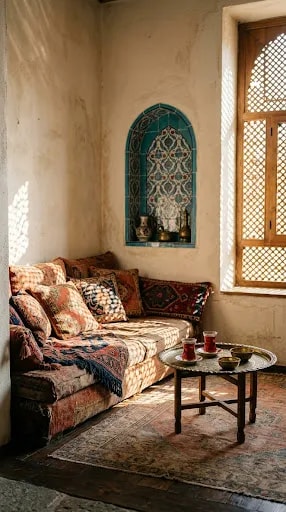
Some rooms announce themselves; this one whispers. A low sofa wraps the corner, heaped with kilim-covered cushions in rust, madder red, and cream. Beside it stands a small wooden table with a hammered metal tray top, three tulip-shaped tea glasses catching the light. Behind everything, an arched niche is set with turquoise Iznik tiles, its shelves crowded with ceramic jugs and a single brass ever. The whole composition works because nothing competes: the tiles are the jewel, the textiles are the warmth, and the plaster walls hold it all together.
The niche is the real lesson here. In traditional Turkish homes, a recessed arch in the wall serves as both storage and stage, a place where everyday pottery becomes decoration. You can recreate the effect without a full renovation by building a shallow arched shelf unit or recessing a section of drywall between studs. Line the back with patterned tile, or with a painted arch in a deep teal if tile is out of reach, then keep the shelves sparse. Three or four pieces, varied in height and material, read as a collection. A dozen read as clutter. The arch itself matters more than what fills it, since the curve softens a room full of rectangles in a way no piece of furniture can.
Color needs a steady hand. The palette in this corner comes from the earth, terracotta and rust and warm cream, with the tile providing the one cool, saturated interruption. If you are working with a neutral room, treat the arched niche as your single point of color and let the upholstery stay quiet. Layering helps too: a flatweave kilim thrown over the back of the sofa, a patterned rug over a plain one, a floor of dark wood grounding everything above it. Texture does the work that pattern alone cannot, especially in the late afternoon when the light grazes the fabric rather than flooding it.
Then there is the window. A wooden screen with a geometric lattice splits the sunlight into a lace of small shadows that slide across plaster as the day moves, and that moving light is half the atmosphere of the room. If you have a plain window, a carved wood or perforated metal panel fitted inside the frame gives you the same effect for modest cost. Position the seating so the pattern falls on a wall rather than on the floor, and keep nearby surfaces matte so the shapes stay soft.
What ties the corner together, finally, is the tea. The tray is set, the glasses are small, and the seat is low enough that sitting down feels like staying a while. Build the niche, layer the textiles, soften the light, and the hospitality takes care of itself.