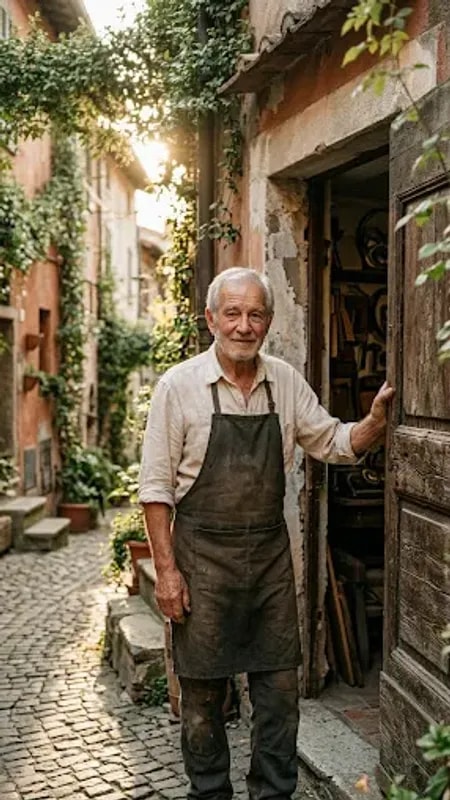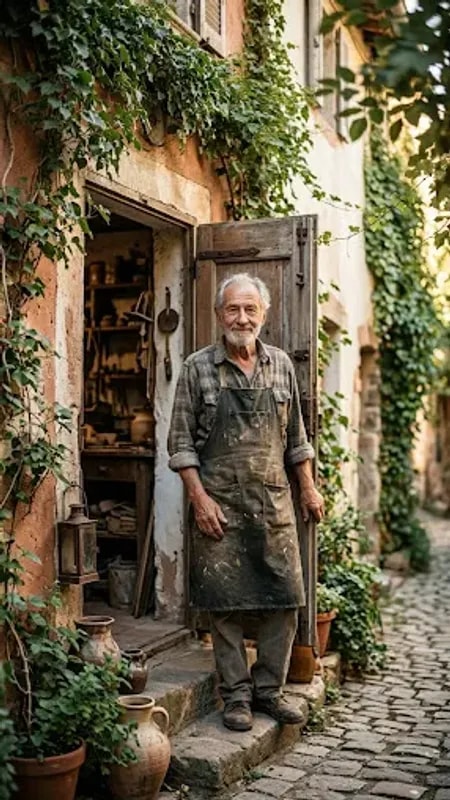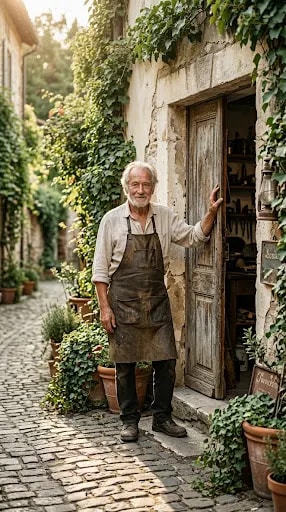
There is a profound distinction between a mere entrance and a true threshold. The former is just a geometric opening in a wall, a functional passage. The latter is a layered narrative space, a buffer between the private life within and the communal life without. This image captures not just a charming facade, but the very soul of a small village home embodied in its keeper. The worn stone, the climbing ivy, and the terracotta pots are not just decor; they are the accumulated patina of daily life, of hands tending and stories shared. The doorway itself becomes a stage, and the man standing within it is both player and guardian.
This visual composition is a masterclass in framing meaning. The vertical crop and the shallow depth of field force our gaze down the cobblestone path, through the soft blur of the background, and directly to the central figure. He is not posed or performing for the camera; he is simply present, a natural fixture of this place. His worn apron speaks of practical work, while his gentle expression offers an open invitation. The warm, golden light doesn’t just illuminate the scene—it sanctifies it, turning the ordinary stone and foliage into something timeless and sacred.
The true magic of this village aesthetic lies in its human scale and its invitation to connection. Unlike the anonymous facades of modern living, this home declares itself through texture and life. The chalkboard sign hints at daily communication, the vintage lantern promises a warm glow after dusk, and the lush plants suggest a care that extends beyond one's own walls. This is architecture that engages with the street, that participates in the rhythm of the village. It blurs the line between inside and outside, suggesting that the home is not a fortress but a permeable part of a larger community.
Ultimately, this image speaks to a universal longing for rootedness and authenticity. The small village style home represents more than an architectural preference; it is a philosophy of living. It prioritizes craft over mass production, character over uniformity, and human connection over isolation. The man in the doorway is the personification of that philosophy. He is the steward of this particular patch of history and harmony. In his quiet stance, we see the promise of a life measured not by square footage but by the depth of its connections and the quiet beauty of its daily rituals.
To design with this spirit is to think beyond materials and floor plans. It is to consider how a home meets the world, who guards its threshold, and what stories its walls are ready to tell. It is an acknowledgment that the most compelling design element of any dwelling is, and always will be, the life that inhabits it.