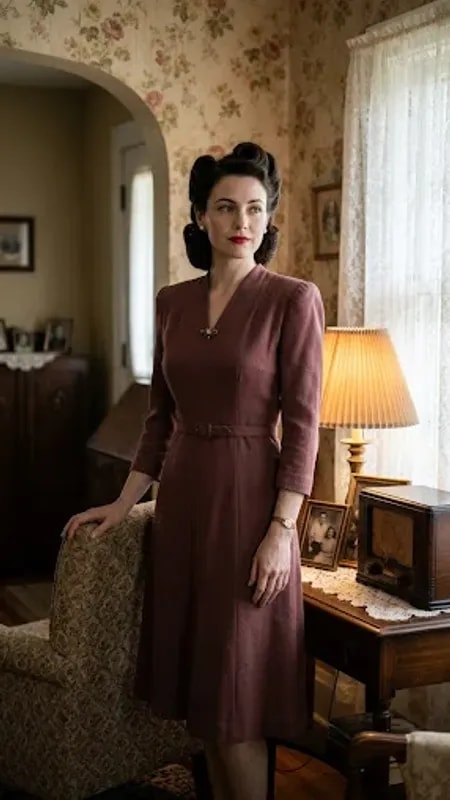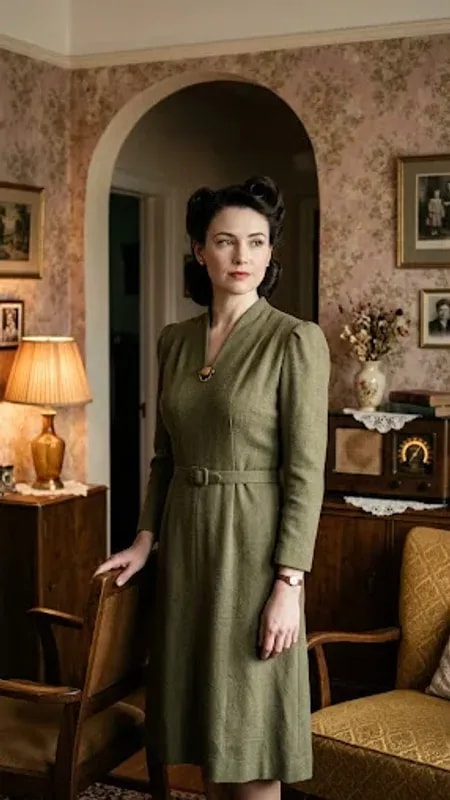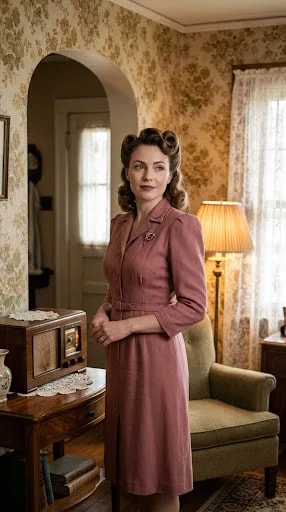
This photograph is more than a portrait; it is a portal into the measured grace of a 1940s afternoon. The woman is the focal point, her dusty rose dress and victory rolls speaking to a time when dressing for the day at home was an act of quiet pride. She stands not as a model posing for a modern shoot, but as a figure perfectly integrated into her surroundings. The living room embraces her, framing her within an archway of floral wallpaper that feels both structured and soft.
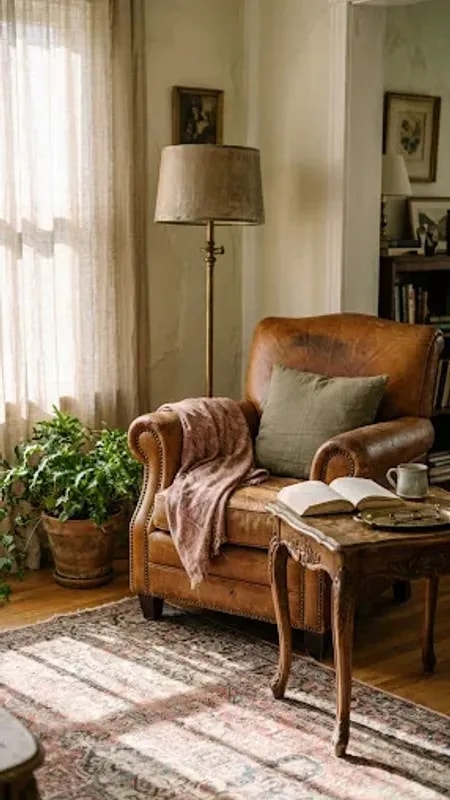
The details surrounding her are not mere props but essential characters in this domestic scene. The vintage wooden radio, with its warm-toned wood, suggests a world connected by sound rather than screens, a centerpiece for family gathering. The pleated-shade floor lamp and the muted green armchair invite relaxation and reading. Together with the patterned rug and sheer curtains diffusing the light, they create a composition that is intentionally curated yet feels effortlessly lived-in.
The lighting is the unsung hero of this image, casting a warm, diffused glow that erases harsh lines and bathes every surface in a gentle ochre hue. This quality of light, streaming from a window and an unseen doorway, contributes profoundly to the emotional tone. It evokes a specific, slower pace of time—a golden hour that seems to stretch on indefinitely, perfect for listening to a radio broadcast or losing oneself in a book.
Ultimately, the image’s power lies in its synthesis of person and place. The 1940s aesthetic here is not a costume drama but a holistic environment. The shallow depth of field, mimicking classic film photography, draws us into this intimate bubble, making the past feel immediately present and tactile. It’s a masterclass in how authentic period design isn’t about replicating a catalog, but about curating an atmosphere where every element, from the brooch on a dress to the fabric of a lampshade, contributes to a feeling of cohesive, cozy nostalgia.
This vignette reminds us that home design at its best is deeply personal and sensory. It shows a style where elegance was woven into the everyday, and comfort was found in the careful arrangement of familiar, well-loved objects. It’s a quiet argument for a home that doesn’t just house you, but gently holds you.