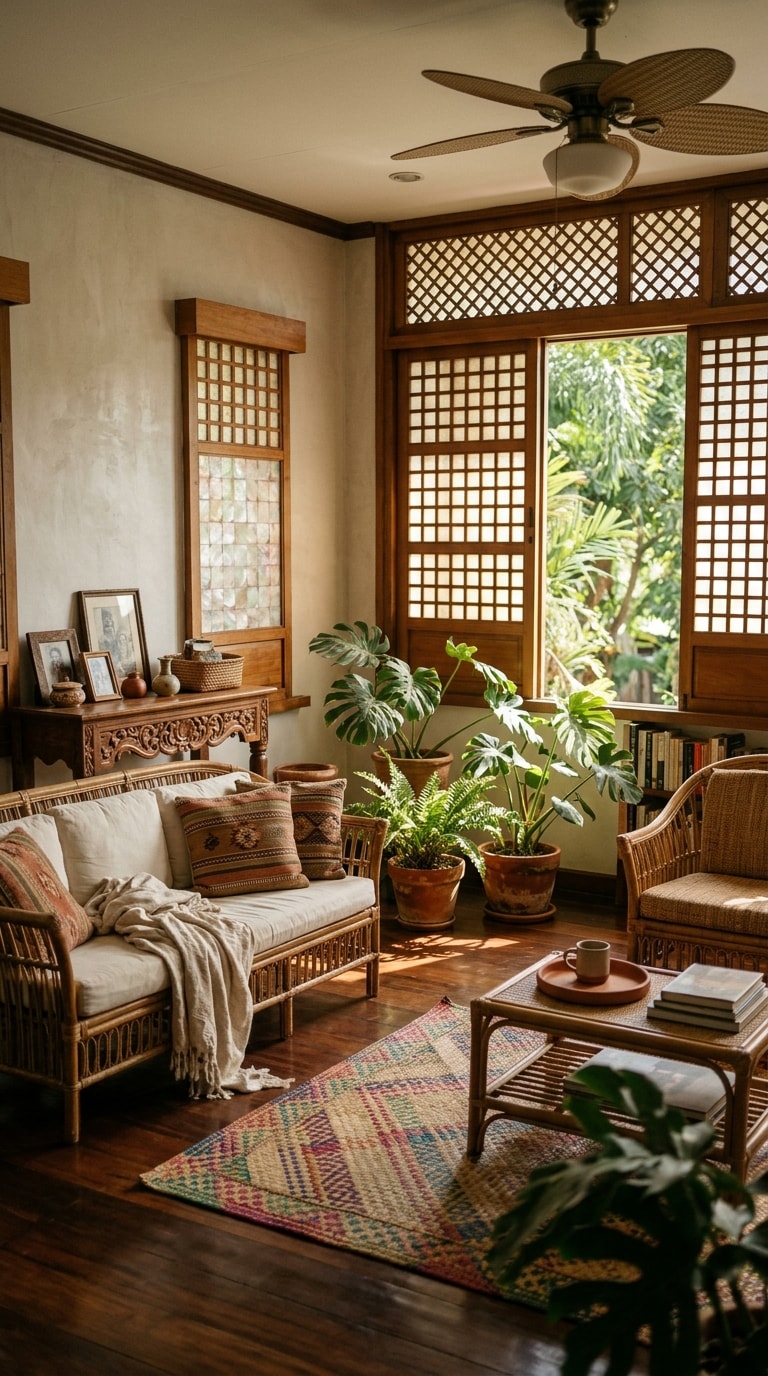
There is a particular kind of quiet in a Filipino home that has nothing to do with minimalism and everything to do with softness. The room in view is built around a single low rattan daybed, wide enough to curl into sideways, its frame left in the pale blonde of unfinished cane. Cushions in oat, clay, and faded brown pile up against the curve of the backrest rather than sitting in neat rows. Underneath, a woven floor mat runs out past the legs of the piece, and a low wooden table holds one ceramic vase of dried pampas grass. Nothing here is displayed for a photograph; everything is placed for a body to sink into after a long, humid afternoon.
That instinct toward the floor is deeply rooted. Traditional Filipino seating has long favored the low and the generous, from the bangkô bench to the wooden salakab stools pulled out for visitors. Lower furniture keeps a room feeling open above eye level, which matters in a tropical climate where air movement does more work than any appliance. Rattan, solihiya cane webbing, and abaca all share the same logic: they breathe. A woven back lets heat escape where an upholstered one would trap it, so the room stays cool without looking stripped down or clinical.
Texture, not shine, does the decorative work. Pale cane meets the matte grain of narra or acacia on the side table, and a rough banig mat underfoot contrasts with the smooth ceramic of the vase. The palette stays inside a narrow band of creams, beiges, and warm browns, which is why the dried grasses read as a deliberate accent rather than clutter. Light arrives filtered and diffuse, the kind that comes through jalousie slats or a capiz shell window, laying soft stripes across the cushions in the late afternoon. Glossy finishes and hard metal would break that spell entirely.
The lesson for anyone borrowing this style is restraint in quantity and generosity in comfort. Choose one woven anchor piece, a daybed or a wide lounge chair, and let it hold the corner. Pair it with a table low enough that a cup of coffee sits within reach of a reclining arm. Layer two or three textiles with different weaves instead of one bold pattern, and keep the walls quiet so the grain of the furniture can be read. Skip the themed props. The beauty of Filipino style home interior design is that it never announces itself as a style; it simply feels like the place you want to be when the day is finally over.