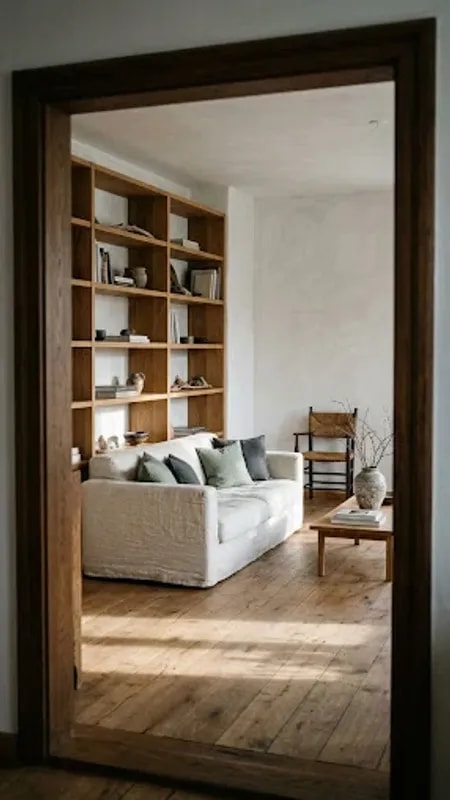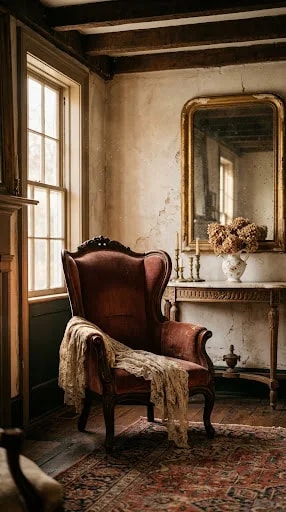
Antique style home design is often mistaken for a shopping list: a claw-foot table here, a gilt mirror there, and enough chintz to make a room look like a museum wing. The rooms that actually work are quieter than that. They rely on patina, the thin film of age that no finish can fake, and on a handful of pieces with real presence. A single wingback chair in deep rust velvet can carry an entire corner if the walls behind it are allowed to stay plain.
Start with the shell. Distressed plaster, exposed beams, and worn wood floors give antique style its characteristic softness, because they absorb light rather than bouncing it back. If your walls are builder-grade smooth, limewash or a matte chalk finish will approximate that chalky depth for far less than replastering. Keep the palette earthy and slightly faded: terracotta, cream, antique gold, dark brown, muted green. These are colors that look better as they age, which is the whole point.
Furniture should be chosen for silhouette first and provenance second. Carved wood frames, cabriole legs, turned spindles, and rolled arms read as antique even when they are contemporary reproductions. One strong piece per sightline is enough. Let a carved console hold a white vase of dried hydrangeas and a pair of slender candlesticks, and leave the wall above it mostly bare except for a single mirror. Reflections do double duty in these rooms, borrowing light from a tall window and making a modest space feel deeper.
Textiles finish the story. A cream lace throw draped over the back of a chair, a worn Persian rug with its pattern softened by decades of footsteps, linen that wrinkles instead of creasing sharply. Avoid anything that looks factory-perfect. The goal is a room that appears to have been assembled slowly, over years, by someone with a good eye and no interest in matching.
Finally, resist the urge to complete the set. Antique style thrives on a little asymmetry and one or two deliberate gaps: an empty hook, a bare stretch of plaster, a chair pulled slightly out of line. That imperfection is what makes a room feel inhabited rather than staged. Buy fewer things, choose them for texture and shape, and let time do the rest of the decorating.