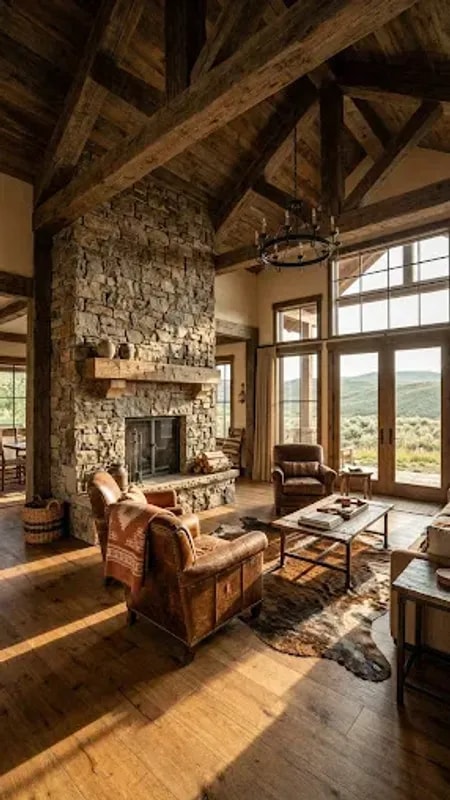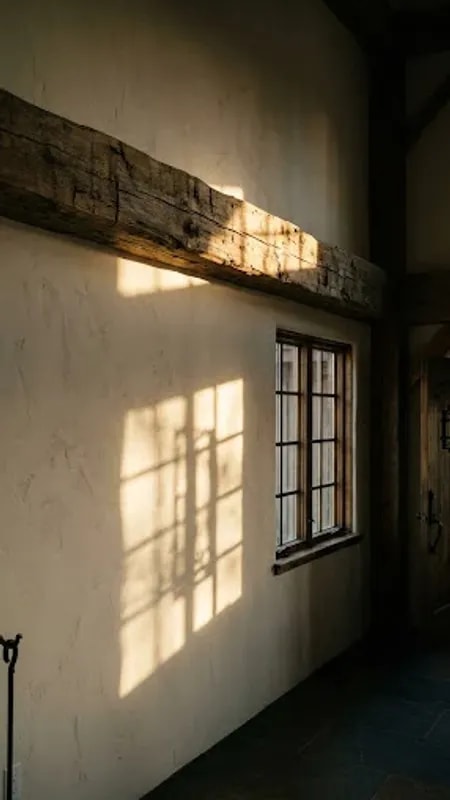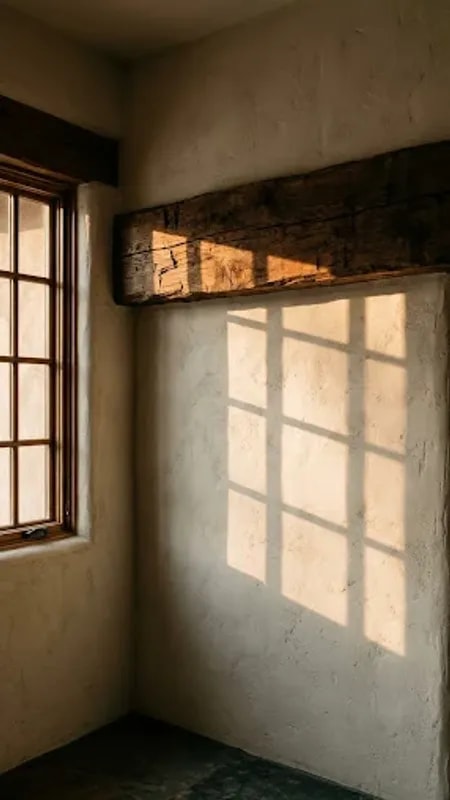
A loft only feels like a home when the hard shell has something soft to push against. In this New York apartment, the architecture does the talking first: an exposed red-brick wall rising past tall black-framed windows, herringbone wood floors running dark and glossy underfoot, daylight cutting long shadows across the room. Then the lived-in details step in — a charcoal sofa, a cream sweater, a brass floor lamp, a mug resting on a low table. The room works because neither side wins.
The bones are non-negotiable, so treat them as the fixed cast. Brick wants to be seen, not skimmed over with drywall or buried behind a crowded gallery wall. Black steel windows should stay black; painting them white softens the industrial edge into something generic. Herringbone floors deserve a warm mid-to-dark stain and a rug that doesn't swallow every square inch — leave a border of wood visible so the pattern can breathe. If your space is short on original detail, fake it with restraint: one brick-clad wall, one oversized factory-style window, one properly heavy door.
Warmth is where most loft interiors fail. The fix is layered and inexpensive: oatmeal and cream textiles against charcoal upholstery, brass or aged metal for reflection, a patterned rug with a little faded color, and books stacked within reach of the sofa rather than styled into oblivion. Add something alive — a fiddle-leaf fig with real scale, not a tiny tabletop plant. A low coffee table keeps sightlines open and makes the seating feel conversational instead of showroom-perfect.
Light and layout do the rest. Tall windows pull the eye upward, so keep furniture low and let the vertical lines stay uninterrupted. Float the sofa away from the wall if the room allows it; the gap reads as confidence and gives the rug a purpose. Leave the path between window and seating clear so afternoon sun can land on the brick and floor. One floor lamp near the sofa arm is enough for evening; overhead lighting should be dimmable and rarely at full strength.
Finally, edit. A New York loft is not a theme park of industrial clichés — no fake rivets, no salvaged signage, no exposed ductwork unless it is genuinely part of the building. Choose a few pieces with patina, keep the palette to brick red, charcoal, cream, brass, and plant green, and let the apartment look like someone actually lives there. That is the difference between a loft and a stage set.