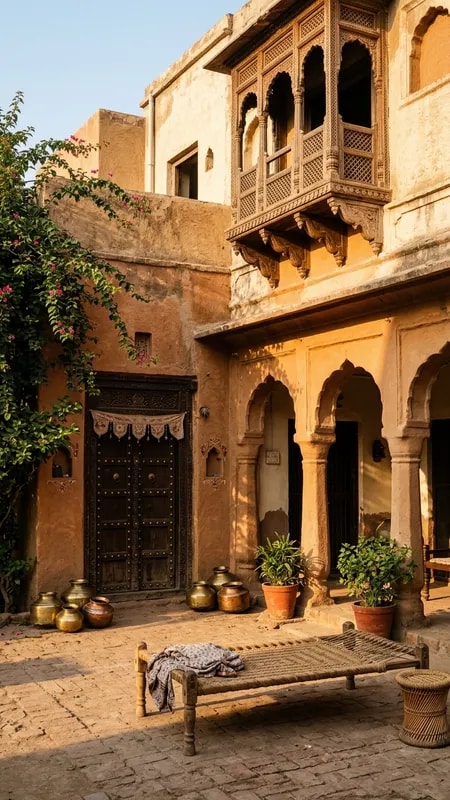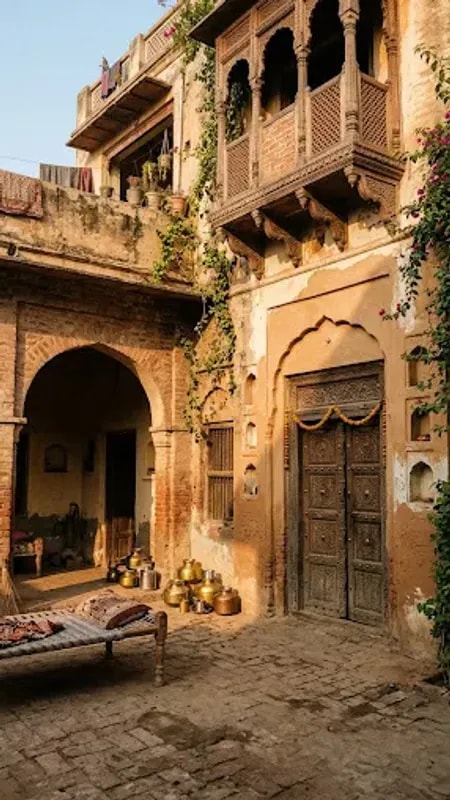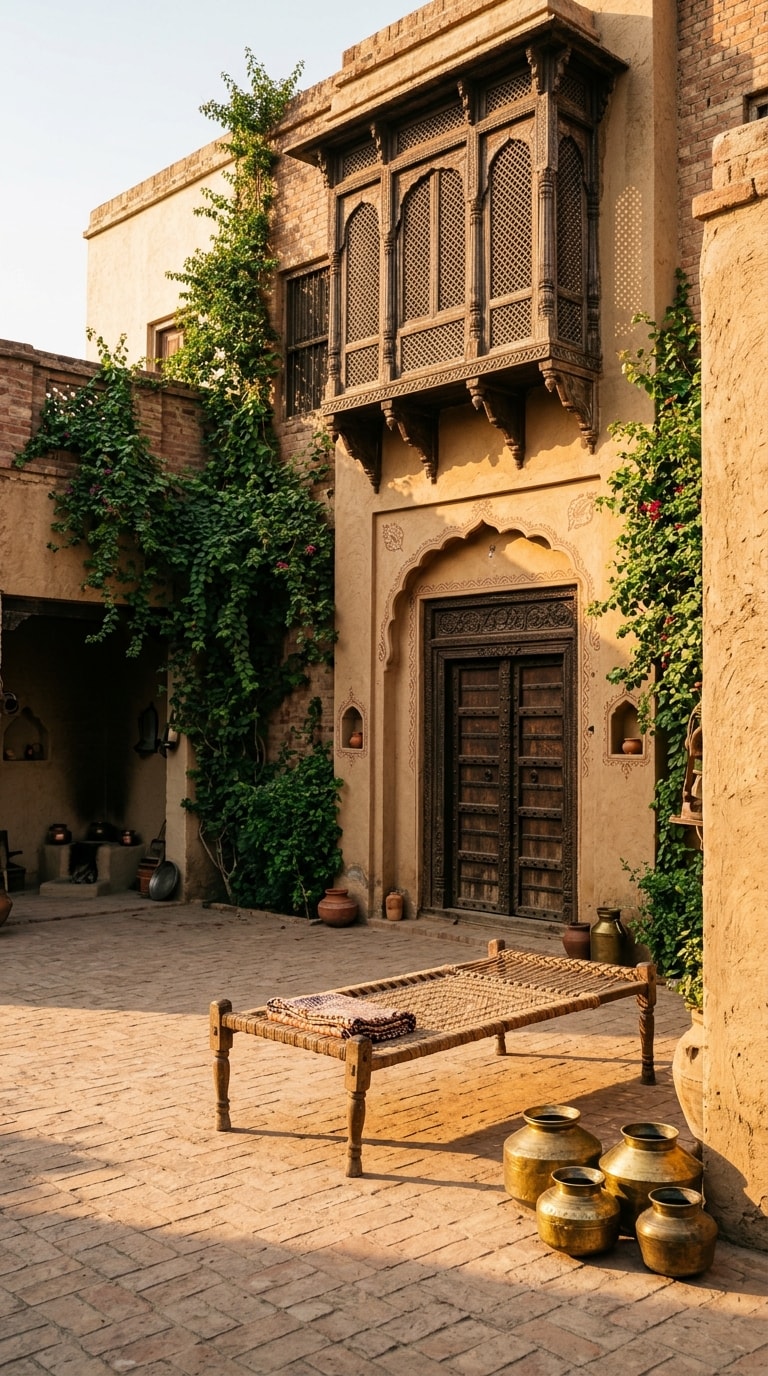
There is a particular stillness that settles over a Punjabi courtyard at golden hour. The sandstone facade glows ochre, an intricately carved wooden door stands half in shadow, and above it an ornate balcony reaches out like an open hand. A woven charpai rests on brick paving, a folded blanket at its edge, while brass pots catch the last light and vines spill down textured walls. This is not a museum piece but a living blueprint for a single home design in the Punjabi style, where one generous outdoor room holds the whole household together.
The architecture begins with a single gesture: the courtyard. In a Punjabi-style home, this open-to-sky center is the lungs of the plan, pulling cool air through the rooms in summer and holding warmth in winter. For a single home, you do not need a sprawling haveli to borrow the idea. One wall of sandstone or lime-washed brick, one deeply recessed door, and one overhanging balcony above it are enough to set the rhythm. The door should feel like a threshold, thick and hand-carved, with brass fittings that age gracefully. The balcony, even a shallow one, casts the long shadows that give the courtyard its drama and gives the facade its vertical lift. Terracotta bricks underfoot, laid in a simple running bond, keep the floor breathable and warm under bare feet.
Furnishings stay low and honest. The charpai is the quiet hero of the scene, a woven cot that works as a daybed, a dining seat, or a place for an afternoon nap. Its rope weave and wooden frame soften the stone around it. Pair it with a folded cotton blanket in a muted block print, a couple of low stools, and a cluster of brass pots that can hold water, flowers, or nothing at all. These objects are not decoration for their own sake; they are the tools of a slow daily routine, polished by use and sunlight. A single home benefits from this restraint. Fewer pieces, chosen well, let the architecture speak.
Planting softens every hard edge. Let a creeper climb the wall beside the door and allow it to wander where it likes. Set pots of tulsi or bougainvillea along the courtyard edge, and keep the palette earthy: ochre, terracotta, deep green, and the pale gold of aged wood. The golden-hour light does the rest, stretching shadows across the brick floor and turning the carved door into a study of light and shade. This is the kind of design that rewards patience, because the vines and the brass only get better with time.
A single home does not need many rooms to feel complete. It needs one place where the day can slow down, where a charpai in the shade is enough of an invitation. The Punjabi courtyard offers exactly that: a grounded, generous heart at the center of everything, holding the household in its quiet orbit.