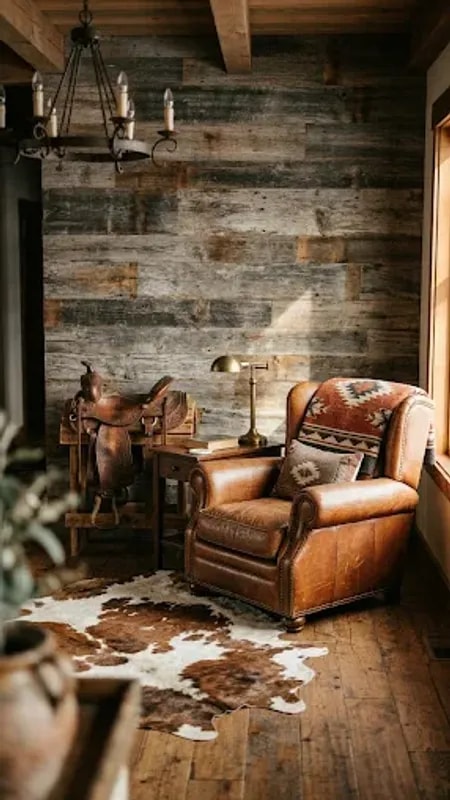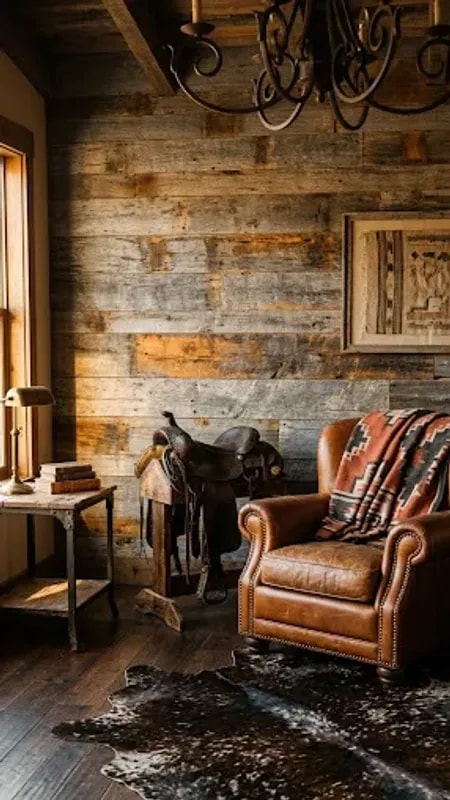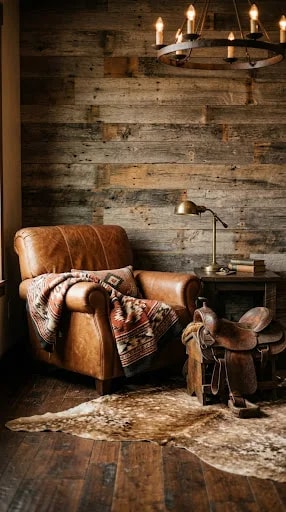
Western style works best when it looks accumulated rather than decorated, and a reading nook is the ideal place to prove it. Start with the chair. A generously sized leather armchair in a deep tobacco brown, scuffed at the arms and softened at the seat, carries more character than a matched set of anything. Choose one with a low, wide stance so it invites you to sink sideways with a book rather than perch upright. Everything else in the corner should defer to it.
Texture does the heavy lifting in a room this small. A reclaimed wood plank wall gives the corner a backdrop with grain, knots, and nail holes that read as history instead of distress-by-numbers. Underfoot, an animal hide rug over dark hardwood adds a soft, irregular shape that breaks up the floor line and keeps the palette earthy. Drape a Southwestern-patterned blanket over one arm of the chair and tuck a small pillow into the corner of the seat; the muted reds in the weave are the only real color you need, and they will warm up an otherwise sepia room.
The piece that makes the corner unforgettable is the vintage saddle, resting on a simple wooden stand to the right of the chair. Treated as sculpture rather than equipment, it gives the nook a working-ranch authenticity that no reproduction sign can match. The rule is one artifact per corner. Let the saddle be the story, and resist adding spurs, lassos, or horseshoes to the same few square feet. A small dark side table holding a brass desk lamp and a stack of well-worn books finishes the arrangement without competing for attention.
Lighting decides whether the space feels nostalgic or gloomy. A wrought-iron ring chandelier overhead casts a wide, low pool of light that flatters leather and rough timber; keep the bulbs warm, around 2700K, and put everything on a dimmer. The brass lamp belongs at elbow height for reading, while the chandelier handles mood. Warm, low-key light rakes across the plank wall and exaggerates every texture, which is exactly the point.
Finally, edit. Limit yourself to three dominant materials — leather, wood, and wool — and let the browns, tans, and deep sepia do the rest. Western decor fails when it becomes a costume; it succeeds when a corner looks like it has been sat in for twenty years. Build the chair, layer the textures, place one good artifact, then stop.