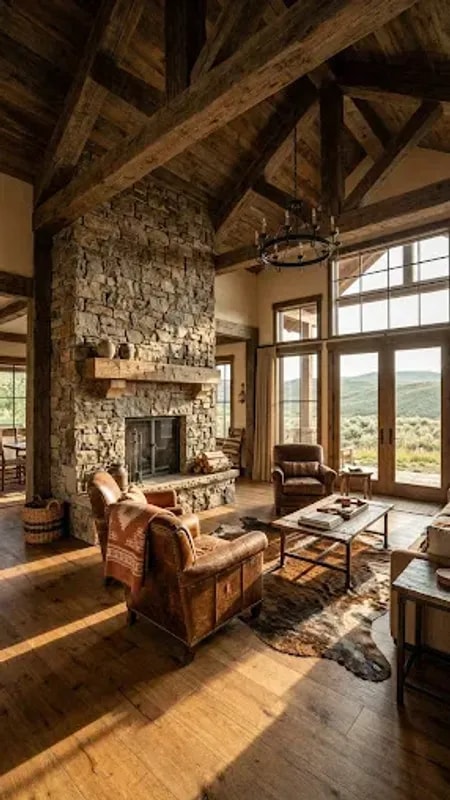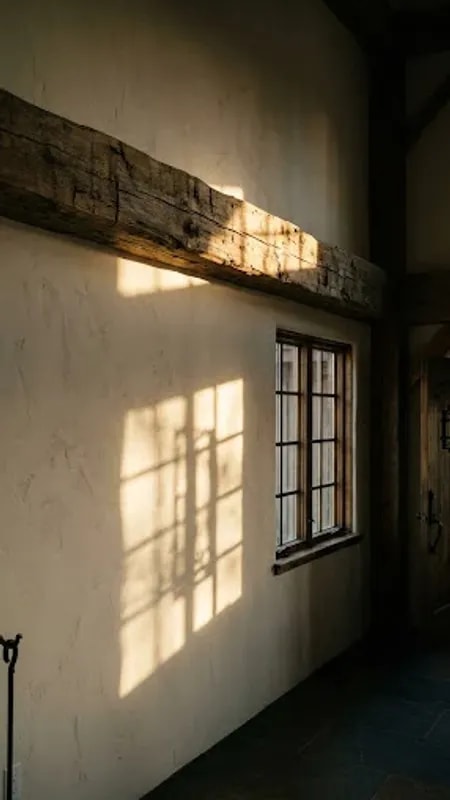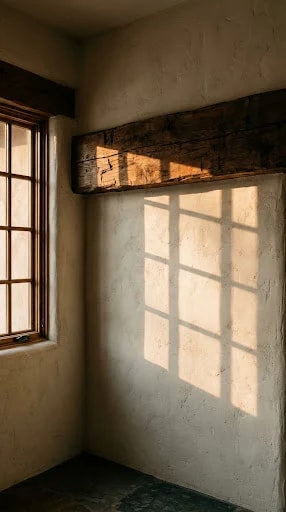
The corner does not announce itself. It simply catches the afternoon sun, and for a few hours the wall becomes a drawing. A multi-paned window throws a crisp geometric grid across textured off-white plaster, while a thick rough-hewn beam holds the top of the frame like a dark horizontal rule. Nothing here is styled in the usual sense. The composition is light, shadow, and a few honest materials, and that is exactly what makes it feel like a rustic ranch interior at its best.
The plaster is the quiet hero. It is not flat drywall pretending to be old; it has a subtle, hand-worked surface that catches raking light and softens the edges of the shadow grid. In ranch-style homes, this kind of off-white limewash or troweled plaster is often the most forgiving backdrop for timber, leather, and worn wood floors. Its imperfections absorb the sun rather than reflecting it, so the corner feels warm instead of glaring. The window shadow only reads because the wall has enough tooth to hold it.
The beam above does the structural work and the emotional work. Rough-sawn, dark brown, and visibly heavy, it spans the plaster without apology. That single horizontal line keeps the vertical window shadow from feeling too graphic, and its grain catches the low sun in a way that painted or faux-aged beams never will. In a ranch interior, exposed timber should look earned: a real beam, or at least one with honest texture, placed where the architecture already wants weight.
Notice, too, what is missing. There is no gallery wall, no busy textile, no styled shelf crowding the light. The palette is creamy white, deep brown, and amber, and the restraint lets the shadow act as ornament. This is a useful lesson for anyone working in a rustic ranch style: before adding another object, watch how the sun moves across the wall. The best decoration in this corner is temporary, free, and different every hour.
To translate the look, start with a plaster or limewash finish that has subtle variation, then keep the window trim simple so the grid stays crisp. Choose a rough-hewn or reclaimed beam with visible saw marks, and let it run uninterrupted. Plan seating and art around the sun path rather than against it. The result is not a museum room but a slow, sunlit corner that makes a historic ranch house feel calm, grounded, and quietly generous.