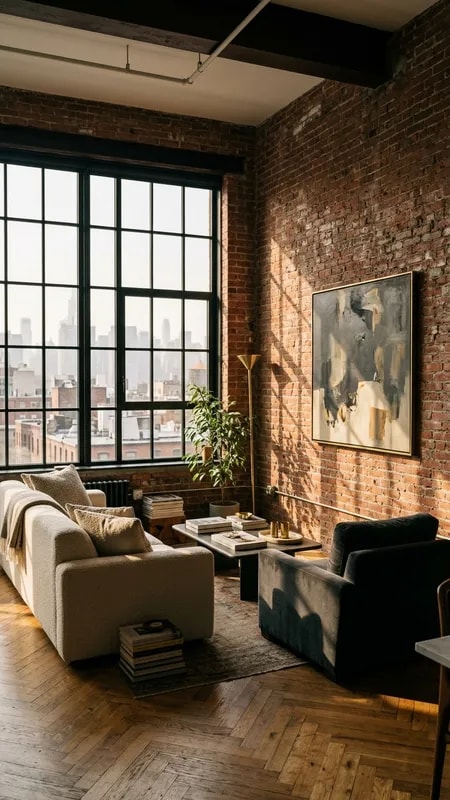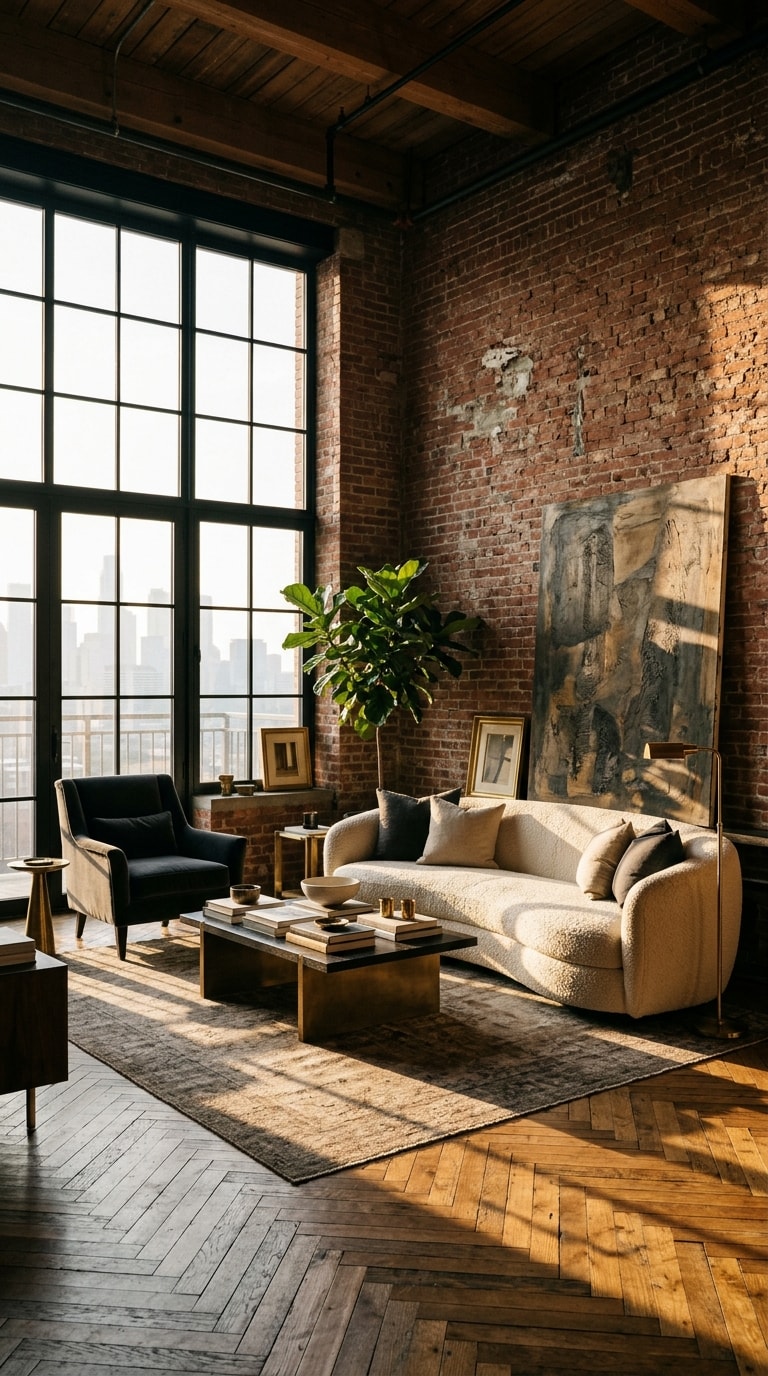
Late afternoon does most of the decorating in a New York loft. Light pours through tall black grid windows, stretches across a herringbone parquet floor, and lands in long dappled shapes on a cream rug. The brick wall behind the sofa glows terracotta, the wood beams overhead turn honey, and suddenly all that hard material feels forgiving. That is the trick of New York style home design: the industrial shell is never the point on its own. It is the frame that makes softness legible.
Start with the bones and resist the urge to smooth them over. Exposed brick, timber beams, and oversized black-framed windows are expensive to fake and easy to ruin with the wrong paint or a dropped ceiling. Repair them, clean them, and let them read as they are. Herringbone parquet earns its keep here too, because the pattern adds a fine grain of texture underfoot that keeps a large open room from feeling like a warehouse. When the architecture is this loud, your job is restraint rather than competition.
Then soften deliberately. A curved cream sofa floating in the middle of the room breaks the grid of window and beam, and a single black leather armchair gives the pale upholstery something to push against. Low tables work better than tall ones in a space with this much vertical drama, especially a brass-edged piece that catches the afternoon light and holds a stack of books without asking for attention. One curve for every hard corner is a useful rule, and textiles do the rest: a wool rug, linen pillows, a throw you actually use.
Light and greenery finish the picture. Track the sun before you place anything, because a west-facing wall of glass will decide where you sit long before a floor plan does. A leafy potted tree near the window filters glare and adds the muted green that keeps terracotta and honey wood from turning syrupy. Art leaning against the brick instead of hung on it reads as collected rather than installed, and a large abstract canvas can hold a wall that would otherwise swallow a smaller frame whole. Leave some floor empty. Negative space is what separates calm from clutter.
The palette is worth memorizing: terracotta, honey wood, cream, black, and one muted green. Keep cream and wood as the majority, black as the punctuation, and brick as the accent you never have to paint. Buy fewer, larger pieces and let them breathe. The goal is not a showroom version of downtown. It is a room where the light does the work, the brick stays honest, and a Sunday afternoon has somewhere good to land.