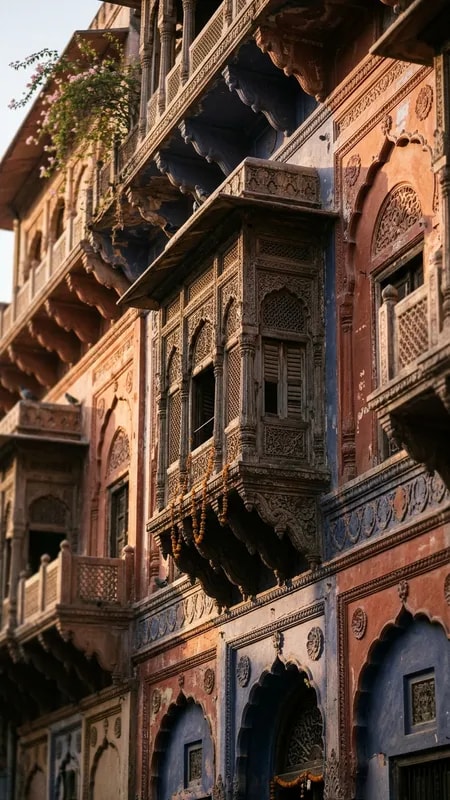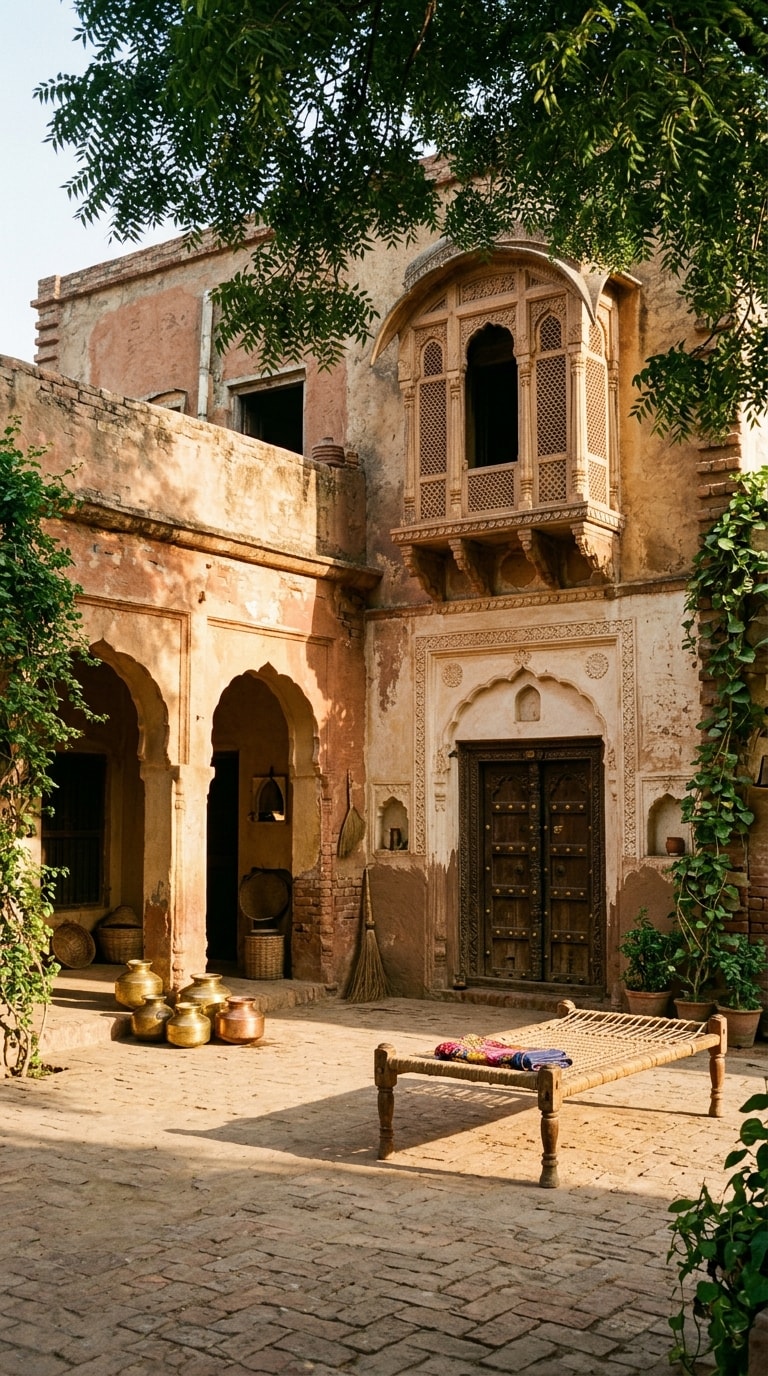
Late sun arrives in a Punjabi courtyard and does half the decorating for you. It rakes across ochre and terracotta walls, deepens every hairline crack in the lime plaster, and pulls long shadows from the arched verandah onto brick paving. Nothing here is new, and that is precisely the point. A charpai rests against the wall with a single bright cushion thrown across it, brass pots cluster beside a step, potted plants lean into the light. The most important room in this single home is outdoors, and everything in it has been there long enough to belong.
What makes the haveli worth studying is not its silhouette but its surfaces. Lime plaster breathes and stains and softens at the edges; brick paving darkens where water has run for decades; wooden doors deepen from honey to near-black wherever hands have pushed them open. New builds that chase this look usually fail because they copy shapes instead of materials. If you want the mood, spend the budget on plaster rather than paint, on real terracotta rather than printed tile, on solid wood that will mark and mellow. Then wait. Patina is the one finish no supplier can deliver.
Look up and the facade teaches a second lesson about depth. The jharokha balcony projects out over the courtyard, its lattice screens slicing sunlight into a slow grid that slides across the floor through the afternoon. Arched openings sit recessed behind a verandah, so the walls read as thick and the shade reads as cool. Even in a single home without a full courtyard, that principle travels: give windows a deep reveal, set a seat back into the wall, let screens filter rather than block. Shadow is a building material.
The styling is almost accidental, which is why it works. One charpai, not three. A few brass pots of different sizes and provenances, dulled by handling. Plants left to spill rather than pruned into shapes. There is one saturated accent — that cushion — against a palette of dusty pink, burnt sienna and muted green. Most modern interiors over-furnish because they are afraid of emptiness; this courtyard is confident in it. Copy the restraint before you copy the objects.
The dignity of an old family home lives in repair, not renovation. A patch of plaster left slightly different in tone, a door repainted only where the sun ate through, a threshold worn into a shallow curve by generations of feet. That is the real Punjabi-style lesson for a single home: keep the materials honest, let the light do the work, and allow time to finish the room.