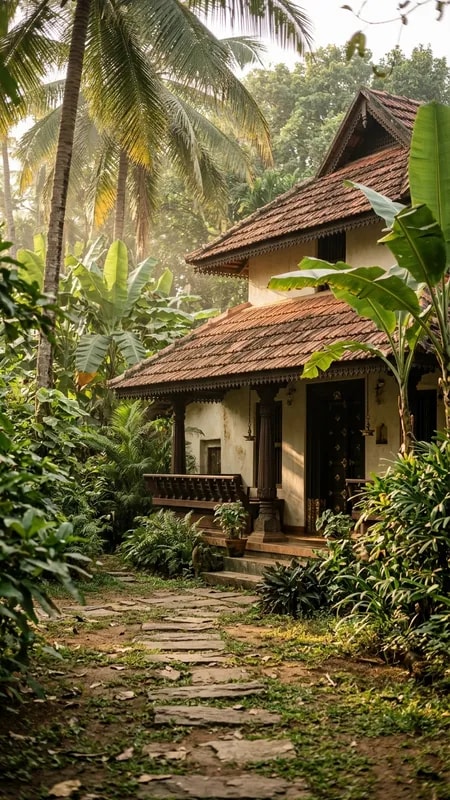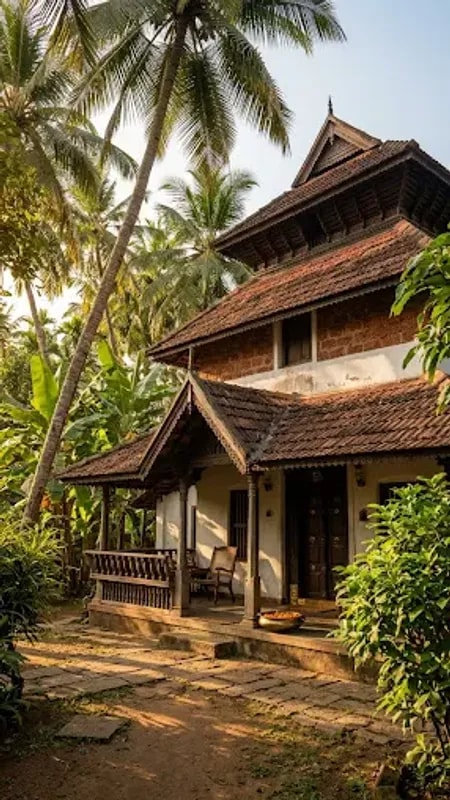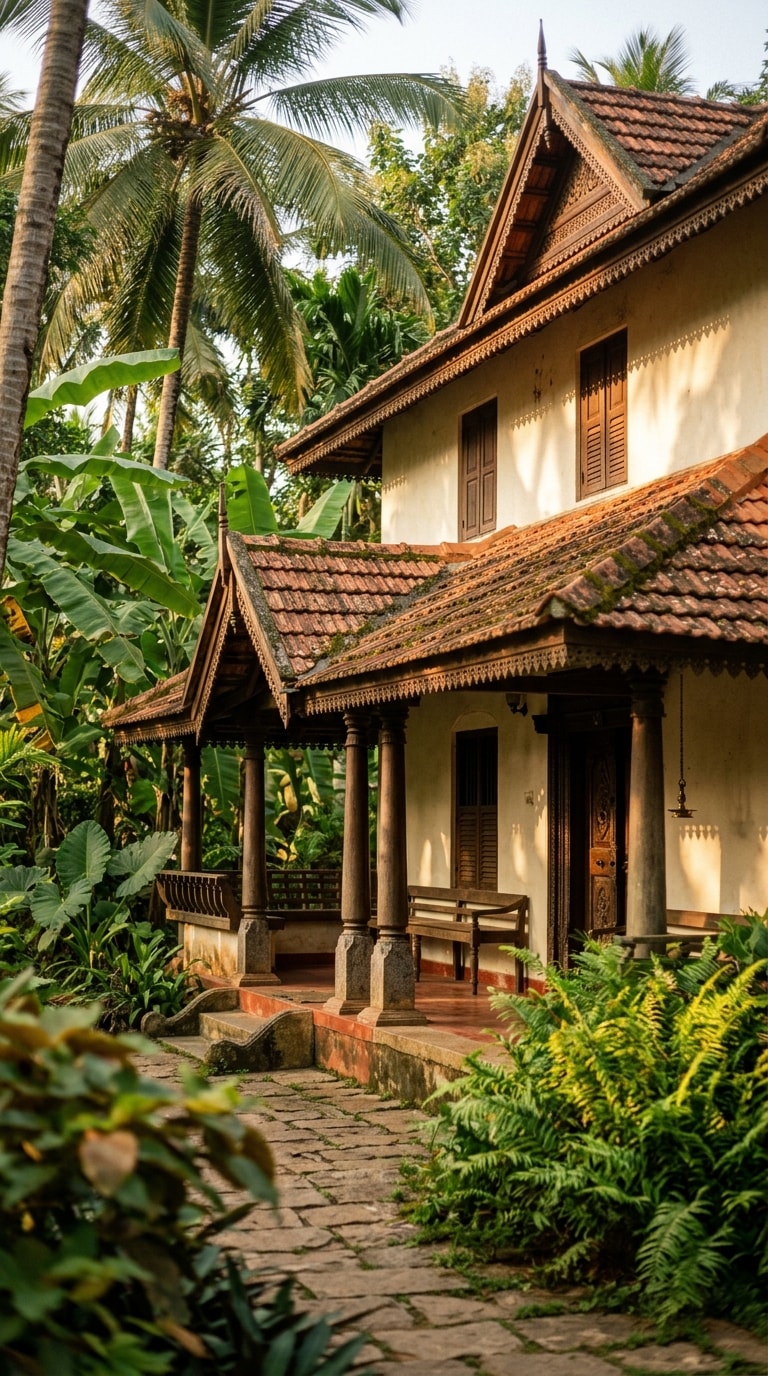
There is a particular hour in the late afternoon when a Kerala-style house looks exactly as it should. The sun drops low, grazing cream lime-plastered walls with a warm gold, and the deep eaves throw long soft shadows across the veranda. Ferns and banana leaves crowd the foreground, half-hiding the stone path that leads in, and the whole scene settles into a quiet that city houses rarely manage. This is not decoration for its own sake. Every element of that facade is answering a question the climate asked first.
Start with the roof, because it is the loudest gesture and the most practical one. Broad, steeply pitched planes of terracotta tile shed the monsoon fast and throw off heat that would otherwise bake the rooms below. The pitch is generous — often close to forty-five degrees — and the deep overhang creates a permanent band of shade that keeps water away from the walls. Where the roof edges meet, carved wooden gables and bargeboards finish the line, some plain, some with floral or geometric relief. Those carved details are the signature of the style, but they earn their place as shading and ventilation points, not just ornament.
Beneath that roof sits the veranda, a raised platform held up by sturdy timber pillars, usually with a low bench or two set against the wall. It works as a threshold between the garden and the interior, a place to sit through a rain shower or take tea while the light goes orange. Louvered windows open off it, angled slats that let air move through while cutting glare and keeping out the worst of the afternoon sun. Notice how the entrance is always slightly in shadow; that darkness is deliberate, a cool pocket in an otherwise bright landscape.
The palette does most of the emotional work. Terracotta brown, dark oiled timber, cream walls, and a great deal of green. Nothing is glossy. Wood is left to weather and silver slightly at the edges, stone is uneven underfoot, and the path is laid in short irregular slabs rather than poured concrete. If you want to borrow the look without rebuilding, this is where to start: keep finishes matte, keep the timber dark, and resist the urge to paint trim bright white. A wood-stained door and a simple brass or black iron fitting will read more authentically than any amount of carving.
Finally, treat the planting as part of the architecture. In Kerala gardens, ferns, heliconia, and banana clumps press right up to the steps, softening the hard edges and cooling the air around the veranda. Leave a narrow planting bed along the path rather than a bare strip of gravel, and let a few leaves overlap the roofline from the right angle. The result is a house that seems grown into its site instead of dropped onto it.