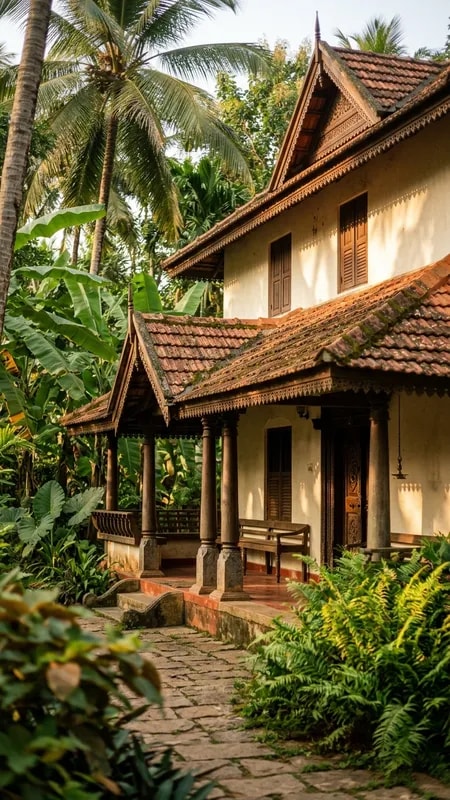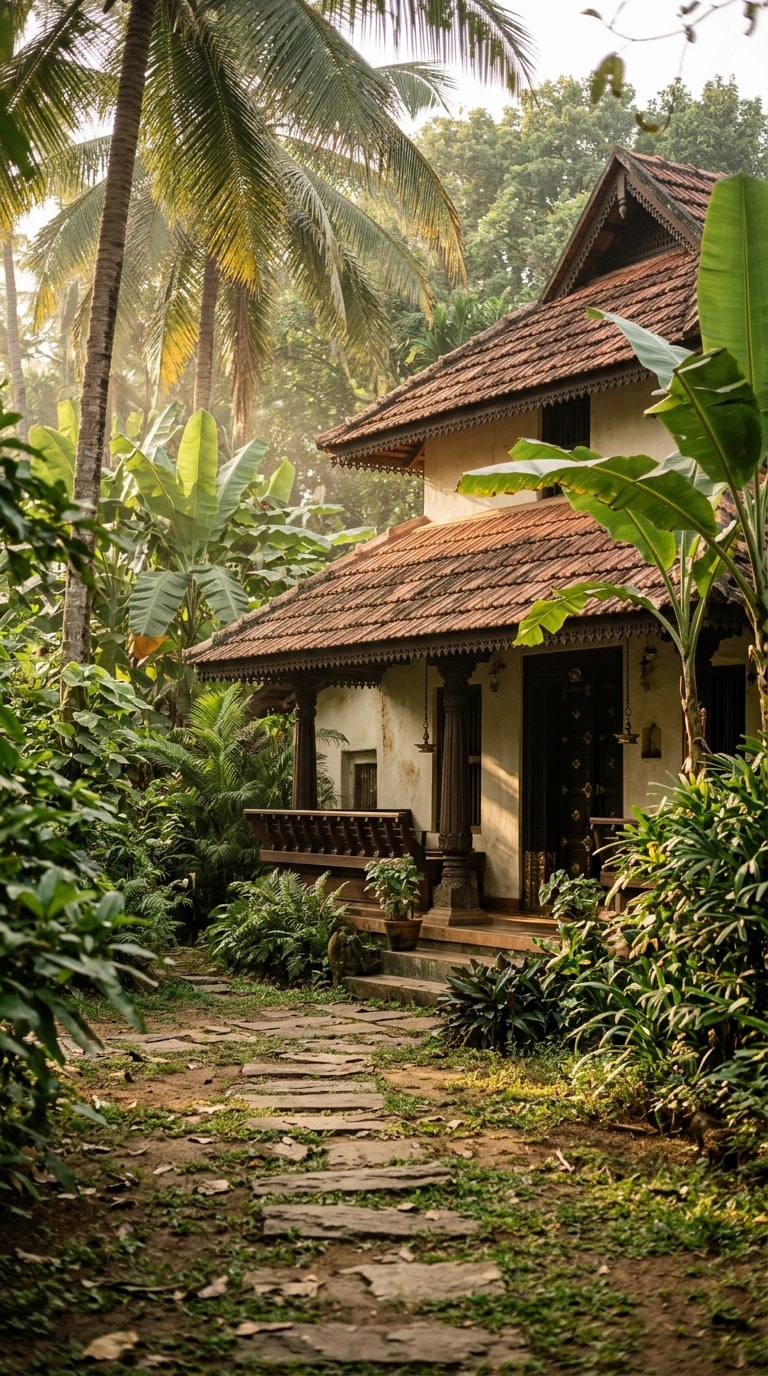
Good Kerala-style home exterior design rarely announces itself all at once. It draws you in through a sequence: a rugged stone path underfoot, a screen of broad leaves, then the steady presence of a steep terracotta roof and cream plaster walls. In this scene, the house does not compete with the garden. The dark wooden pillars, window frames, and main door give the facade its weight, while the path acts as a quiet invitation. The composition feels natural because the foreground foliage is allowed to do its job, framing the entrance without hiding it.
The planting is the real architecture here. Tall coconut palms lift the eye upward, banana leaves add broad, sculptural texture at shoulder height, and ferns soften the ground plane. That layering matters more than any single plant. It creates depth, filters the warm tropical light into dappled shadows, and gives the house a sense of privacy without a wall. For a Kerala exterior, copy the principle rather than the exact palette: choose plants that thrive locally, repeat a few strong textures, and keep a clear sightline from the gate to the front door. A garden that looks effortless is usually edited.
Material choices carry the mood. Terracotta tiles age into rust and umber, cream plaster picks up the green around it, and dark wood brings warmth and contrast. The stone pathway is deliberately irregular, so it feels laid by hand rather than stamped from a mould. These details reward a slower approach. Instead of polishing every surface, let the roof show weather, let the wood darken, and let the path settle into the soil. The result is an exterior that feels grounded in its place, not transplanted from a catalogue.
Practical design should protect that atmosphere. Make the path wide enough for two people to walk side by side, slope it gently away from the house, and plan drainage before planting. Keep mulch and soil slightly below the damp-proof course, and choose low-maintenance species that tolerate heavy monsoon rain. Warm exterior lighting at the door and along the path can extend the welcome after sunset, but keep it soft and low. The goal is not a showpiece that stops you at the gate. It is a home exterior that invites you forward, one shaded step at a time.