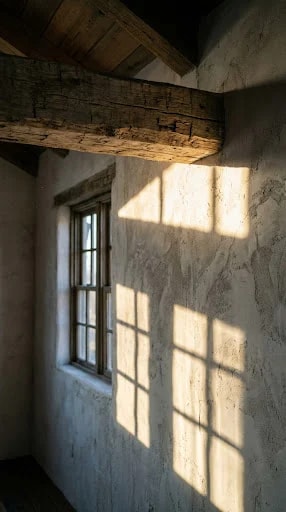
Walk into a well-made rustic ranch house and the first thing that stops you usually isn't a sofa. It's a corner. A rough-hewn beam crossing an off-white plaster wall, a tall multi-paned window letting morning sun rake across both. The light finds every trowel mark and saw kerf, and the room suddenly feels older, calmer, and more considered than it has any right to. That is the whole argument for ranch style rustic interior design: the architecture does the decorating, and everything else is support.
Start with the beam. In ranch homes the structure sits close to the surface, with low ceilings, exposed joists, and posts that actually hold something up, and that honesty is the style's best asset. A reclaimed timber with visible grain, a few checks, and old nail holes will out-charm any factory-perfect mantel. Keep the finish matte. A penetrating oil or hardwax lets the wood absorb light instead of bouncing it back, which is why old barn wood reads warm rather than shiny. Skip the near-black stain; ranch interiors want honey, ash, and tobacco tones that sit comfortably against cream.
Then the wall it meets. Flat drywall is the enemy of this look because it gives light nothing to catch. Hand-troweled plaster, limewash, or a genuine skim coat gives you a surface with subtle undulation, faint tonal shifts, and hairline character that reads as age even in a new build. Warm off-white, somewhere between oatmeal and heavy cream, keeps the room bright while letting shadows supply the drama. If a full plaster job isn't in the budget, a mineral or Roman clay paint in a dead-matte finish gets you most of the way for a fraction of the mess.
Finally, plan the light around those two surfaces. The window in this corner is doing more work than any lamp: mullioned glass throws crisp geometric shadows that shift hour by hour and make the wall feel alive. Resist the urge to bury it under heavy drapery. A simple linen shade, or nothing at all, preserves that raking light. And resist over-lighting the rest of the room, too. A few warm pools at floor level let the corners stay soft and shadowed, and that contrast is what makes texture legible in the first place.
The lesson is restraint. Rustic ranch interiors fail when they are accessorized like a cabin set, with too many antlers and too much burlap. A weathered beam, a plaster wall, and one good window are already a composition. Add a leather chair, a wool rug, a single piece of old pottery, and stop. The corner will do the rest, quietly, every morning the sun comes through.