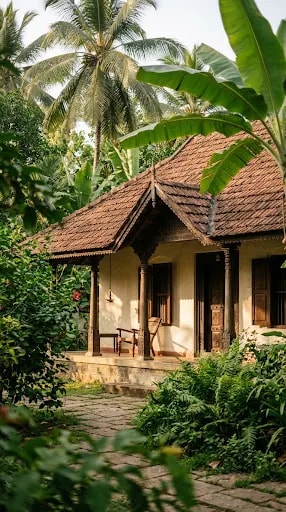
The first thing this house does is refuse to hurry you. A stone-paved path narrows between banana leaves and ferns, bends past a pair of wooden chairs, and only then lets the facade come into view. Tall coconut palms lean over the roofline, and sunlight arrives in fragments rather than a flood. That sequence is not an accident of landscaping. In Kerala-style home exterior design, the approach is part of the architecture, and the garden is the first room you enter.
The roof carries the most weight, literally and visually. Sloped and clad in terracotta tiles, it throws a wide, generous shadow across the front of the house, keeping creamy off-white walls from turning harsh under a tropical sun. Deep eaves mean monsoon rain falls a comfortable distance from the doors and windows, and the pitch sheds water fast when the sky opens without warning. Notice how the roof sits low and broad rather than tall and pointed. That horizontal spread is what gives the house its grounded, settled feeling, as if it has been resting in the greenery for decades.
Supporting that roof, dark wooden pillars line the veranda and do the quiet structural work of the facade. Their color is the anchor of the whole palette: deep brown against off-white plaster, green foliage, and warm red tile. Wood that is left to age honestly, rather than painted over, reads as both sturdy and familiar. The veranda itself is shallow enough to feel intimate and deep enough to hold two chairs, a cup of tea, and a conversation that lasts until the light changes. It is the transition zone where inside and outside negotiate, and it is where most of the living actually happens.
What makes the composition work for anyone borrowing these ideas is the discipline of the palette. Three colors do almost everything here: the green of palms and ferns, the red-brown of the tiles, and the soft cream of the walls. Everything else is texture, stone underfoot, wood grain, and the blur of leaves in the foreground that frames the view like a held breath. Add too many accents and the calm evaporates. If you are planning a Kerala-inspired exterior of your own, begin with shade before decoration, keep the roof honest, let timber darken naturally, and leave room for a path that takes the long way to the door.
There is a practical lesson hidden in the beauty. Homes in hot, wet climates are not improved by sealing themselves off; they are improved by layering shade, airflow, and planting so the building and the garden cool each other. This exterior does exactly that, and the reward is a porch that stays usable at two in the afternoon. Sit in one of those chairs and the pace slows on its own. The palms move, the light shifts across the tiles, and the house asks nothing of you but time.