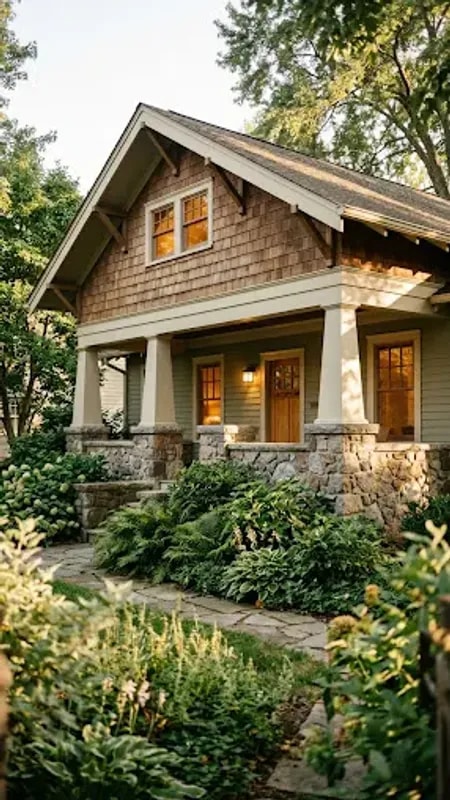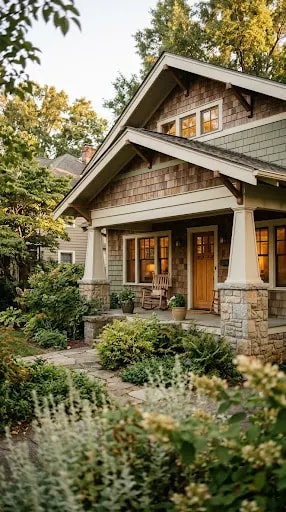
Craftsman style rarely wins attention for any single feature. It wins because of the way its materials sit next to each other. Look closely at a well-built facade and you will find a deliberate sequence of textures: rough stone at the base, cedar shingle rising up the gable, a tapered column narrowing against the sky, and a slab of honey-toned wood at the door. Each surface is doing a job, and each one makes the others look better. If you are planning exterior updates, thinking in terms of material contrast will take you further than chasing a color trend.
Start at the ground and work upward. Stone or stacked ledgestone piers give the porch a visual foundation and echo the gray of a flagstone walk, so the path and the house feel related rather than separate. Above that, shingle siding — whether true cedar or a fiber-cement version — brings a softness and irregular texture that flat lap boards cannot match. Paint the shingles a muted sage or taupe rather than a bright color; the grain and shadow lines already provide plenty of detail, and a quiet hue lets the stone and wood speak. Trim in cream, never stark white, keeps the palette warm.
Columns deserve their own attention. A Craftsman column is usually a tapered shaft, wider at the base and narrower at the top, often resting on a short stone or masonry pedestal. That taper does quiet structural work: it pulls the roofline visually downward and makes the porch feel grounded instead of propped up. If your columns are plain posts, adding a pedestal and a slight taper is one of the highest-impact changes available, and it costs far less than re-siding the whole house.
Then there is the door, the one element that should look like a material rather than a paint color. Amber and honey-stained wood reads as warm even in shade, and it pairs naturally with the amber glow of interior lights seen through multipane windows. Keep the glass divided, keep the hardware dark and simple, and let that entry point be the warmest note on the facade. Add a rocking chair, a couple of planted pots, and layered shrubs that soften the foundation, and the composition completes itself.
The lesson is not to copy a specific house but to copy the logic: rough next to smooth, dark next to light, natural next to painted. Get that rhythm right and the curb appeal takes care of itself.