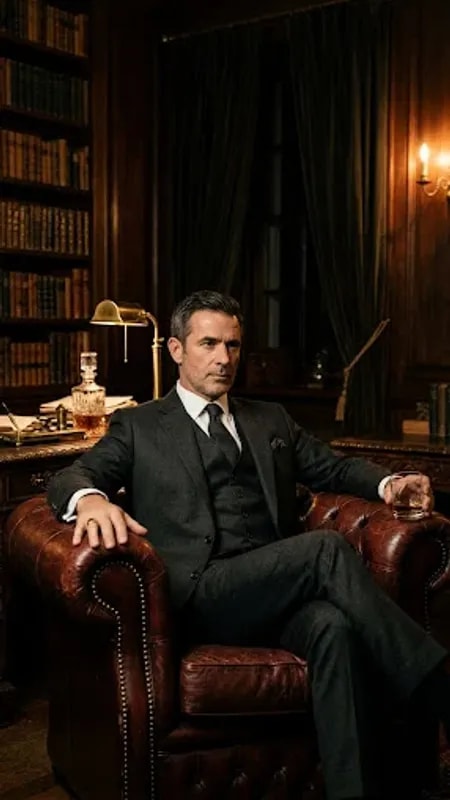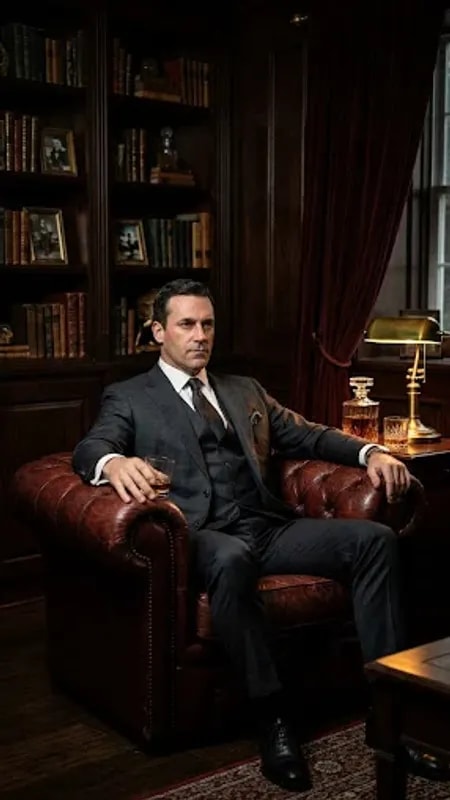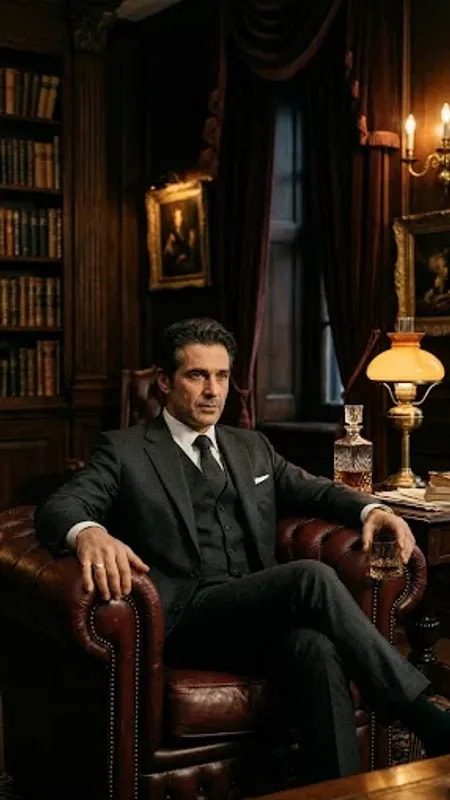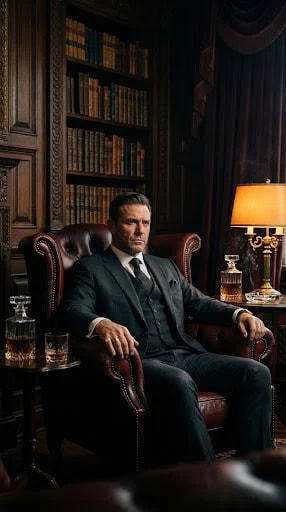
In the world of cinematic and aesthetic storytelling, the desk is rarely just a desk. In this image, it transforms into a command center, a fortified island of influence in a sea of shadow. The heavy, dark wood grain suggests permanence and weight, a foundation for decisions that carry consequence. Its surface is uncluttered yet purposefully populated, each item a strategic piece in a visual narrative of power. The composition itself is a masterclass in framing, cropping tightly around the man and his dominion to eliminate any extraneous context. This isn't just a room; it's a carefully constructed arena where the only action is contemplation and command.
The lighting performs a crucial dramatic function, acting as a visual spotlight on the tools of power. The single desk lamp creates a stark, directional pool of warm amber light, illuminating the crystal decanter, the telephone, and the book while leaving the occupant's face and the room's corners in deliberate obscurity. This chiaroscuro effect, so beloved in film noir and classic portraiture, does more than set a mood—it creates a hierarchy of importance. The light tells us what to look at: the means of communication, the offering of hospitality, and the weight of knowledge. Everything else remains in the realm of the unknown, amplifying the sense of controlled secrecy.
Notice the precise arrangement of objects. The decanter and glass are placed just so, ready for an offer that could be a reward or a test. The vintage rotary telephone, a symbol of a bygone era of discrete, wire-tapped conversations, sits within easy reach. The leather-bound book adds a layer of gravitas, hinting at ledgers, codes, or history. Even the stark white shirt cuff, perfectly crisp against the dark wood and shadow, speaks of an exacting personal standard. This is not casual clutter; it is a curated collection of props, each selected to communicate capability, tradition, and unassailable authority.
The overall mood generated is one of potent, quiet intimidation mixed with a magnetic intrigue. The camera angle, low and close, makes the viewer feel seated across the desk, a participant in a meeting where the terms are unspoken but understood. The color palette of deep burgundy, rich amber, and black walnut envelops the scene in a cocoon of secluded opulence, a style that favors impression over ostentation. It’s a design philosophy where power is demonstrated not through loud extravagance, but through an atmosphere so dense with implication that it feels physical. This image captures the very essence of a design language built on perception, where every element, from the light to the leather, is deployed with calculated intent.