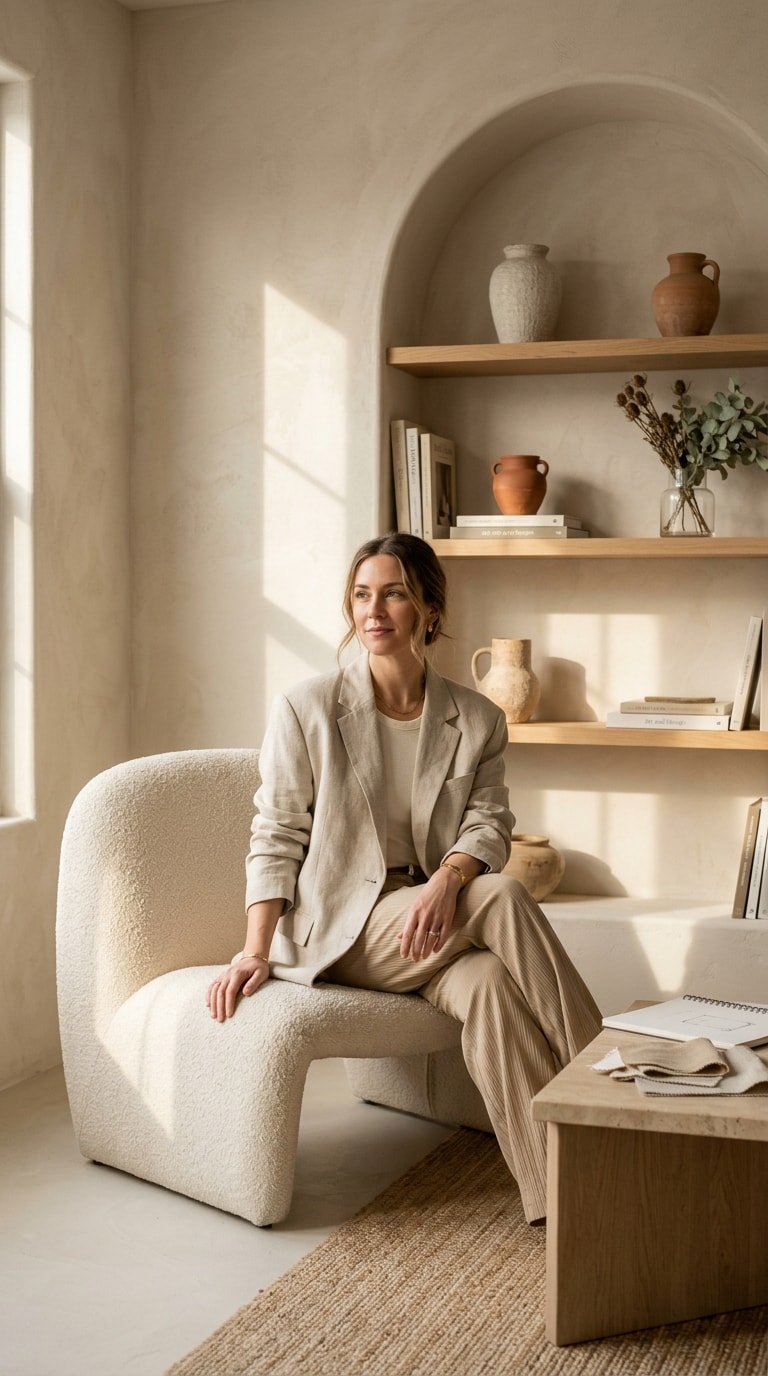
A room dressed entirely in cream can go one of two ways: it reads as a deliberate, hushed composition, or it flattens into a waiting room. The difference is almost never the furniture. It is depth — the small architectural moves and layered surfaces that give a pale palette somewhere to travel. Look closely at a scene like this one and you will find two quiet workhorses carrying the whole wall: a shallow arched niche pressed into plaster, and a run of floating wood shelves that steps across the remaining space. Neither is expensive. Both are structural decisions that make the flat plane of a wall feel considered.
The arch earns its keep because it introduces a curve into a room built almost entirely from right angles. A rectangle of cream plaster is invisible; a recessed arch becomes a frame, and frames ask to be filled. Keep the niche shallow — six to eight inches is plenty — so it reads as a shadow rather than a cupboard, and paint or plaster it the same tone as the wall so the curve is felt before it is seen. Then resist overfilling it. A single tall vessel, a leaning stack of books, and a great deal of empty space will do more than a shelf of small objects. The negative space inside the arch is the point.
Floating shelves handle the rest. Mount them at a height where the top surface sits just above eye level so you look up into the objects rather than down at them, and keep the depth modest — deep shelves catch clutter, shallow ones force editing. The styling rule that keeps a run of shelves calm is rhythm: tall, short, tall. A glass vase of eucalyptus next to a squat terracotta jug, a few horizontal books weighting one end, a single ceramic bowl on its own. Repeat the materials rather than the shapes. Matte pottery, aged wood, and one green thing is a complete recipe.
Underfoot and underhand, texture does the work that color usually does. A nubby bouclé chair, a jute rug with visible weave, a low wood table with an open notebook left face down — these are not decorative flourishes, they are the reason an all-neutral room feels warm instead of clinical. Warm daylight raking across a plaster wall will find every one of those surfaces and cast soft diagonal shadows that shift through the afternoon, which is really the whole trick: give the light something to describe. Choose five or six materials you love — cream, sand, oatmeal, clay, muted green — and let them repeat from the chair to the shelves to the floor. Repetition reads as intention.