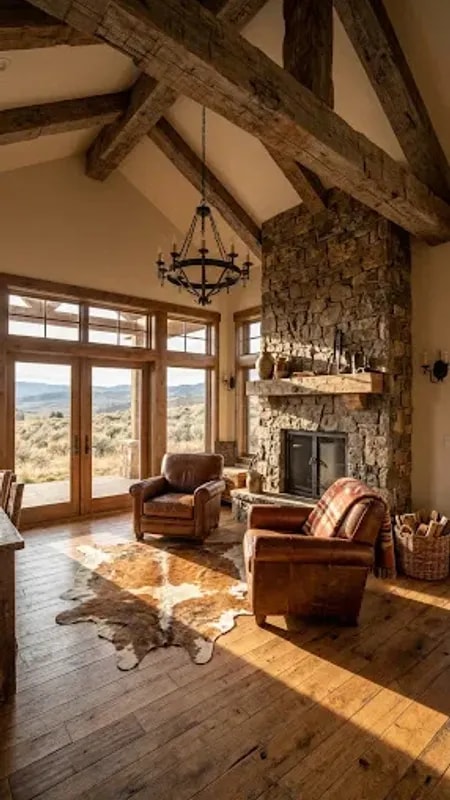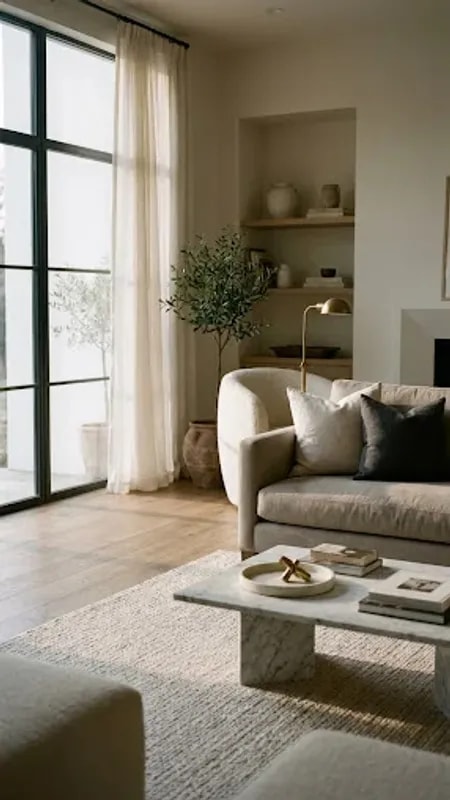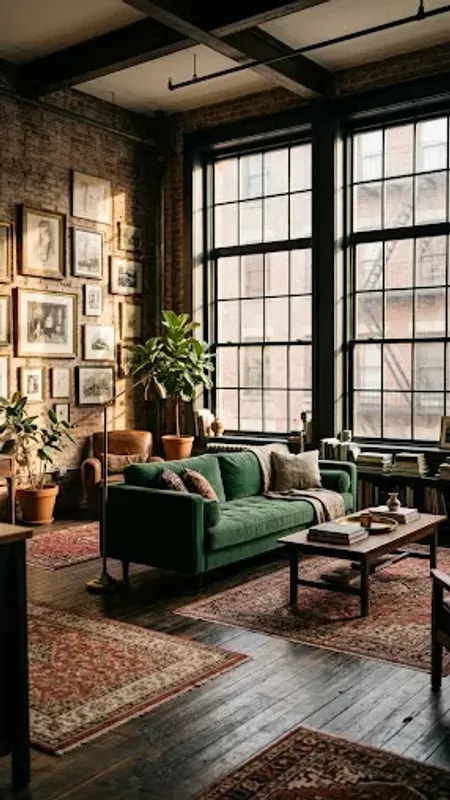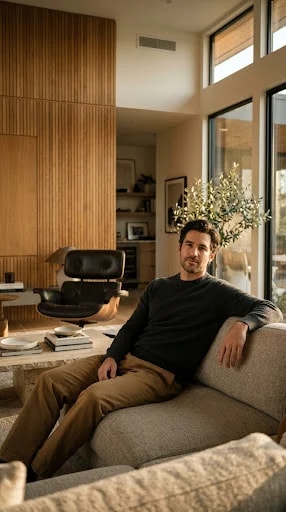
There is a particular kind of room that photographs well and still works on a Tuesday night with a cup of coffee and a half-finished book. It sits somewhere between the showroom and the sofa you actually sink into. The starting point is almost always a single generous seat with real texture — a nubby oatmeal sofa, a heavy wool weave, something that shows a little wear without looking tired. Camel, charcoal, cream and olive keep the palette tight enough that everything can be added to over years rather than bought in one weekend.
Vertical wood slats are the quiet workhorse of this look. They add architecture to a wall without paint or art, filter sound, and throw soft shadow lines across the room as the sun moves. Pair them with a hard, honest surface at the center — a chunky stone or travertine coffee table with a rough edge — and the softness of the upholstery suddenly has something to push against. That contrast is the whole trick: soft against hard, matte against polished, light against dark. A room made entirely of one texture goes flat no matter how expensive the pieces are.
Then there is the one piece worth saving for. A proper lounge chair in leather and molded wood earns its footprint because it does two jobs at once — it is sculpture when nobody is sitting in it, and it is the best seat in the house when someone is. Leather takes on the shape of the people who use it, which is why a new one looks slightly wrong and a ten-year-old one looks perfect. Buy the chair you will still want in a decade, and let everything else stay modest.
Natural light does more for this style than any object in it. Keep the windows bare or use a single linen panel, position the largest piece of furniture where the afternoon sun lands, and let the shadows do the decorating. An olive tree in a plain terracotta pot adds the one green note the palette needs and softens the corners of a rectilinear room. Books stacked low and slightly crooked on the coffee table are not clutter; they are evidence that a person lives here.
What ties it together is restraint. Choose one statement chair, one architectural wall, one organic object, and let the rest of the room breathe. Skip the matching set, avoid filling every corner, and resist the urge to buy the accessories before you have lived with the empty space for a month. The rooms that feel effortless are usually the ones that were finished slowly, edited honestly, and left just a little bit unfinished on purpose.