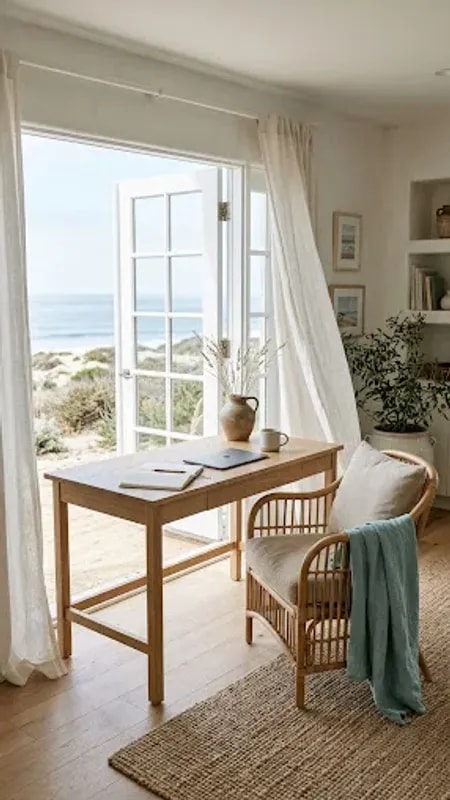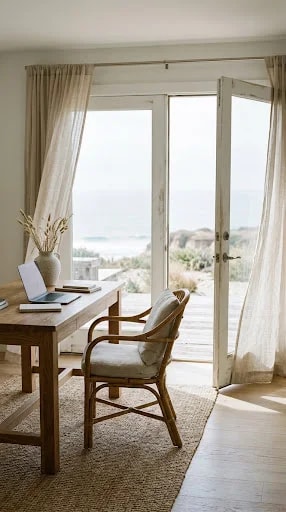
There is a particular kind of quiet that only shows up in a room built around a window. Here, the desk sits squarely in front of whitewashed French doors thrown open to a hazy stretch of ocean, and every other decision in the space seems to have been made in service of that one opening. The result is not a room with a view so much as a room that knows its place. Nothing on the walls competes. Nothing on the floor asks for attention. The horizon gets the last word.
The first rule of this layout is sightline discipline. The desk faces the doors, but it stays low enough that the ocean remains visible from a seated position, which is the whole point of putting a workspace there. Upholstered or tall-backed chairs, floating shelves above the desk, and pendant lights hung low all chop that vertical band into fragments. Instead, the architecture does the framing: the door casing and the pale trim act as a natural border, turning the outdoors into a picture that changes with the weather and the hour. If you are recreating this at home, measure the view from your chair before you buy anything. Whatever rises above the sill line should earn its place.
The material palette here is deliberately narrow, and that is what keeps the room calm. Pale wood, cream linen, woven rattan, and a jute rug all sit in the same soft range, so the only saturated color in the room is the grey-blue outside. A rattan chair with a linen cushion keeps the silhouette airy and adds texture without weight, while the jute floor covering grounds the space and hides the sand that inevitably follows you in from the beach. Whitewashed doors and trim bounce light deeper into the room, which matters on mornings when the marine layer refuses to lift.
Light is the other collaborator. Sheer curtains hung generously on both sides of the doorway soften the direct glare that can make a laptop screen unreadable by mid-morning, and they move with the breeze in a way that makes an ordinary workday feel less enclosed. Position the desk slightly off-axis from due west if you can, and plan screen-heavy tasks for the softer hours. Beyond that, keep the styling almost aggressively simple: an open laptop, a short stack of books, one ceramic vase of dried botanicals. The restraint is the design. A coastal office works when it feels like it could be tidied in thirty seconds, leaving you free to look up.