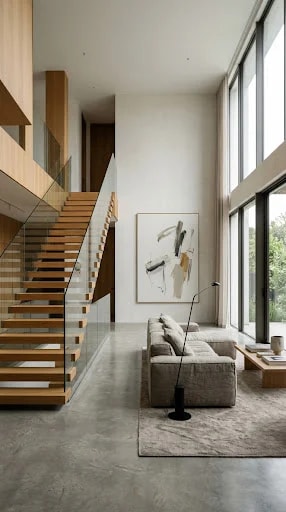
The first thing this room does is pull your eyes upward. A floating oak staircase rises diagonally on the left, while a stack of black-framed windows carries the same upward rhythm on the right. Between them, the sofa, coffee table, and artwork sit deliberately low. That contrast is the whole story of contemporary style home design at its best: architecture supplies the height, furniture supplies the calm.
Verticality here is not simply a matter of a double-height ceiling. It comes from repeated cues—slim glass balustrades, narrow window frames, the stair's open treads, and clean white walls that let shadows do the drawing. The tall windows turn an entire wall into a daylight instrument, pouring soft light across polished concrete and warming the oak steps. Black accents keep the glazing crisp without making the space feel heavy. Because the staircase is open, sightlines pass through it; the room never feels blocked, even though a major sculptural element sits right beside the seating area.
The low furniture is the counterweight. A long gray sectional hugs the floor, a wood coffee table keeps the center grounded, and a soft rug cushions the concrete underfoot. A single large abstract painting, muted with a touch of ochre, hangs low enough to stay connected to the sofa rather than floating in the void. This is quiet luxury in practice: warm oak against cool gray, crisp white against black frames, and one earthy accent that keeps the palette from turning clinical. Nothing shouts. Proportions do the talking.
For anyone translating the look at home, choose one vertical hero and let it lead. Repeat its rhythm in window mullions, a stair balustrade, or a slender floor lamp, but do not clutter the same wall with small decorations. Keep seating low and long. Hang one generous artwork instead of a gallery wall. Leave negative space around the stair, and let daylight and greenery outside become part of the composition. The goal is not to fill the height but to make it feel effortless.
That balance is why the room feels airy yet grounded. Contemporary style home design often gets reduced to white walls and sharp lines, but the real work is relational: tall against low, cool against warm, open against anchored. Get those relationships right, and a double-height space becomes more than impressive—it becomes livable, serene, and quietly luxurious.