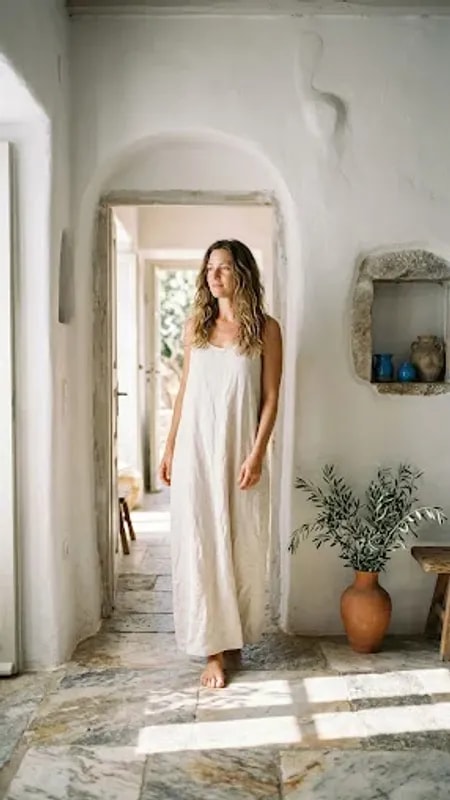
Greek style interior design begins with a single, radical idea: let the light and the walls do the talking. In a whitewashed room, every surface bounces daylight back into the space, so a small doorway or a narrow niche suddenly reads as generous. The look is rooted in necessity — island builders used lime wash to brighten interiors and keep them cool — but the effect is pure poetry. If you want to recreate it, start with matte, chalky white or warm off-white on the walls rather than glossy paint. The finish should look hand-applied, with faint variations that catch the sun as it moves across the room during the day.
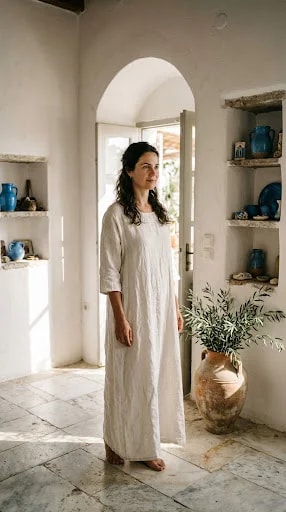
The arch is the signature gesture. A doorway or window with a soft rounded top does two things at once: it frames the view like a picture and makes the room feel older, more settled, more rooted. You do not need structural work to get it. Arched mirrors, arched alcoves cut into a thick wall, and arched shelving units all borrow the same rhythm. Pair them with deep recessed niches — shallow shelves sunk into the wall itself — and you gain display space without adding a piece of furniture. This is where Greek style interior design is quietly brilliant at small living: the architecture holds your things.
Fill those niches with restraint. The palette in a Greek home is disciplined: white walls, cream and warm stone underfoot, terracotta for weight, olive green for softness, and that unmistakable Aegean blue. Blue glazed jugs and ceramic bowls are the classic accent, and they work best in groups — three or five vessels of varying height, some glossy, some matte, some slightly imperfect. Mix in unglazed terracotta urns and let a few hold olive branches or dried grasses rather than flowers; the loose, informal arrangement keeps the room from feeling staged. Handmade ceramics with thumbprints and uneven rims are a feature here, not a flaw.
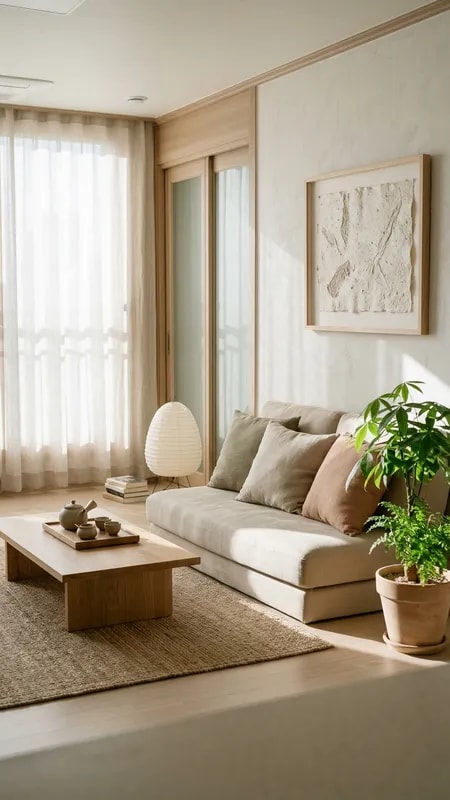
Underfoot, choose pale stone, worn limestone, or a matte concrete tile that mimics it. Floors in this style are meant to show the passage of feet and time, so avoid anything too polished or too busy. Layer a flat-woven cotton or jute rug in a sandy tone if you want warmth, but keep pattern minimal so the texture of the stone can speak. Then dress the rest of the room loosely. Slubby linen cushions, a low wooden stool, a simple framed print of a coastline, sheer curtains that move in a doorway breeze — these are the details that make a whitewashed room feel lived in rather than empty.
What ties the whole look together is a refusal to overfill. Greek style interior design is generous with light, texture, and shadow, and stingy with objects. Let one large urn carry the corner. Let one arch carry the wall. Leave the rest quiet, and the room will feel like the calmest place you own.