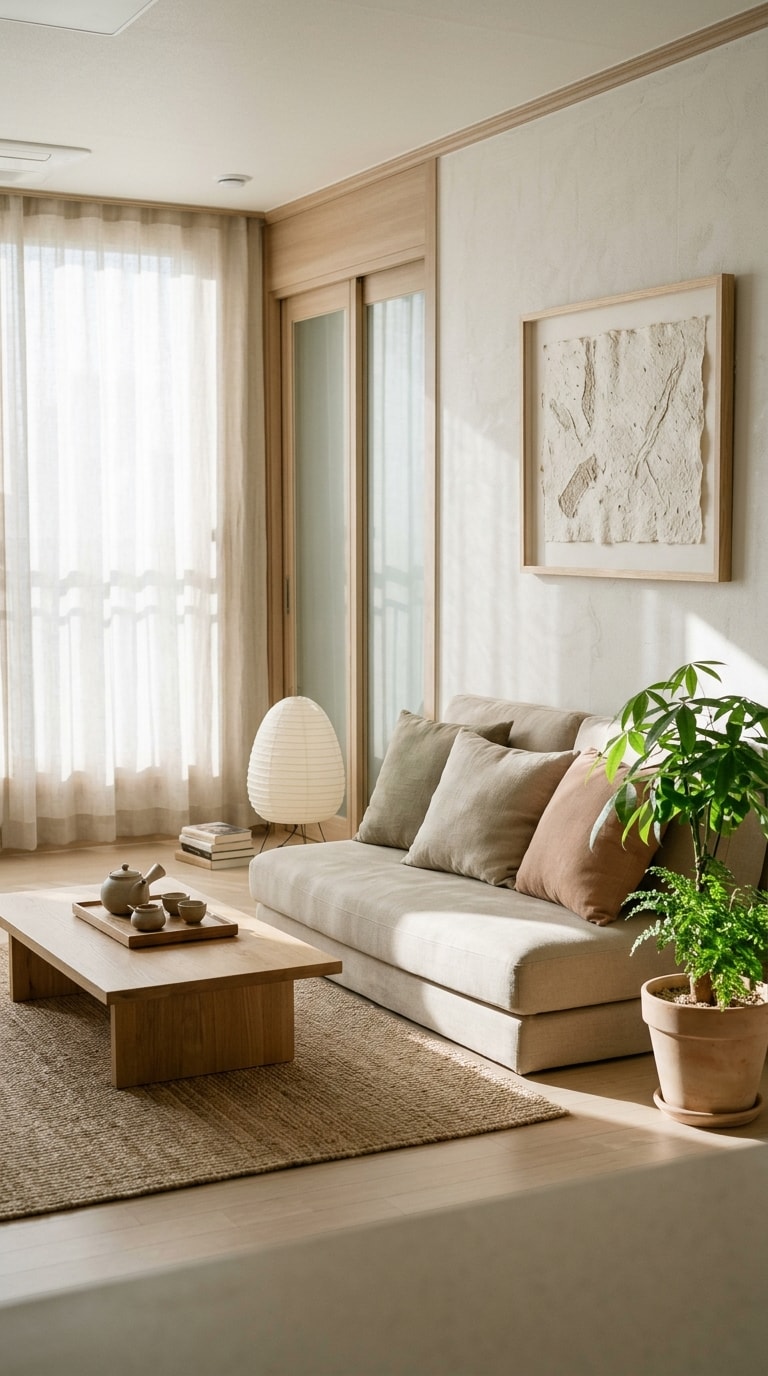
The first thing this room gives you is not a sofa or a shelf — it's light. Floor-length sheer curtains diffuse the daylight until it turns creamy, and the whole space reads as one continuous surface of softness: oat, cream, pale wood, a whisper of green. That is the practical core of home design korean style. Before you buy anything, decide how light should enter and how gently it should land. Hang curtains from the ceiling rather than the window frame, choose a fabric you can still see the sky through, and let the daylight do the work a dozen lamps would otherwise be hired to do.
The furniture stays low on purpose. A beige sofa with its back to the artwork, a coffee table close to the floor, cushions in undyed linen — nothing rises above eye level and interrupts the window. This is not minimalism as an aesthetic performance; it is minimalism as a sightline. When your seating sits low, the room gains vertical air, and the framed textured artwork across the way becomes the focal point instead of competing with the backs of chairs. Try this test: stand in the doorway and count how many objects break the horizon of the window. Fewer is usually better.
Notice what sits on the table. A wooden tray, a teapot, two cups, a small stack of books, one potted plant in terracotta. The objects are few but they are not austere. Korean rooms tend to keep their warmth in texture rather than color — a woven jute rug underfoot, the grain of the wood, a paper-lantern floor lamp glowing at dusk, ceramic that shows the thumbprint of whoever threw it. If your palette is already neutral, texture is your only remaining source of interest, so spend there. Layer jute on wood, linen on wool, matte clay next to a glass of water, and the same three colors will never feel flat.
Then there's the ritual the room is quietly arranged around. Sliding paneled doors close off the kitchen sounds; the tea tray waits where the afternoon light falls. Home design korean style is often described as calm, but calm is a byproduct of a space that has been given a job. A corner that is only for tea, a window that is only for looking out, a low table that is only for setting things down. Give each surface one purpose, keep the plants alive, and leave the walls mostly bare except for one piece you actually love. The room will feel less decorated than restored.