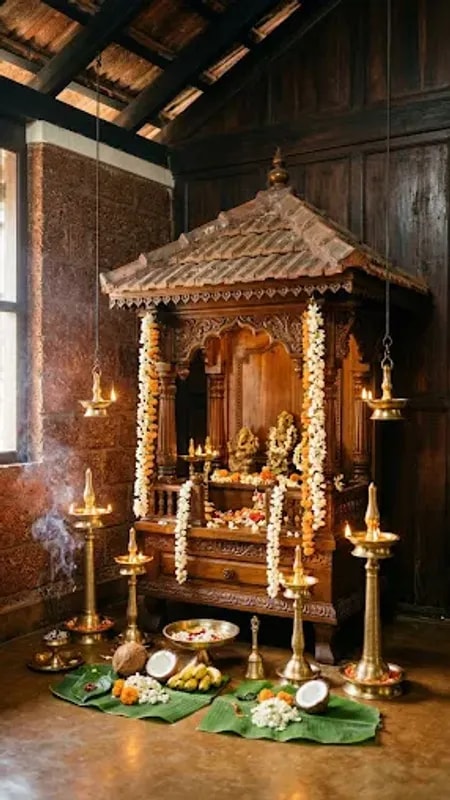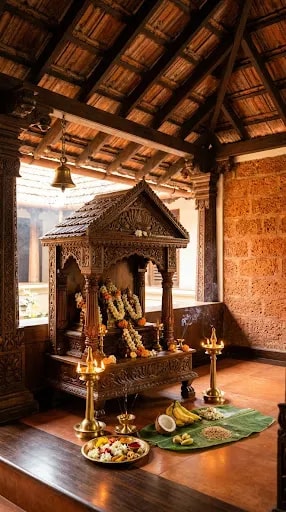
A carved wooden mandapam under a sloped tile roof sets the architecture, but it is the light that makes a Kerala home shrine feel inhabited. The warm glow of a nilavilakku, its tiers of oil-fed wicks stacked like a small brass tower, does more than illuminate the dark teak. It softens the grain of the wood, throws long shadows across the terracotta wall behind, and turns a corner of the house into a place that feels tended rather than merely decorated. When you plan your shrine, treat the lamp as a fixture in the design, not an afterthought: give it a permanent spot on the floor or a low plinth where the flame sits below eye level and the upward light catches the carved brackets above.
Brass bells hung from the roof beam add a second layer, and not only an audible one. A row of small bells at varying heights creates a screen of metal against the slatted ceiling, catching and bouncing the lamplight through the day. Keep the arrangement loose and asymmetric; the charm of a Kerala shrine is that it looks assembled over years, each bell and vessel added for a reason. The same logic applies to the objects on the altar shelf, where a mix of heights and patinas reads richer than a matched set. Let one piece, perhaps an older lamp or an inherited uruli, hold the visual weight while smaller items orbit it.
The offerings deserve their own staging. A fresh banana leaf laid flat on the wooden floor or a low stool becomes a temporary canvas for bananas, a coconut, flowers, and a small mound of rice, and it brings colour into a palette otherwise dominated by deep browns and copper. Marigold and jasmine garlands draped over the mandapam frame add the one saturated note, and they should be replaced often enough that the shrine always looks cared for. Position the leaf so that it sits within the pool of lamplight rather than behind it, and leave space around it; a crowded offering looks accidental, a spaced one looks deliberate.
Light from the room matters as much as the flame. If your shrine sits beside a window with soft morning light from one side, you get the double warmth this setup depends on: cool daylight grazing the wood on one edge, golden flame light on the other. Avoid overhead downlights, which flatten the carving and wash out the shadows that give depth to the pillars. A dimmable wall fixture or a shaded pendant kept low and warm is a better companion to the oil lamps.
Finally, think about the floor. Wide wooden planks, kept bare and polished, ground the whole composition and reflect a little of the glow back upward. A single cotton mat for seating, a low stool for the offering tray, and nothing else. Restraint is what allows the lamp, the garland, and the carved roof to read as one quiet scene instead of a collection of objects.