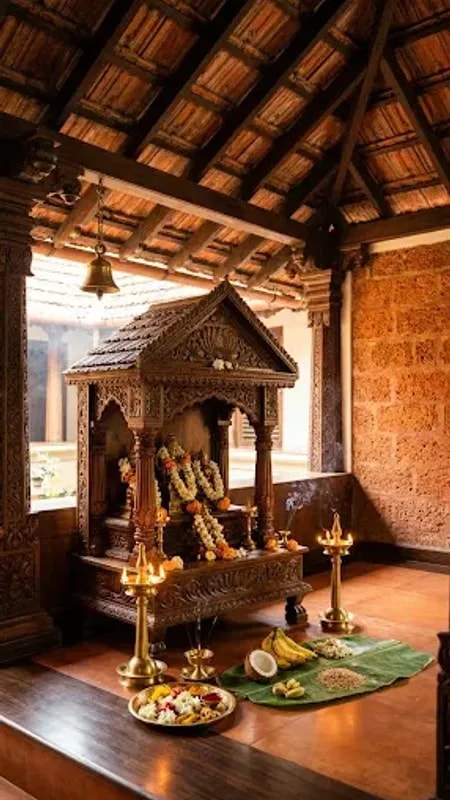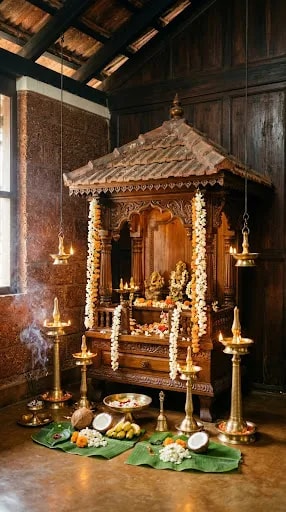
In Kerala, you can spot a temple from a distance by its roof: tiered, low-slung, tiled in terracotta, and capped with a small finial that catches the light. Bring that silhouette indoors and something surprising happens. The corner of a room stops feeling like a corner and starts feeling like a threshold. The shrine in this alcove is a good example — a carved teak structure with its own miniature tiled roof, standing dark and detailed against a shadowed wall, brass lamps flanking it at equal distance, garlands of white and orange draped over the eaves, offerings of coconut and banana laid out on a fresh banana leaf.
The roof is the design decision that matters most. A traditional srikovil stacks its tiers over the sanctum, each level stepping inward, and a home version should respect that logic rather than imitate it loosely. One tier suits a low ceiling or a shallow niche; two or three tiers ask for height and for a wall that can carry the visual weight. Keep the tiles small in scale, since normal roof tiles will look clumsy on a shrine of this size, and let the wooden brackets underneath do the decorative work. Oiled teak or rosewood, never painted, is what makes the carvings read as depth instead of ornament.
Symmetry does more for a home shrine than any single object in it. Center the structure on its wall, leave forty to sixty centimetres of clear space on each side, and place the lamps an identical distance from the base. A plinth of granite or dark wood lifts the shrine off the floor and gives the eye a resting line. If the room allows it, set the whole arrangement so you face it while seated — the carvings sit closest to eye level that way, and the roof reads as architecture rather than furniture.
Lighting completes the design, and the instinct to brighten everything should be resisted. Warm, directional light from one side, as in this photograph, lets the roof cast a soft shadow across the wall behind it and gives the brass a slow gleam instead of a glare. A single overhead white bulb will flatten every carving in the room. Oil lamps do the rest: the flame height, the faint smoke, the way the light moves across the wood after dusk.
Finally, treat the offerings as part of the composition. Banana leaf, coconut, fruit, loose flowers in earthy whites and oranges pick up the terracotta and gold without competing with them. Change them daily, keep the surface clear of anything that is not offered or lit, and the shrine stays what it was built to be — a small piece of Kerala's temple heritage, holding its own quiet in the middle of a house.