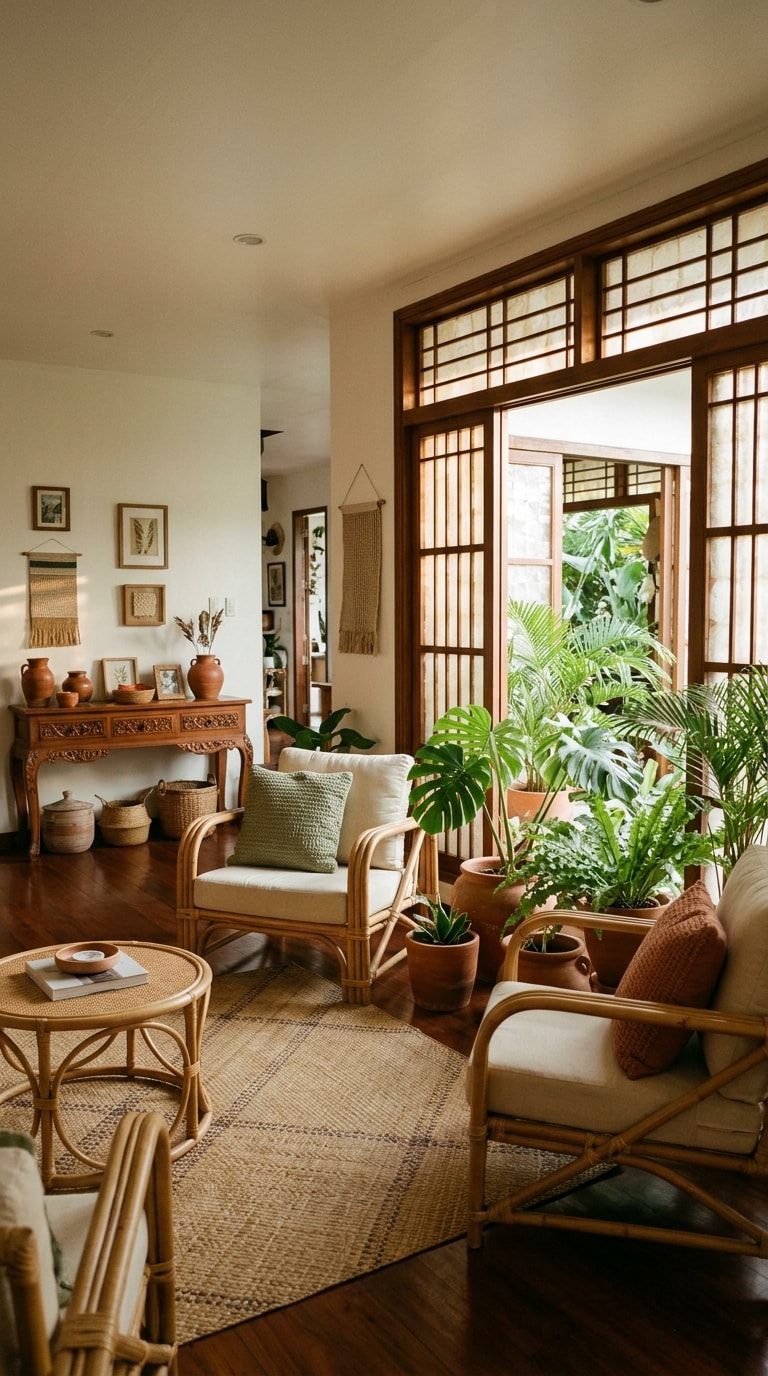
Look past the plants for a moment and the real structure of this room appears: two woven rattan armchairs, a round rattan table, a textured rug over dark timber planks, and a carved console holding a few small ceramics. Nothing here is trying hard. The sun does the rest, sliding through the wide wooden grid windows and landing in soft bands across the floor. This is Filipino-style interior design at its most persuasive, where the materials carry the mood and the furniture is arranged to let air and daylight move.
Rattan is the engine of the whole look, and it earns its place. Peeled and bent by hand, it is light enough to shift around a room and open enough that you see the wall behind it, which keeps a small living area from feeling stuffed. The same logic runs through the rest of the craft vocabulary: solihiya caning on chair backs, abaca and buri weaving on baskets and rugs, capiz shells used sparingly as a glint rather than a statement. In provincial workshops these techniques have been refined over generations, and that history is why a single well-made chair can hold a corner of a room on its own. Buy fewer pieces, but buy the woven ones well.
The palette is warm and unfussy, which is harder to pull off than it sounds. Honey wood, rattan tan, and cream cushions form the base, with fresh green from the palms and terracotta from the pots adding the only real color. Notice that the console is one dark, solid mass against all that lightness, giving the eye somewhere to rest. If you are building this scheme at home, follow the same ratio: plenty of pale and woven, a few deep wood anchors, and greenery treated as part of the furniture rather than an afterthought.
Wide windows framed by timber grids are the other half of the design. They turn the garden into wallpaper and make the transition between inside and out feel gradual, which suits a tropical climate where heat and humidity set the rules. Rugs stay flat and breathable, fabrics stay natural, and seating is pulled slightly off the walls so air can pass. The room is not decorated for a photograph; it is arranged for a slow afternoon with a cold drink and a breeze.
What keeps it from tipping into resort pastiche is restraint. No themed signage, no bamboo everywhere, no clutter of souvenirs. Just honest materials, a quiet palette, and daylight given room to work.