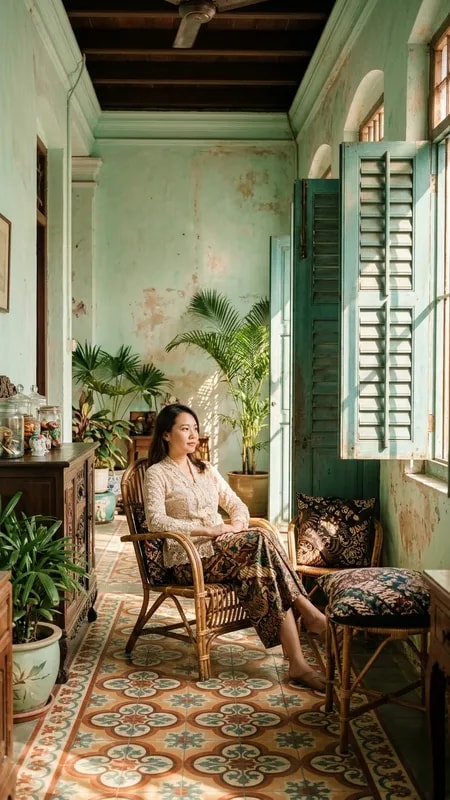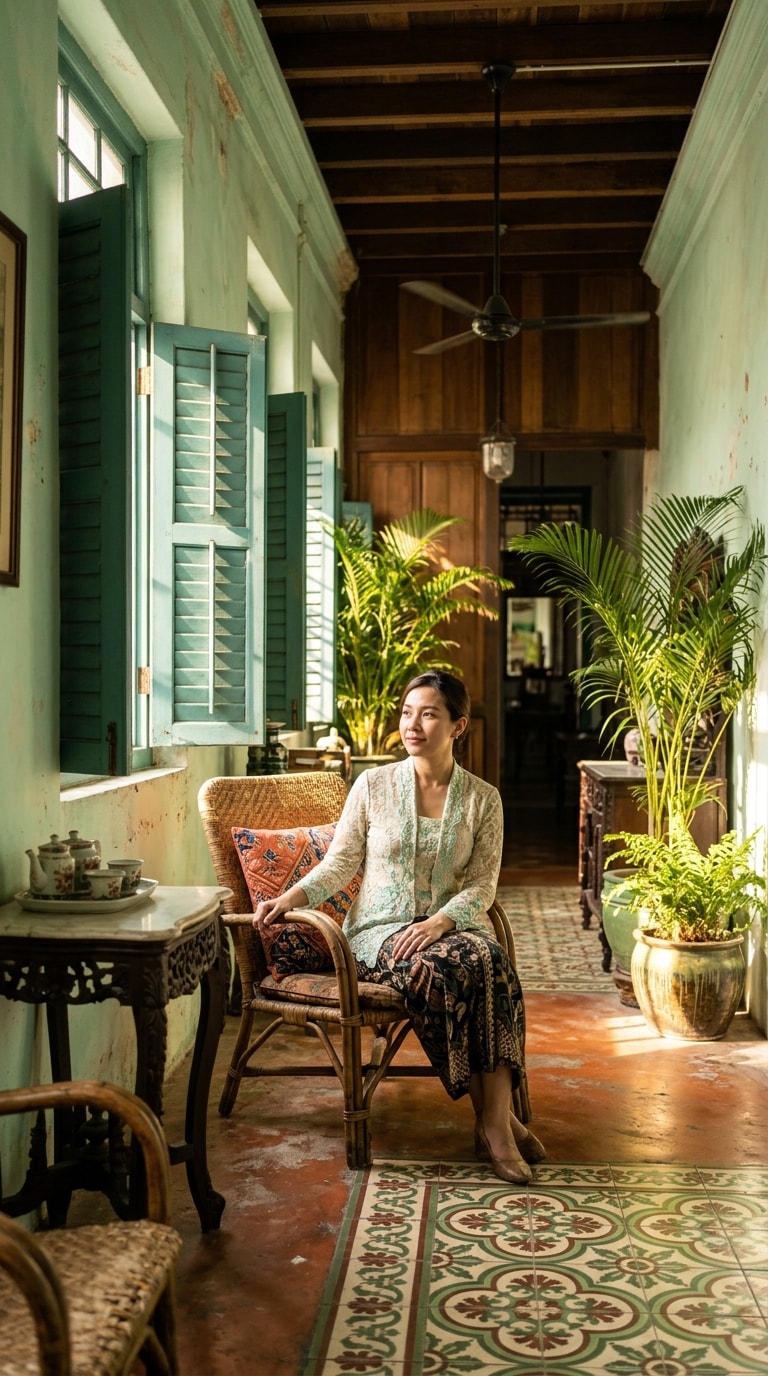
Most people photograph the living room. In a Nanyang style home, the corridor is the room that quietly does the most work. It is the long axis that ties front to back, drawing cool air through the house, sliding daylight across the floor, and giving every other space a sense of arrival. Stand at one end and the whole plan unfolds in a single glance: pale louvered shutters on one side, dark timber beams overhead, terracotta underfoot, and a wooden door waiting at the far end like a full stop.
The louvered shutters deserve their reputation. Angled slats let the breeze in while cutting the glare, so the light that lands on the floor arrives already softened. Paired with deep eaves and a high ceiling, they create the pressure difference that pulls air through the hall instead of letting it sit. The dark ceiling beams above are not decoration for its own sake; they visually lower the ceiling, which makes the corridor feel sheltering rather than tunnel-like, and they hold the eye as it travels forward. Terracotta tiles finish the job, staying cool underfoot and warming the palette with that familiar burnt red.
Furnishing a corridor this long is a matter of restraint. A single woven rattan chair set slightly off-axis gives the passage a place to pause without blocking it. A marble-topped side table holding a tea set turns a few square feet into a small ritual: pour, sit, watch the light move. Potted palms at intervals introduce the green that Nanyang interiors borrow from the garden, and because they sit low, they keep the sightline to the far door intact. Everything is deliberately sparse. The corridor's job is depth, and clutter is the fastest way to flatten it.
What makes the perspective work is proportion. A hallway that is too wide loses its pull; too narrow and it feels like a service passage. The sweet spot lets one person walk comfortably while leaving room for a chair, a table, a plant, and the shadows they cast. Then the composition takes care of itself — a compressed, intimate view that reads as tranquil rather than cramped, nostalgic without being a museum. If you are renovating a shophouse or building new, spend your attention here. Get the corridor right and the rest of the house will feel calm by default.