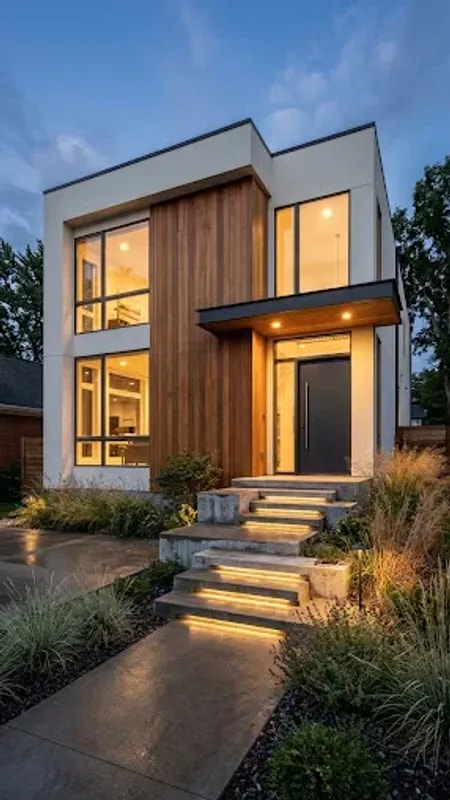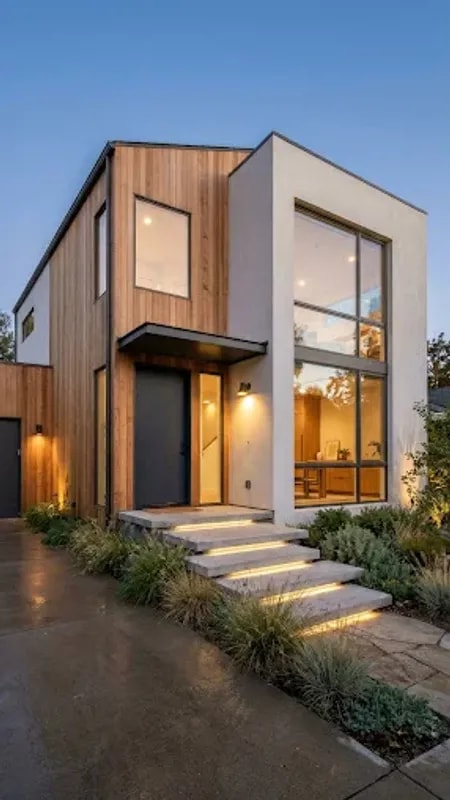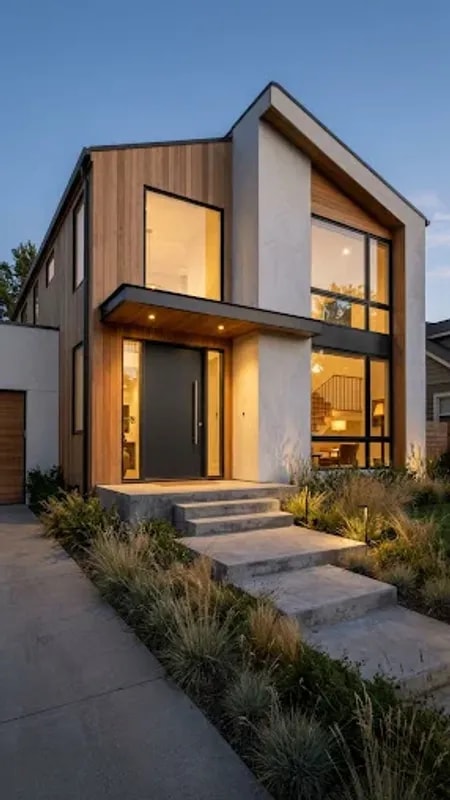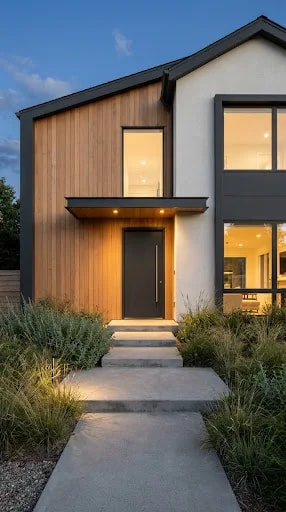
The most memorable modern facades rarely rely on ornament. They rely on contrast, and this home front makes its argument with just two surfaces: warm honey-toned wood siding running vertically beside fields of crisp white stucco. The wood softens what could have been a cold box, while the stucco gives the eye somewhere to rest. Notice the proportion — the white does most of the covering, and the wood is concentrated around the entry and upper volume, which pulls attention toward the door instead of spreading it thin. Vertical boards also stretch the facade upward, adding height that a two-story house of this width genuinely needs.
Everything else on the elevation is punctuation. The windows are dark-framed and generously sized but never fussy, and the front door is a flat black slab that reads as a confident full stop at the end of the composition. A recessed awning above the entrance creates a shallow shadow line by day and a soft pocket of light after sunset. This is the discipline that separates a polished modern front from a busy one: pick one accent color, repeat it in the window frames, the door, the house numbers, and then stop. Three tones total — white, wood, charcoal — and the house looks resolved from the street.
The approach matters as much as the wall. Smooth concrete steps and a straight walkway act as a leading line, and the low plantings do their part by staying low. Textured ornamental grasses and clipped shrubs flank the path without blocking sightlines to the entrance, which keeps the front feeling open and legible. A common mistake is crowding a modern entry with layered beds and tall specimens; here the restraint lets the architecture stay the subject while the greens add just enough organic movement to break up the hard edges.
Then there is the lighting, which is where this facade earns its evening presence. The interior glows through the windows in a warm amber that plays against a cool, dusky blue sky — the classic contrast that makes a home look inhabited rather than staged. Subtle uplights graze the wood siding and the shrubs, revealing texture that disappears in flat daylight, while the recessed entry light keeps the door bright without turning the front into a runway. Warm bulbs in the 2700 to 3000 Kelvin range will keep that inviting cast; cooler temperatures quickly read clinical.
If you are borrowing from this look, start with the two-material rule and resist adding a third finish. Focus the wood where you want the eye to go, keep the accent dark and consistent, edit the plantings down to a few repeated species, and light in layers rather than floods. The result is a front that feels calm at noon and genuinely welcoming at dusk.