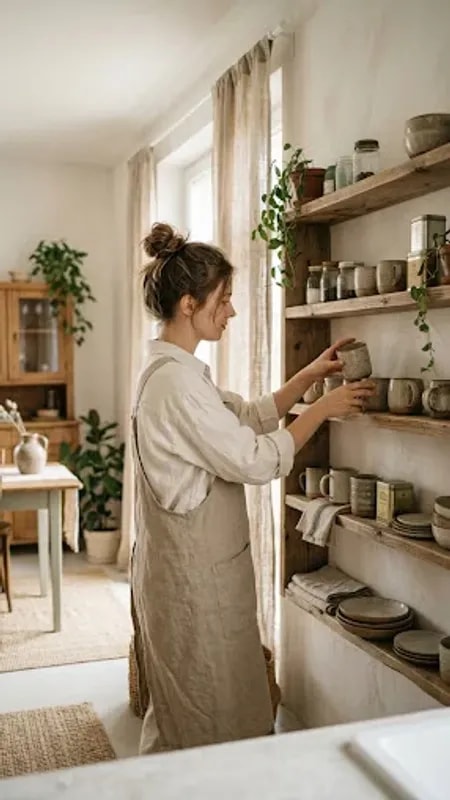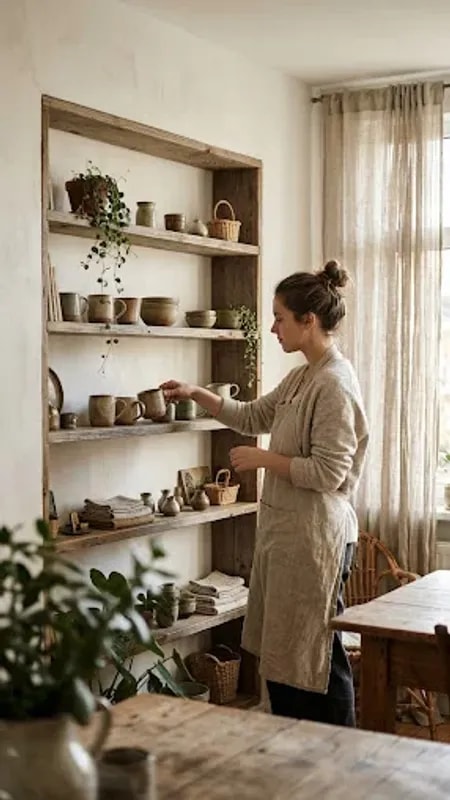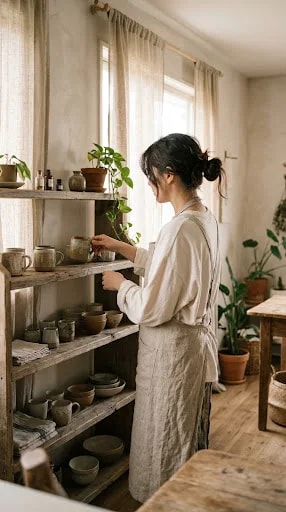
There is a moment in every zakka-style home that never makes it into the final photograph: the apron, the damp cloth, the quiet decision to swap a pitcher two shelves down. What looks like a settled still life is actually a practice. The shelf you admire was arranged this morning, and it will be rearranged tomorrow, because the objects on it are used — mugs for tea, bowls for rice, linens for drying hands — and useful things never stay put for long.
This is the useful distinction between zakka style home decor and a styled display. A display is composed once and protected from touch. A zakka shelf is composed to be disturbed. The woman in the linen apron is not decorating; she is putting the kitchen back in order after breakfast, and the beauty of the scene comes from that ordinary sequence. Her hands know the weight of each piece. She sets the teapot where the light from the window will catch its glaze in the afternoon, and she moves the small bottles to the back so the taller mugs can breathe.
If you want this feeling at home, start with rhythm rather than shopping. Choose one surface — a tall open shelf, a kitchen counter edge, a windowsill — and give it five minutes each morning. Take everything off, wipe the wood, and put back only what earned its place. You will notice that the arrangement improves when it is slightly imperfect: one bowl turned so its uneven rim shows, a plant allowed to trail past the shelf edge, a stack of folded linen that is not quite square. Wabi-sabi is not a finish you apply. It is what happens when handmade objects are handled daily and allowed to age honestly.
Materials do most of the quiet work here. Weathered wood, oatmeal ceramics, clay brown glaze, muted leaf green, sheer cotton at the window — a palette that stays calm because nothing in it is trying to be the loudest thing in the room. Keep the shelf mostly empty. Leave gaps so the eye can rest, and let the daylight do the decorating; a bright window will cast better shadows than any lamp you can buy.
What you are really curating is a habit of attention. The shelf is a record of the season: what you are drinking, what you are cooking, which mug you reach for first. Arrange it, use it, and arrange it again tomorrow.