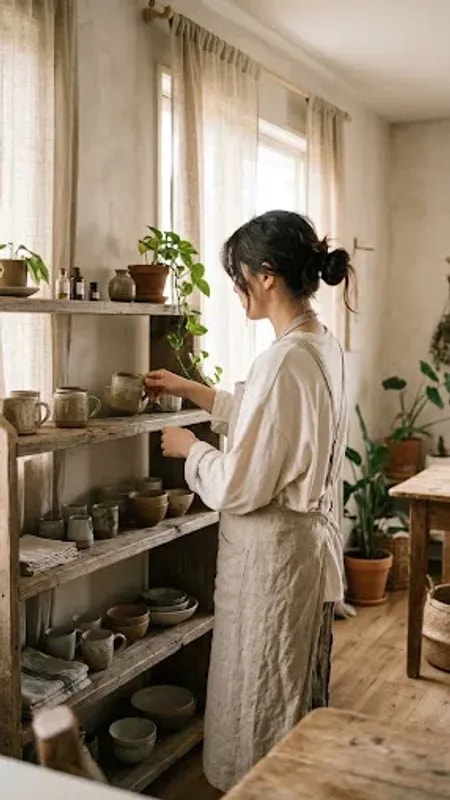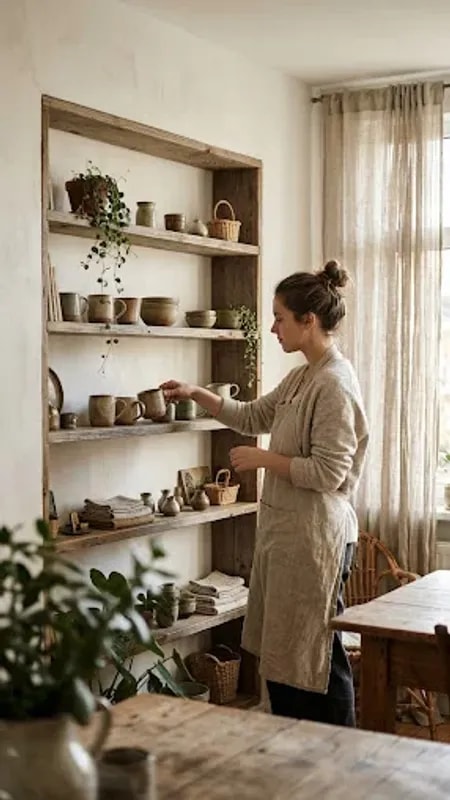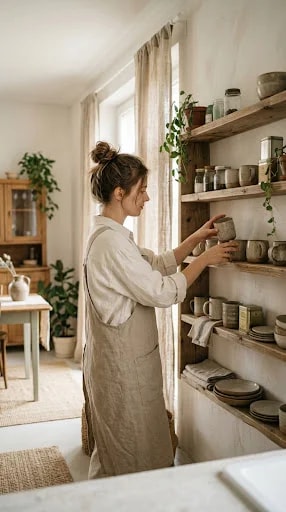
A single shelf, cropped tight and shot straight on, is enough to explain zakka style home decor. Five ordinary things share the space: a small framed botanical print, a plain white mug, a glass jar of wooden utensils, a woven basket, a potted succulent. Nothing here is precious. Nothing matches in any formal sense. Yet the arrangement holds together, and that quiet cohesion is the whole point of zakka — the Japanese idea of collecting everyday objects that have been made with care and letting their usefulness be their beauty.
The palette does most of the work. Warm wood, cream, a soft green from the succulent, a hint of slate blue in the frame or the shadowed corner. These are muted, earthy colors that occur naturally together, which is why the shelf reads as calm rather than collected. When you style your own shelves, pick a narrow band of tones and stay inside it. Restraint is what separates a curated shelf from a crowded one; three or four hues repeated across a few objects will always look more intentional than a dozen competing colors.
Texture carries the rest. Matte ceramic against glass, the grain of wood against the dry weave of a basket, the faint roughness of handmade paper behind the print. Diffused daylight is the ideal light for this kind of display because it lets those surfaces speak and lays down soft shadows that give each object depth without glare. Notice how the jar of utensils is not hidden in a drawer — the wooden handles are part of the composition, their shapes repeating vertically and echoing the slim stem of the plant.
What makes the shelf feel human is that everything on it does something. The mug gets used, the utensils get reached for, the basket holds what needs holding. Zakka style home decor treats utility as a credential rather than a compromise, and the two decorative gestures — the botanical print and the little succulent — work because they are small and quiet, not because they are loud. A shelf like this invites the eye to slow down and inspect, and it rewards that inspection with small differences in surface and tone.
To build one, start with three objects you actually use, add one natural element and one thing on the wall, then stop. Leave gaps. Let the wood show between pieces, and shift a single item every few weeks rather than restyling the whole shelf at once. The result should look less like a display and more like a record of how you live.