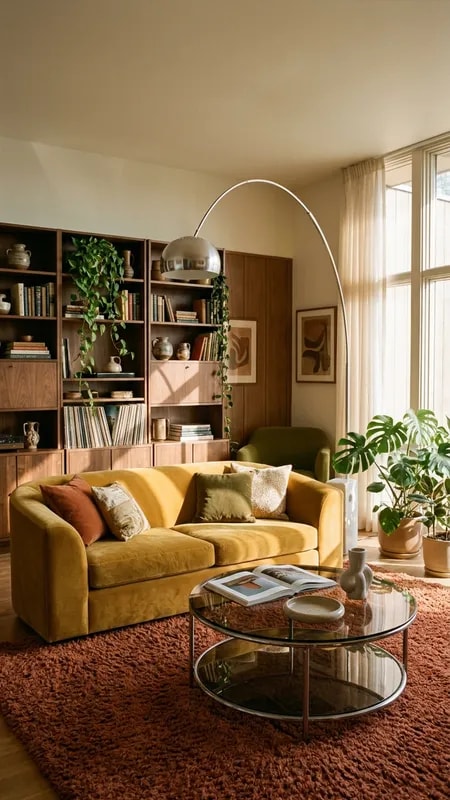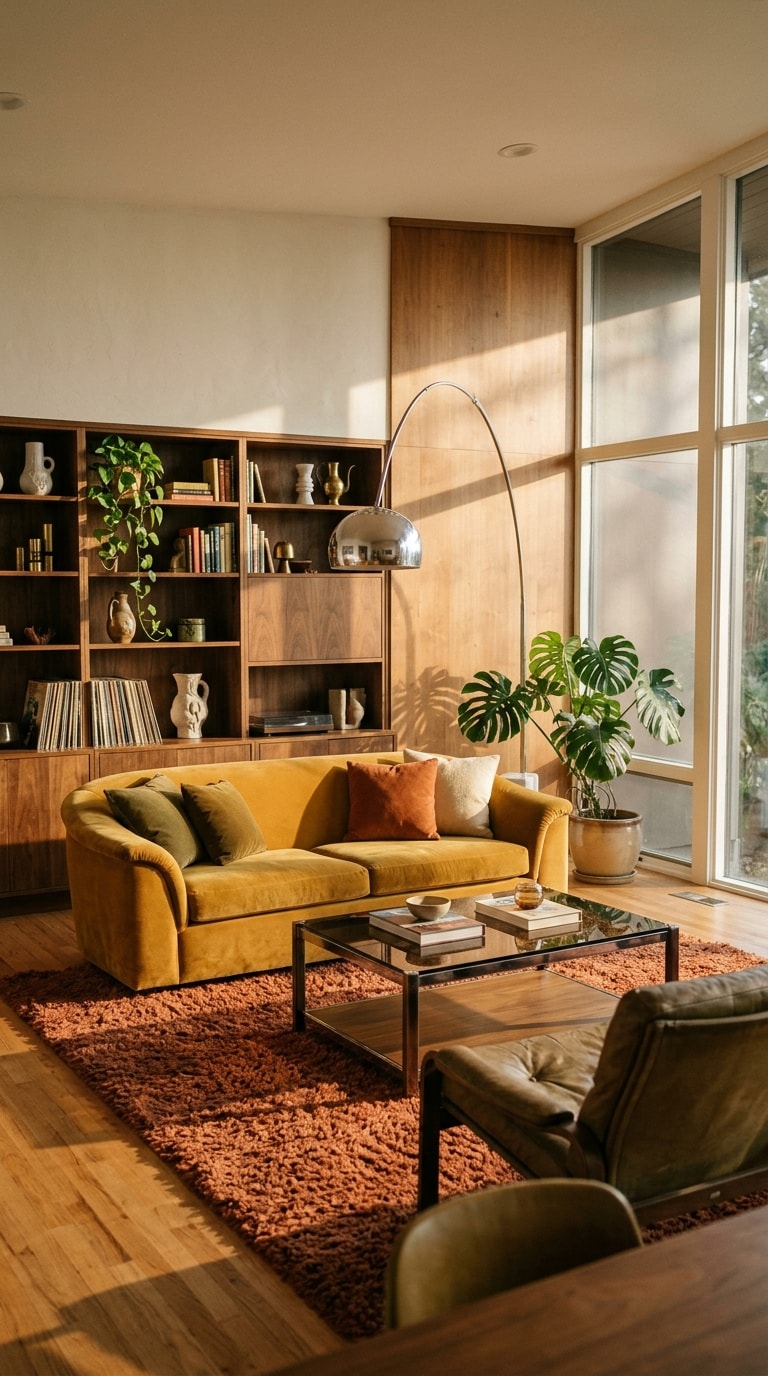
Walk into a room like this in the middle of the afternoon and the first thing you notice isn't the furniture — it's the light. Tall windows rake across a cream wall, throwing long shadows over a rust shag rug, and suddenly the mustard velvet sofa reads less like a period piece and more like the warmest seat in the house. That's the quiet argument for 70s style done well: the decade's best rooms were built around light and texture, not around props. Get the sun in, choose materials that hold warmth, and the nostalgia takes care of itself.
The palette here is the real workhorse. Mustard, rust, walnut brown, olive, and cream sit close enough on the color wheel to feel like one continuous sunset, with chrome acting as the neutral that keeps everything from turning to syrup. Notice the ratio: cream walls and pale light do most of the heavy lifting, the sofa and rug carry the saturation, and the walnut wall unit bridges them. If you're rebuilding this at home, pick one hero color — the mustard — and let a second, deeper tone like rust live on the floor. Olive leather lounge chairs pull the green out of the monstera in the corner, which is a cheap trick and a good one.
Storage does the styling. The wall unit runs almost to the ceiling, but it doesn't feel heavy because the shelves are loosely filled: books stacked flat, a few ceramics left with air around them, one trailing plant allowed to spill over an edge. That's the difference between a 70s room that feels collected and one that feels cluttered. Leave gaps. Let the wood grain show. A glass-and-metal coffee table with a couple of stacked books and small bowls does the same job at eye level — it holds a handful of things and then gets out of the way, so the rug stays visible and the room keeps breathing.
Lighting earns its place twice. The chrome arc floor lamp curves over the sofa like a piece of sculpture during the day, then becomes the practical light source after dark when the windows quit. Place seating in a shallow U — sofa against the shelving, lounge chairs pulled forward on the rug — and you get conversation without a wall of furniture. The low, slightly wide camera angle in a room like this isn't an accident; it's what happens when the seating sits low and the storage climbs high.
You don't need much to copy it. One saturated velvet piece, one warm wood unit, a plain floor covering with real pile, and a plant large enough to cast a shadow. Then wait for four o'clock and let the sun finish the room.