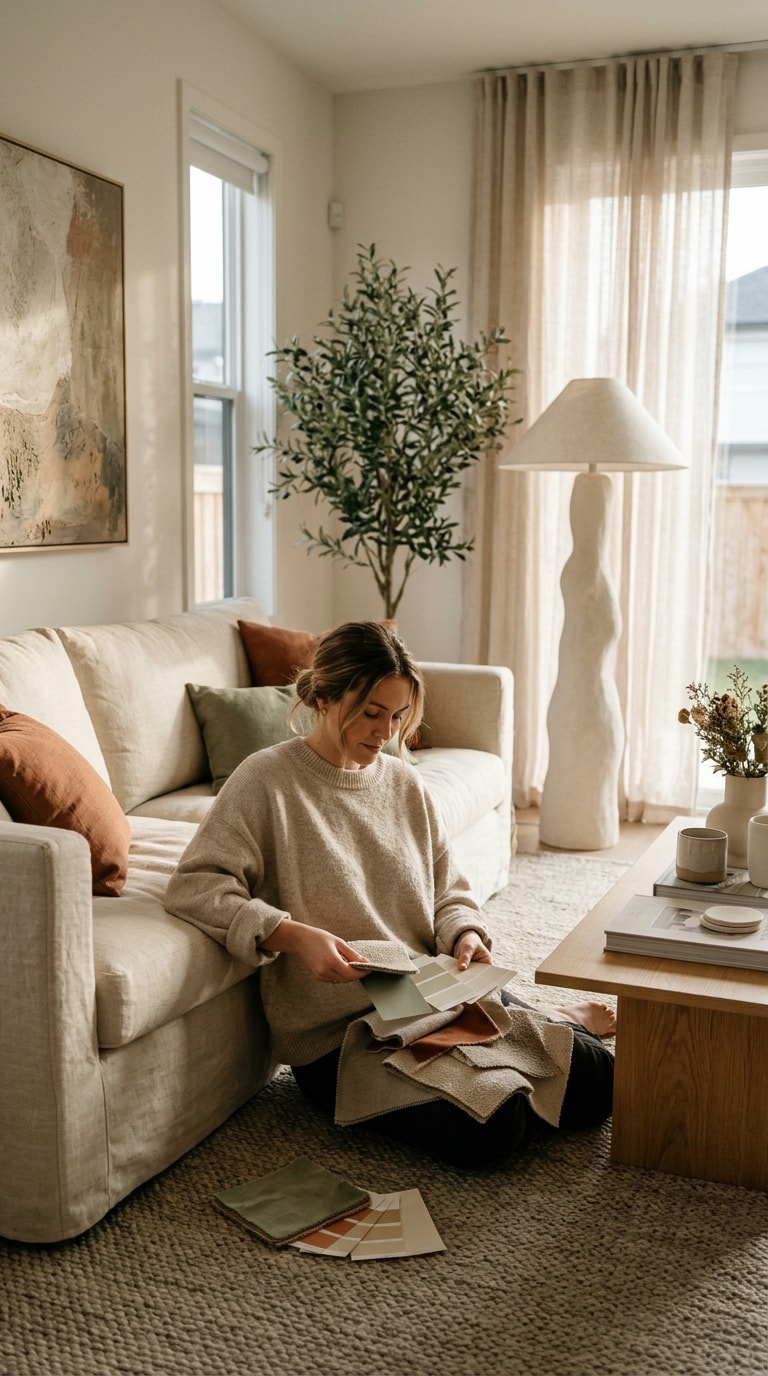
The late-afternoon light is soft and diffused, the kind that makes every cream and rust and olive tone look like it belongs. A woman sits cross-legged on a textured rug, fabric swatches fanned out in front of her, a plush beige sofa behind her with pillows in burnt orange and muted green. She is not scrolling through a quiz on her phone—though she might have done that first. She is doing the slower, more satisfying work: touching the materials, holding them up to the window, seeing how they change from morning to evening. That is the real test, and it is where a home interior design style quiz earns its keep.
Online quizzes are a useful starting point because they give you words for what you already love. They help you notice whether you gravitate toward clean lines or layered textures, cool grays or warm woods. But the result is not a verdict. It is a vocabulary. The danger is treating a label like 'modern minimalist' or 'transitional' as a rulebook, then buying a room that looks correct but feels anonymous. The woman on the rug knows better. She has likely taken a quiz or two, but she is using the swatches to translate a vague idea into something she can actually live with.
Here is how to do the same. Start with the quiz, then take its suggestions to a fabric store or order a sample kit. Pull paint chips in the colors the quiz pointed you toward, plus a few wildcards. Bring them home and live with them for a few days. Prop them against the sofa, lay them on the coffee table, hold them next to the olive tree. Notice which combinations make you exhale. The palette in this room—creams, warm woods, rust, and muted greens—did not come from a single quiz result. It came from someone paying attention to what felt calm and grounded in her own space.
A style quiz is a compass, not a map. It can point you north, but you still have to walk the terrain. The best rooms are built the way this one seems to have been: slowly, with hands-on curiosity and a willingness to change your mind. So take the quiz, sure. Then sit on the floor with your swatches, let the light move across them, and trust the combinations that make you want to stay awhile. That is how a house becomes a home that actually feels like you.